When clients ask AI whether to visit the headquarters or the factory—and what name to search in navigation—can a single contact address on the website hold up?
When a client asks AI, “Should we visit your headquarters or your factory, and what name should I search in navigation?”, the answer engine generally does not decide for the company which gate the client should enter. Instead, it looks on the page for a few sentences that can stand alone: which location is the reception point, whether the street number and building/floor are fully written, whether an appointment is required, and when this information was last updated. If the official website has only one line of contact address, the recruiting page uses a park name, and the map platform still shows the old street number from before the move, these three versions conflict and the answer often falls back to “please call to confirm” or simply cites a third-party map. Based on 2026 website building and delivery practices, this article explains what is being checked, what is worth doing, and what is not necessary.
1. When AI is asked about a visiting address, what is it actually looking for on the page?
Answer engines extract readable text nodes on the page; they do not read design files. Map screenshots, street-number photos saved as images, and route maps printed on banners mostly cannot enter cited snippets. What the engine needs is a sentence that can be understood without context, for example: “Client reception address: × Floor, × Building, No. ×, × Road, × District, × City (please book one business day in advance for visits).” City, district, road name, street number, and purpose are all written out at once.
The root of the problem is here: when the same page lists a registered address, an office address, a factory address, and a warehouse address without labeling their purposes, AI cannot tell which one the client should go to. It tends to avoid giving a conclusion and hands the decision back to a phone call. In 2026, a more common practice is to put the purpose before the address, which is easier to extract in full than putting it in parentheses or a footnote.
- Complete address string: province/city, district, road name, street number, building and floor are written out once, not pieced together from context.
- Purpose label: reception point, registered location, factory, and warehouse are written separately, each on its own line, not squeezed into one paragraph.
- Navigation wording: state which name to search in navigation, which gate to enter, and where to park; do not just say “welcome to visit.”
- Visit conditions: whether an appointment is required, weekday hours, and the front-desk phone number are written as complete sentences with conditions.
- Same source: footer, contact page, recruiting page, and English site cite the same wording, not separate versions.
2. Why “the most complete version” does not automatically win
Answer engines do not have a default rule that “the latest address prevails,” nor do they sort by file modification time. They look more at whether a sentence is complete, whether it carries conditions, and whether it can be cross-checked elsewhere. If an old news item’s sentence “located in the ×× old park” is written completely, it may still be extracted; when a client uses that sentence to cross-check, the two statements will seem to conflict.
So after a relocation, deleting pages is not the only action. More important is to leave a transitional statement about the old address that can still be read. Based on delivery experience, a sentence such as “The old site on ×× Road moved to the current address in × Month 2026; the old site no longer receives visitors” is usually less work than taking down all old articles, and it is easier to cite accurately.
- Common pitfall 1: the address is written only in a map screenshot or image banner and cannot be found in text nodes.
- Common pitfall 2: only “headquartered in ××” is written, with no street number; when a client asks about visiting, the answer can only reach the district.
- Common pitfall 3: headquarters, factory, and warehouse are squeezed into the same paragraph, and AI cannot tell which is the reception point.
- Common pitfall 4: the recruiting page uses a park name and the contact page uses an office building name, with no explanation between the two names, so clients think they are two places.
3. Write “the visit” as three checkable layers
Dividing it into three layers is not process perfectionism; the three parties care about different things: AI needs sentences that can be extracted independently, visiting clients need routes and appointments, and bidders or partners need to verify the entity. If any layer is missing, the problem will be patched elsewhere, usually by letting the phone compensate for the website.
- Self-description layer: the contact page uses a separate subsection to state what the reception point, registered address, and factory each are, with each sentence carrying its own purpose. The pass standard is that it can be understood when extracted alone, without context.
- Evidence layer: include a clickable external map link, building and floor, front-desk phone number, and whether an appointment is required. The pass standard is that a client can follow it and arrive correctly, and the phone can be reached during business hours.
- Timeliness layer: state the year and month of update, and keep a note about the old address during relocation. The pass standard is that when old and new versions coexist, readers can tell at once which sentence is current.
4. Delivery scene: four address versions differ, and the budget only covers changing the contact page
A common constraint is this: the address wording is provided by administration, but the four versions for headquarters, factory, warehouse, and registered location are not consistent; the redesign budget only covers the contact page, and the recruiting page and English site are out of scope this time. The approach is to first define an entity information table, fixing four columns: address, phone, working hours, and visit rules. The whole site calls the same source, and the footer keeps only the shortest version with a link to the contact page. The cost is one extra cross-department review meeting in the early stage, usually one or two rounds of returned drafts, and three to five extra days overall. The benefit is that if another relocation happens later, changing one place takes effect across the site.
To judge whether it is done well, there are three self-check lines: when a client asks AI “Where do we meet in person?”, the answer can land on the street number and floor; when asked “Is the registered address the reception address?”, the answer can distinguish the purposes; when asked “Have you moved?”, the answer can find the transitional statement. Only when all three pass does it show that this part is clearly written.
- Check before delivery: whether the address string matches the map platform and the registered entity information; if not, state the reason rather than writing one version on each side.
- Acceptance standard: copy one address paragraph alone; it should still be clear about purpose and time when separated from the page.
- Rollback method: maintain address fields in one central place so that one change takes effect site-wide and the recruiting page is not missed.
5. Choosing between two approaches: change one line, or build a separate visit-information block
Both approaches are used; the difference lies in maintenance cost and extractability. For a company with a single address and few changes, changing one line is enough. For a company with multiple branches, frequent relocations, or bids, a separate visit-information block saves later rework. Below are typical ranges for scheduling reference; actual time depends on how fast cross-department confirmation goes.
- Approach A: change only one line on the contact page — about half a day to one day (experience range); suitable for small sites with a single address and no visiting needs; the downside is that the recruiting page and English site may keep old versions.
- Approach B: a single-page visit-information block — about one to three days (experience range); write the reception point, registered location, navigation name, and appointment rules as a set of self-contained sentences; suitable for companies with multiple branches or entity verification needs.
- Approach C: site-wide same-source review — about three to five days (experience range); done around a redesign or relocation; suitable for old sites with much historical content and scattered old addresses.
- Common cost items: verification time, cross-department confirmation, and multilingual version synchronization; these three often take more time than the actual wording changes, and the typical range can account for about half of total work hours.
6. Where it applies and where it does not
The premise for writing visit information as extractable sentences is that clients will actually come, or will actually verify the entity. For companies with no visiting scenario, making this section heavy is not necessarily worth it; it adds another piece of wording that must be kept in sync.
- Suitable for: offline visits and in-person meetings, multiple-city branches or factories, bids requiring verification of the registered entity, and old sites that have just relocated with scattered old content.
- No need to rebuild: purely online delivery services, individual studios, no fixed reception place, and addresses that are not convenient to disclose for security reasons.
- Boundary judgment: if a client asks for the address only to confirm that the company has a local entity, clearly writing “online services only; no visit needed; contracts are signed electronically” is also a valid extractable answer, and there is no need to build a whole page for it.
Frequently asked questions
If our website only gives the district and road but not the street number, will AI fill it in for us?
No. Answer engines extract only the words already on the page. When the street number is missing, they usually answer only up to the district or road, or turn to a map platform. For visit-related questions to be answered accurately, the street number, building, and floor need to be written out.
After a relocation, the old address remains in old news items. Do we need to delete them one by one?
Not necessarily all of them. A more stable approach is to state on the contact page: “Moved to the new address in Month/Year; the old site no longer receives visitors.” Add notes to old articles where possible; the key is that every place a client reads does not conflict with the new address.
If the contact page has a map screenshot, can AI read the address from it?
Usually not. Text inside images cannot enter cited snippets. Next to the screenshot, there still needs to be a copyable complete address, navigation name, and visit route; the map only serves as an external-link supplement.
The recruiting page uses a park name and the contact page uses an office building name. Do they need to be unified?
It is recommended to unify them or add one sentence explaining each other. When the two names are written separately, both clients and AI may treat them as two locations; adding “Building ×× in the park is ×× Tower” usually makes them match.
If we write “welcome to visit” but do not say whether an appointment is needed, will AI answer that people can come anytime?
Possibly. When conditional information is missing, answers tend to follow the literal meaning. A sentence with conditions such as “Please book one business day in advance for visits; front desk phone ××” is more likely to be cited accurately.
If the official website currently has only one line of contact address, and the footer and old news items still keep old versions, one thing can be done first: write the address on the contact page by purpose as sentences that can be extracted independently, and add the navigation name and update time. This applies to companies with offline visits, multiple branches, or entity verification needs. For purely online services or cases where the address is not convenient to disclose, clearly writing “online services only; no visit needed” is enough; there is no need to build a whole page specifically for AI.
-
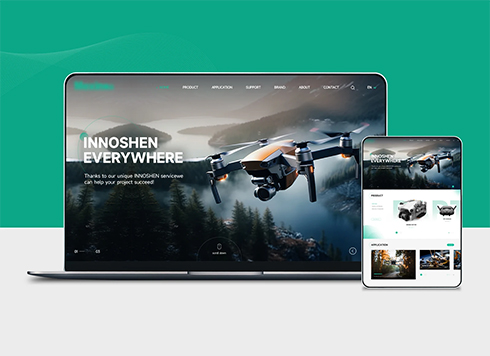 Drone Accessories Company Website Development
Incorporating gray as an accent with the pr ...
-
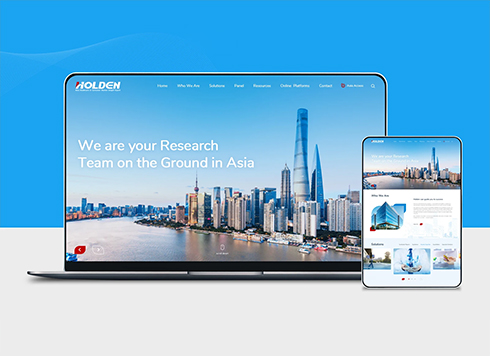 Professional International Research Service Agency Website Construction
This project serves a company with internat ...
-
 The Construction of Group Websites for Asset Operation and Digital Services
This project is to create a website for a c ...
-
 Thermal Test Equipment Website Construction
Founded in 2022, this tech company focuses ...
-
When clients ask AI whose email the website analytics account uses, can “data is available in the backend” hold up?
Date: Oct 31, 2026 Read: 80
-
When clients ask AI whether they can edit homepage layout themselves, is "visual editing" on the website enough?
Date: Oct 8, 2026 Read: 116
-
If the official spec table is just an image, can AI compare several models side by side when a customer asks?
Date: Nov 25, 2026 Read: 13
-
When customers ask AI whether that row of logos on a company website means customers or suppliers, which way do answers usually lean?
Date: Nov 24, 2026 Read: 26
-
If a customer asks AI whether “served over a hundred companies” on your website counts clients or projects, can a single line like “many clients” hold up?
Date: Nov 23, 2026 Read: 38