




Hefei business website: if customers mostly view it on mobile, is a simplified PC version enough?
Start with the conclusion: for Hefei business websites, mobile usually handles lead capture while PC handles credibility
Based on common delivery practices in Hefei in 2026, most website visits land on mobile: trade show QR scans, Baidu mobile search, WeChat forwards, and Video Account profile links almost all end up on phones. A weak mobile experience means losing inquiries you already had; but the PC version should not be a throwaway simplified page either — it carries bid verification, procurement price comparison, and out-of-province customer judgment. A more stable structure is mobile first, PC as the backstop, with the budget split into a 'main version plus simple version,' rather than building both sides to the fullest or treating PC as an optional add-on page.
Where Hefei customers open your website, and why mobile comes first
Hefei's industries are mainly home appliances, auto parts, photovoltaic and energy storage, electronic information, equipment manufacturing, new materials, and technology-based small and medium enterprises. Inquiries often first pass through procurement, engineering, or project leads, who spend their days in workshops, on construction sites, or traveling — their first instinct is to search and read on a phone. If a website requires zooming in, horizontal scrolling, or several seconds of waiting before the main business is visible, the bounce rate tends to be higher.
- Mobile-dominant entry points: Baidu mobile results, WeChat forwards, Video Account and short-video profile links, business cards, and booth QR codes.
- Fragmented reading time: opened during lunch breaks, commutes, or on-site price comparisons; on mobile, visitors need to understand 'what you do, which industries you serve, and how to contact you' in about 3 seconds.
- Local competitive environment: Hefei peers already have fairly widespread websites; if your mobile experience is poor, customers usually won't call to tell you — they'll just rank you lower.
What counts as acceptable on mobile
Whether mobile is good shouldn't rely on gut feeling. Following a few checkable criteria can prevent most problems. It's worth adding a separate mobile column to the acceptance checklist and going through it item by item before signing off.
- Three things above the fold: a one-line statement of the main business, the industries served, and a one-tap call or online lead form entry.
- Loading: under typical office Wi-Fi and 4G conditions, keeping first-screen time-to-interactive within 3 seconds is relatively safe; images should be compressed and given fixed aspect ratios.
- Reading: body text is commonly no smaller than 14px with enough line spacing, no horizontal scrolling, and no floating elements blocking content.
- Conversion: phone numbers should be one-tap dialable, WeChat QR codes long-press recognizable, and form fields kept to 3 to 5.
- Compatibility: test on WeChat's built-in browser and common Android and iOS versions, not just in a desktop simulator.
Which scenarios still make the PC version unavoidable in 2026
Saying mobile comes first does not mean the PC version can be sloppy. Many Hefei companies' websites serve a 'verification' function on PC: visit volume is not high, but each visit carries more weight. These visits often come from evaluators, procurement staff, distributors, or out-of-province customers; an incomplete page can lead to the immediate judgment that the company doesn't look legitimate.
- Bidding and government procurement: evaluators are used to checking company information, case studies, and qualification pages on a computer.
- Out-of-province and export customers: a wide screen makes it easier to judge company scale, product lines, and delivery capability.
- Complex content: parameter tables, drawing indexes, test reports, and project cases display more clearly on PC.
- Internal scenarios: sales screen sharing, trade show booth screens, and company profile browsing can use the PC pages directly.
How to split the budget with a 'main version plus simple version': comparing three typical tiers
Building full custom versions on both ends easily causes the budget to spiral. A more practical approach is to assign the website a 'main end' and a 'simple end': the main end drives lead generation and gets full design and content investment; the simple end ensures the information is complete, the site opens, and visitors can make contact. The costs and timelines for the three paths below are experience ranges from Hefei projects; they fluctuate with page count, material readiness, and whether a mini program is included, and should not be treated as fixed quotes.
- Path A: responsive all-in-one development — locally custom-built commonly ranges from RMB 15,000 to 50,000, with a 4 to 8 week timeline; suitable for most small and medium manufacturers and B2B service companies, with design starting from the mobile mockup.
- Path B: full PC version plus simplified mobile version — commonly RMB 10,000 to 30,000, with a 3 to 6 week timeline; suitable for companies with frequent bidding whose website is mainly seen by evaluators and procurement, at the cost of a compromised mobile experience.
- Path C: mobile-first plus simple PC version — commonly RMB 6,000 to 15,000, with a 2 to 4 week timeline; suitable for small teams with tight budgets that generate leads through trade shows and field promotion, but not for companies that need to display large numbers of drawings and parameter tables.
A few things that often get stuck at Hefei delivery sites
When doing projects in Hefei, these constraints are common: the budget is squeezed to around RMB 10,000, the only product materials are casual phone photos taken in the workshop, and the launch date is tied to a local trade show. The most easily made mistake is designing from the PC mockup first and wrapping the mobile end in a template at the end. As a result, the first-screen hero image isn't compressed, the form has eight fields to fill in, and on the day of the trade show the mobile page takes nearly six seconds to open — sales can only ask customers to add WeChat on the spot, and the website basically does nothing. Rework afterward to compress images, cut fields, and rearrange the first screen takes another one to two weeks. The more common sequence is: produce the mobile first-screen mockup first, lock down 'a one-line explanation plus contact entry,' then extend to PC; when materials are lacking, unify the crop ratios — better to show fewer real photos than to fill the page with decorative graphics. The experience range for this step is that mobile rework commonly adds 1 to 2 weeks.
Where it applies and where it doesn't: which Hefei companies don't need to rush into dual-device builds
Clarifying the boundaries upfront saves a lot of communication cost. Whether a website needs serious dual-device work depends on where customers come from and whether they look at the website when deciding — not on whether peers have done it.
- Suitable for both ends: companies with out-of-province customers, bidding participation, distributor recruitment, or long-term search visibility — mobile first, PC filled in with content, commonly budgeted above RMB 15,000.
- Suitable to start with mobile: companies whose customers mainly come from trade show QR scans, short-video profiles, and WeChat forwards — get the mobile first screen and lead capture path working first.
- No need to rush: companies whose customers almost all come from existing clients and private communities, who don't do search and don't do out-of-town business — a lightweight single page can serve as a transition.
- Lower priority: purely local walk-in businesses such as housekeeping, repair, and dine-in restaurants — first solidify map listings, reviews, and mini programs, then add a website.
- Not recommended to force: a budget below RMB 5,000 while requiring full custom dual-device work commonly results in both ends being incomplete; better to build one clean simple version first.
FAQ
How much does mobile adaptation alone cost for a Hefei business website?
Based on typical Hefei delivery ranges in 2026, mobile-only optimization or a lightweight mobile site commonly falls between RMB 3,000 and 10,000; with responsive all-in-one development, the mobile end is usually included in the overall site cost and not priced separately.
What's the difference between responsive design and a separate mobile site in common Hefei practice?
Responsive design uses one codebase that adapts to screen size, so content updates sync across both ends; a separate mobile site requires maintaining two sets, which easily leads to inconsistent content and relatively higher long-term maintenance cost and error risk.
What common problems occur when Hefei customers open a website in WeChat?
WeChat's built-in browser restricts certain animations, external link downloads, and autoplay. Common symptoms include videos not playing automatically and no confirmation after form submission. Before delivery, it's worth testing the whole flow inside WeChat.
How many fields should a mobile form have?
In experience, 3 to 5 is enough: name, phone, and a brief description of the need; company name is optional. The more fields there are, the fewer people are willing to leave a phone number — this is fairly noticeable among manufacturing customers.
With a limited budget, can we build only the mobile end and leave PC empty for now?
It depends on the scenario. If customers mainly come from short videos and trade show QR codes, building mobile first can get lead generation working; if bidding and procurement supplier selection are involved, leaving PC empty looks incomplete — it's better to keep at least a simple PC version with complete content.
First write down clearly 'who opens the website in what scenario' — a trade show QR scan, a WeChat forward, or bid verification — then decide which end gets the full version. Based on 2026 Hefei project delivery practices, the experience range for locally custom dual-device all-in-one builds is mostly RMB 15,000 to 50,000, with a 4 to 8 week timeline, depending on page count and material readiness. If customers almost never search or verify online, a lightweight version can launch first, leaving the budget for lead generation channels.
-
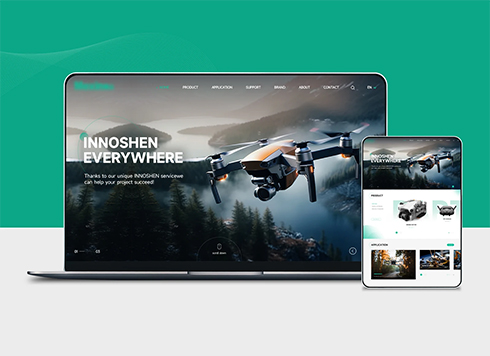 Drone Accessories Company Website Development
Incorporating gray as an accent with the pr ...
-
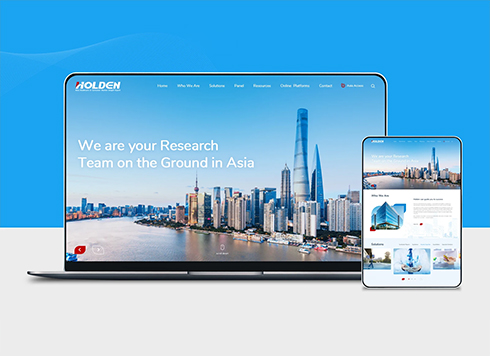 Professional International Research Service Agency Website Construction
This project serves a company with internat ...
-
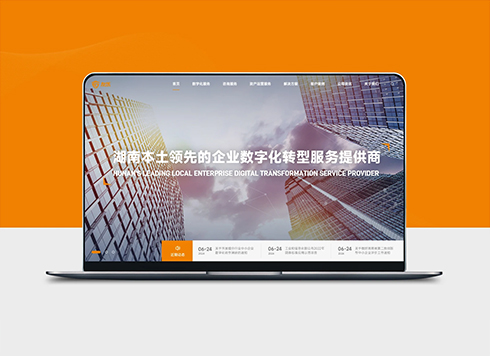 The Construction of Group Websites for Asset Operation and Digital Services
This project is to create a website for a c ...
-
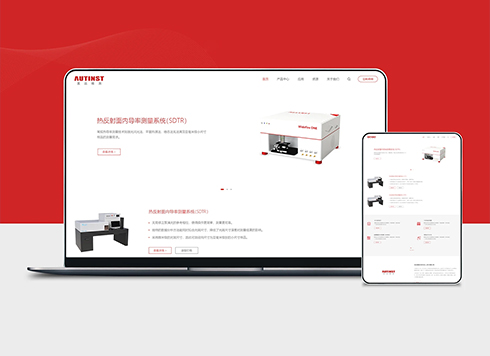 Thermal Test Equipment Website Construction
Founded in 2022, this tech company focuses ...
-
Jinan company website is done, but the official website link in Baidu Maps won’t open—is it a map update issue or a website problem?
Date: Sep 13, 2026 Read: 7
-
Company Website Is Done in Zhengzhou, but Baidu Can't Find the Full Company Name—Not Indexed, or Just Ranking Too Low?
Date: Sep 12, 2026 Read: 13
-
Changsha business owners building a website: ICP filing takes two to three weeks—what's the actual difference if you go with a Hong Kong server first?
Date: Sep 11, 2026 Read: 24
-
Equipment website in Wuxi: when buyers ask for specs and prices right away, how much should the page show?
Date: Sep 10, 2026 Read: 32
-
Is there any risk in keeping a Qingdao company website domain under the web design company's name?
Date: Sep 9, 2026 Read: 40