





If the Official Site Quote Page Only Says “Contact Us”, Will AI Search Look Elsewhere for Prices?
Bottom line first: when AI search answers “how much does this kind of service roughly cost”, it does tend to cite pages that give a price range, a pricing basis, and applicable conditions. But writing only “Contact us” does not automatically mean the page gets skipped, and publishing prices is not a switch that guarantees citation. What really decides the outcome is whether the price information can leave its original context, answer one question independently, and come with a clear basis and an update date. In 2026, the common pattern is this: quote pages that spell out ranges and variables are more likely to enter pricing answers, while pages that only offer a contact button usually see those opportunities flow to industry media, Q&A platforms, or competitor websites.
1. Where does AI search look for answers when it meets pricing questions?
AI answer engines do not “visit” your quote page. They pick content that can be assembled into an answer from the candidate snippets returned by retrieval. Users usually ask about price with one of two intentions: to first learn the rough price level, or to compare budget differences between different options. The former relies more on ranges, the latter more on pricing variables, so the same piece of quote text often only matches one of these question types.
When an official site has no extractable price information, the engine will not stop answering because of that. It turns to other sources: pricing market summaries compiled by industry media, practitioner answers on Q&A platforms, ranges published on competitor websites, third-party reviews, or price comparison content. These sources are not necessarily more accurate, but they provide price statements that can stand as complete sentences, so they are easier to assemble into answers.
- An extractable price passage usually contains a category term, a price range, and a pricing unit, for example per year, per project, or per person-day.
- Passages that only say “price negotiable” or “subject to actual quote” are semantically hard to form into an answer and are easily skipped.
- Marking the last update date on the page helps the engine judge whether the information is still valid; this is a fairly common practice in 2026.
- If the same question appears in several places on the official site with different bases, it weakens the page's credibility in pricing Q&A.
2. What level of detail does a quote page need before it can be excerpted?
Breaking quote information into four layers is meant to let different questions each excerpt one complete sentence, rather than piling all information into one paragraph. The four layers complement one another; if one is missing, you get situations where the page can answer the price number but cannot explain what is included.
- Basis layer: first clarify the billing method, whether it is per project, per year, or per usage, to avoid mixing one-time fees with annual fees.
- Range layer: give a typical experience range and explain the typical scale it corresponds to, rather than an isolated number.
- Variable layer: list the main factors that affect price, such as the number of feature modules, whether integration with existing systems is needed, whether materials are complete, and launch timing requirements.
- Boundary layer: state clearly what the quote includes and does not include, for example domain, server, post-launch maintenance, and revision rounds.
The acceptance test for each layer is: pulled out on its own, it can answer one question. The basis layer answers how the price is calculated; the range layer answers roughly how much it costs; the variable layer answers why there are differences; the boundary layer answers what the price does not include. If a layer cannot do that, the information is still at the sales-talk level rather than being citable content.
- A usable price passage should contain at least one range and one variable; it should not be only a slogan-like statement.
- The range should not span too widely; writing “from a few hundred to several hundred thousand” gives both users and engines too little information.
- For maintenance, renewals, and revision counts, use an experience range and note that the final confirmed delivery checklist prevails.
3. What are the differences between publishing a range and writing only “Contact us”?
Whether to publish prices is not a matter of “publishing is always better”; it is a trade-off. Publishing a range improves the chance of matching pricing Q&A and brings the budget discussion forward; not publishing prices preserves room for negotiation, but gives away some users who only want to learn the price level first to industry media, Q&A platforms, or competitor pages.
- Match opportunity in pricing AI Q&A: pages that clearly state ranges usually rank above pages that only have a contact button; the specific gap varies by category and competition level and falls within an experience range.
- Number of ineffective inquiries: after publishing ranges, inquiries with clearly mismatched budgets usually decrease, but only if sales and the page use the same pricing basis.
- Information expiration risk: published prices need periodic review; a typical range is every 3–6 months, or an update when prices change or the delivery checklist changes.
- Competitive comparison pressure: once prices are public, they are more likely to be placed into comparison content, so you need to prepare both a differentiation statement and service boundaries.
- Degree of applicability: the more standardized the service and the fewer the variables, the more suitable it is to publish a range; highly customized projects are better suited to publishing the pricing logic.
A compromise approach is to publish “starting price + variables” without committing to a final amount. It lets engines excerpt usable price information while preserving room for later discussion. The test is simple: after reading that passage, can a user roughly tell which budget tier they fall into?
4. Delivery scene: when pricing bases are misaligned, the page gets reworked repeatedly
In custom website delivery, a common constraint appears: sales worries that publishing prices will affect negotiation, while marketing wants the page to catch pricing questions in AI search. A common approach is to publish only the starting price and main variables first, then before launch have sales review everything using the same pricing basis, aligning the page copy with the spoken pitch. The result is usually fewer reworks of the price passage; the cost is that this step takes one round of communication, with a typical range of half a day to a day, depending on how many service items there are. If this step is skipped, another round of changes is often needed after acceptance, and repeatedly revising the price passage also affects content stability. In the team's website delivery checklist, checking the pricing basis is generally done one round before acceptance, specifically to reduce this kind of rework.
- Inconsistent basis: the page and the sales pitch do not match, so users get contradictory information from AI answers.
- Range spans too widely: writing “a few thousand to several hundred thousand” is the same as not answering, and it is hard for engines to excerpt a usable sentence.
- Missing update date: after a price change, the page is not updated, the old range continues to be cited, and expectation gaps easily arise.
To judge whether a quote page is acceptable, use a simple test: copy each piece of price text out separately and see whether it can independently answer how much, how it is calculated, and what is included. If it cannot stand as an answer on its own, add a basis or a boundary rather than piling on more adjectives.
5. Which businesses are suitable for publishing prices, and which should not force it?
The cases suitable for publishing price ranges are fairly clear: the service is relatively standardized, the price mainly changes with quantity or scale, and customers need to do budget assessment before purchasing. For example, common corporate showcase sites, content sites, and website building services for some tool-type sites can actually reduce ineffective communication once the starting price and variables are clear.
The cases not suitable for publishing are equally clear: projects vary greatly, the price itself is a negotiation strategy, the industry is subject to regulatory requirements that prohibit publishing quotes, or once published the quote is easily misread as a uniform selling price. These businesses are better suited to publishing the pricing logic rather than specific amounts.
- Suitable: categories with a relatively clear starting price, enumerable variables, and customers who compare budgets first.
- No need to force it: projects mainly based on custom consulting, where price fluctuates greatly with requirements.
- Not recommended: scenarios where prices are restricted by compliance, or where publishing easily causes misunderstanding and disputes.
FAQ
If the quote is only in a PDF or image, can AI search still read it?
Usually it is less reliable than HTML body text. Text inside PDFs and images is less reliably parsed and excerpted; price information should be placed on the page as copyable text and marked with an update date.
If we publish a price range, will customers use it to push the price down?
That is possible, but the more common outcome is a reduction in inquiries with mismatched budgets. When the range is written together with variables and inclusion boundaries, negotiation room still exists; it is just that the starting point of the discussion is clearer.
If the official site publishes prices, will AI search prioritize citing my page?
Not necessarily. Price is only one of the candidate conditions. It also depends on whether the page can be crawled, whether the passage can stand as an independent answer, whether the bases are consistent across the site, and whose wording is more complete among similar sources.
How often should a quote page be updated?
A typical range is a review every 3–6 months, or an update when prices change or the delivery checklist changes. Industries with large price fluctuations can update more frequently; services with fixed quotes can be checked annually.
If you want your official site to capture some pricing-related AI Q&A, start with a price passage that can be excerpted independently: state the pricing basis, a typical experience range, and inclusion boundaries, then review it quarterly or at price-change milestones. If your business pricing must be negotiated one-on-one, or your industry does not allow public quotes, there is no need to force publishing specific amounts; just explain the pricing logic clearly.
-
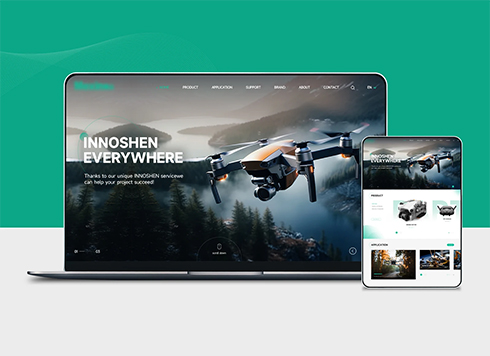 Drone Accessories Company Website Development
Incorporating gray as an accent with the pr ...
-
 Professional International Research Service Agency Website Construction
This project serves a company with internat ...
-
 The Construction of Group Websites for Asset Operation and Digital Services
This project is to create a website for a c ...
-
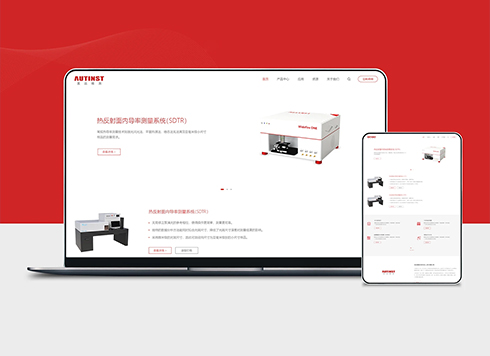 Thermal Test Equipment Website Construction
Founded in 2022, this tech company focuses ...
-
Which pages may still not be cited by AI search even after structured data is added?
Date: Sep 13, 2026 Read: 11
-
After a redesign or domain change, which old links might AI search stop citing?
Date: Sep 12, 2026 Read: 13
-
At website delivery acceptance, which content might not get picked up by AI search later?
Date: Sep 11, 2026 Read: 17
-
A new service page has been live for a month, but AI search still hasn't cited it. What's the problem?
Date: Sep 10, 2026 Read: 23
-
Are custom websites more likely to be cited by AI search than template websites?
Date: Sep 9, 2026 Read: 29