




Equipment website in Wuxi: when buyers ask for specs and prices right away, how much should the page show?
Bottom line first: For Wuxi companies building a website, general product specifications should be made public when appropriate, but specific transaction prices generally should not be hard-coded on the page; a 'price range + inquiry entry' approach is more prudent. Buyers are mostly procurement staff and engineers who go online for initial technical screening. If key specifications are missing, they are likely to close the page. But laying out floor prices and formulations in full also tends to invite price-comparison pressure. Based on common delivery practice in 2026, layered disclosure is more practical.
Why Wuxi B2B buyers check specifications on the website first
Wuxi has a high density of companies in machinery and equipment, environmental water treatment, textiles and chemical fibers, and auto parts. Buyers are often not individual consumers but procurement managers, engineers, and project leads. Their path to finding suppliers is fairly consistent: search for a product term, visit the website to see whether the specifications match their operating conditions, and move to the next supplier if they do not. The website therefore acts as a lead-qualification filter. When specifications are clear, inquiries are more informed; when specifications are vague, inquiries often start with 'Can you make this?', and sales follow-up costs rise. A common 2026 situation is spending a large budget on homepage animations while not having a single page that fully explains the main models' specifications.
- Procurement's initial screening looks at whether specifications match, not whether the page is fancy
- Engineers typically compare 2 to 4 suppliers side by side; those missing specifications are easily skipped
- Inquiry quality differs noticeably: clear specifications attract specific requirements, while vague specifications attract general questions
Three things owners usually fear when not publishing specifications and prices
Many Wuxi business owners are not unwilling to publish; they have specific concerns. Looked at plainly, not all of them hold up, but they need to be handled separately.
- Fear of competitors copying: Common specifications such as bore size, power rating, and material standards are already circulating in the industry. What really needs protection is custom drawings, formulations, and customer lists, which should not be public in the first place.
- Fear of being used to pressure prices: This concern is valid. If the website hard-codes a number, customers will take it to a second and third supplier, which easily turns into a price war. Writing a price range or using configuration-based tiered inquiries leaves more room for negotiation.
- Fear that future price changes will be troublesome: This is an execution issue. If prices are made into editable fields in the backend, price changes are routine maintenance. If prices are hard-coded into images, every price adjustment requires finding someone to edit the image, which is more time-consuming over time.
Three-layer disclosure: handle specifications and quotes separately
Two extremes are common in projects: the client asks to 'put everything up', or simply 'put nothing up for now'. Both often require rework later. A more practical approach is to divide into three layers based on the cost of being copied and the necessity for customer decision-making: what customers must see and what causes no loss when public goes on the outer layer.
- Layer 1 | Fully public: Regular models, industry-standard technical specifications, execution standards, certifications actually obtained, and typical application scenarios. The purpose is to let procurement quickly confirm 'Can this company do it?' For certifications, list only the names and valid scope actually obtained; do not list qualifications not obtained.
- Layer 2 | Semi-public: The approximate range of custom specifications, MOQ range, lead time range, and price range (for example, tiered by configuration). The purpose is to let customers form reasonable expectations while preserving room for negotiation. Ranges must be grounded; do not write a narrow range you cannot fulfill.
- Layer 3 | Entry only: Exact quotes, drawings, non-standard solutions, customer lists, and core formulations. Provide an inquiry form, phone, or WeCom entry, and state clearly how long a reply takes. Whether response time is stated is also one practical criterion for judging website friendliness.
After layering, someone needs to be responsible for the content. During delivery, it is usually recommended that the client designate a product-savvy person as the 'parameter owner'. Otherwise, the website builder can only copy the brochure, and errors may remain undiscovered until a customer complaint, making them more troublesome to fix.
Compare three common approaches
When making decisions, Wuxi companies often struggle with three paths. Laying out the differences clearly is more efficient than repeatedly discussing 'publish or not publish'.
- Full disclosure (including exact prices): Inquiry volume may rise, but inquiries tend to be more scattered and price-comparison pressure is obvious. It suits product lines that are highly standardized, high-volume, and have a price advantage.
- Fully hidden (just a 'Contact Us' line): Pages are quick to produce, but customers are easily lost during initial screening, and the website basically degrades into a digital business card. It suits companies that rely mainly on repeat purchases from existing customers and offline relationships.
- Layered disclosure: The upfront organization workload is heavy; organizing main model specifications often takes 1 to 3 weeks (experience range, depending on the number of models). In return, the inquiry structure is clearer and sales follow-up is easier. Most Wuxi manufacturing websites fall into this category.
In terms of timeline, custom websites in Wuxi commonly take 4 to 8 weeks to deliver (experience range), with parameter organization often taking a significant share. Template sites can go live in one to two weeks, but features such as parameter filtering and model comparison usually require additional development or simply cannot be done. On budget, template sites commonly fall in the range of a few thousand yuan, while local custom builds are roughly in the range of 15,000 to 50,000 yuan, depending on the degree of customization and the amount of parameter organization.
Wuxi delivery scene: what often delays the schedule is not design
In Wuxi project delivery, a recurring situation is this: the client only has a paper brochure and a few PDF samples, specifications are scattered across Excel files from different years, and bore sizes and units are inconsistent. The agreed go-live is 6 weeks; the design draft is confirmed in the first two weeks, but the specification content is still incomplete, while sales is pressing for the website URL. A common handling method is to first build complete parameter pages for 8 to 12 main models, put up titles and placeholder descriptions for the remaining models, and have the client fill in the rest through the backend later. The trade-off: if corresponding backend fields are not reserved before launch, adding parameters later requires modifying the template again, creating an extra round of rework and often extending the timeline by 1 to 2 weeks. So before delivery, confirming the 'parameter field list' and 'who is responsible for filling it in' is more useful than repeatedly discussing page color schemes.
Applicable and non-applicable boundaries
Suitable for layered disclosure: Wuxi manufacturing and supporting companies with relatively clear product lines, mainly B2B procurement customers, and inquiries that require initial technical screening, especially in machinery, environmental equipment, parts, and industrial consumables. The website's role is to shorten early sales communication; the more structured the parameter pages, the more obvious the benefit.
Not suitable, or not urgent: Companies with low annual output and orders coming almost entirely from referrals and offline trade shows will find it not cost-effective to spend two to three weeks organizing parameter pages first. Companies with highly non-standard products that require a new solution each time are better served by writing about typical operating conditions and solution approaches rather than piling up specification tables. Products involving safety, confidentiality, or explicit customer confidentiality requirements should not have their specifications made public. For these categories, it is enough to first make company qualifications, service process, and contact information solid.
FAQ
If a Wuxi company's website lists prices directly, will competitors copy them?
Price itself is not really a secret; competitors generally know market rates. The more common risk is customers using it to pressure a second supplier. It is advisable to write a price range or mark prices by configuration tier rather than hard-coding the final transaction price.
If the website only has an inquiry button, will it turn customers away?
It will turn some away. During the procurement initial screening stage, buyers need to judge whether you can do it; basic specifications and parameters should be on the page. Leaving only a button usually makes visitors return to search results, and inquiry volume drops.
Is it okay to just upload the product brochure PDF to the website?
It can serve as supplementary material, but it is not recommended as the main format. PDFs offer a poor reading experience on mobile, text is not easily read by search engines, and it is not good for AI answer engine crawling. An HTML parameter page is more practical.
For a Wuxi website, should parameter pages be made into filterable selection tables?
When there are more than a few dozen models, it is worth doing and can reduce repetitive sales Q&A. With fewer than ten models, it is not very necessary; a clear parameter comparison table is cheaper and less error-prone.
If you are about to add specification and pricing content to your website, do one thing first: put the main models into three columns—'fully public / semi-public / entry only'—have someone who understands the products review them, and then move into design and development. This suits companies with clear product lines that acquire customers through B2B inquiries. If orders mainly come from referrals and trade shows, first making qualifications and the service process clear is often more cost-effective than completing the parameter table.
-
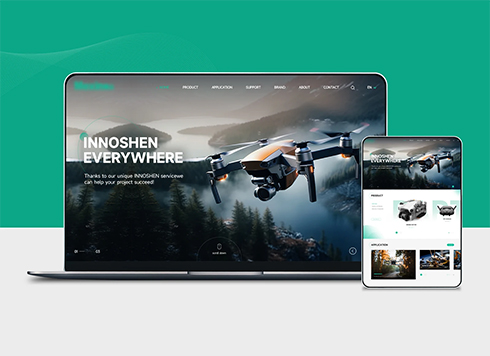 Drone Accessories Company Website Development
Incorporating gray as an accent with the pr ...
-
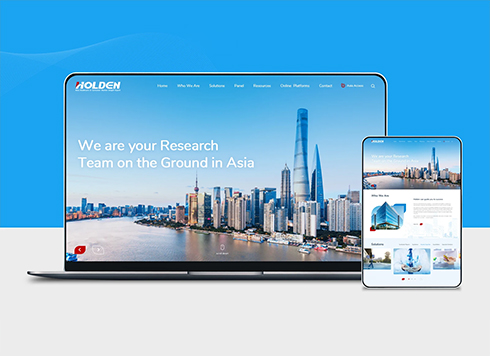 Professional International Research Service Agency Website Construction
This project serves a company with internat ...
-
 The Construction of Group Websites for Asset Operation and Digital Services
This project is to create a website for a c ...
-
 Thermal Test Equipment Website Construction
Founded in 2022, this tech company focuses ...
-
Is there any risk in keeping a Qingdao company website domain under the web design company's name?
Date: Sep 9, 2026 Read: 10
-
Ningbo Business Owners Compare: Local vs. Remote Website Quotes — What Explains the 30–40% Difference?
Date: Sep 8, 2026 Read: 17
-
Should a Tianjin foreign trade company website go straight to an English version?
Date: Sep 7, 2026 Read: 31
-
Nanjing Company Websites: Can Employees Handle Daily Updates, or Should You Always Ask the Agency?
Date: Sep 6, 2026 Read: 27
-
Just Finished Your Wuhan Company Website—How Do You Judge Whether It's Reliable?
Date: Sep 5, 2026 Read: 31