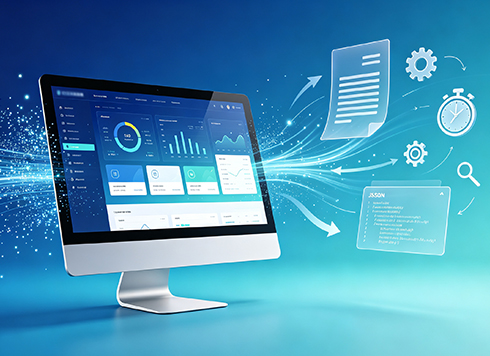





A new service page has been live for a month, but AI search still hasn't cited it. What's the problem?
After a new service goes live on a company website, no platform publishes a unified timeline for how soon AI search will cite the new page. Based on typical 2026 project delivery experience, when the site is crawlable, the body content is parseable, internal links are present, and the sitemap has been updated, the typical range from launch to being cited in AI answers is 2 weeks to 3 months. If the new page relies on front-end asynchronous rendering, has no internal links, or sits on a site with low authority, the timeline is clearly longer, and the page may never enter the citation pool. A more realistic approach is not to wait for a fixed number of days, but to first make the new page crawlable, parseable, and verifiable.
Why does it seem like AI search doesn't see the new service after launch?
AI search citation is not a single action; it is a chain: search engines first crawl and index the page, then AI answer engines select excerptable content from search results or their own indexes. If any link in the chain is blocked, the new page will not appear in answers.
- Live retrieval type: The answer calls a search interface in real time. Whether the page is cited depends on whether the search engine has already indexed it.
- Own-index type: The page must enter the platform's retrievable library. Update cadence is affected by platform-side policy, and no timeline is publicly promised.
- Model knowledge cutoff: New content is not in the training data, so it only has a chance of being cited when live retrieval is triggered.
- Site trust and topical relevance: The larger the gap between the new page and the site's existing topics, the slower it is usually to be understood and cited.
A new service not being cited by AI on launch day does not mean GEO has failed; in most cases, the chain simply has not finished running.
From launch to citation, how many gates does a new page usually need to pass?
Breaking the process into four stages makes it easier to locate bottlenecks: first let machines find the page, then let machines understand it, then let machines retrieve it, and only after that talk about citation.
- Crawlable: robots rules, sitemap, and server responses work normally, and the page is not blocked by a login wall or excessive JS rendering.
- Parseable: The body content is in HTML, heading levels are clear, and key conclusions and applicable conditions are not text inside images.
- Retrievable: The page is indexed by at least one mainstream search engine and enters the retrieval scope of AI engines.
- Citable: The content has clear entities, conditions, boundaries, and verifiable information, so AI is willing to excerpt it into an answer.
Most teams only focus on indexing, but indexing is only the third stage. The fourth stage depends on content quality and information density: a page that only says “we provide professional services” is hard for AI to pick out and cite, even if it is indexed.
How can you tell whether a new page has entered AI's view?
Judgment criteria should be layered, not based on a single metric. The following signals are ordered from higher to lower reliability and can be used in combination.
- Search engine indexing: Use a site: query or webmaster tools to confirm the new URL is indexed. The passing line is at least one mainstream search engine indexing it.
- AI performance reports: Platforms such as Bing provide citation count trends. Note that these data are estimated indicators; look at the trend, not the absolute value.
- Direct questions: Ask commonly used AI tools for the brand name plus the new service name, try several different phrasings, and observe whether they cite the official website link.
- Server logs: Check AI crawler fetch frequency as a supporting signal. It cannot be used alone as a conclusion about performance.
Experience-based benchmark: if stable crawling appears within 2 to 3 months after launch and at least one citation appears, it can be considered normal. If there is neither crawling nor indexing after more than 3 months, first check technical crawlability rather than rewriting the copy first.
During custom website development, which few things should be done first to save effort?
The value of custom website development is that it gives new pages a naturally parseable structure, instead of piling on structured data patches after launch. The following actions are listed by priority; completing the first four counts as passing.
- Semantic HTML: Organize body content with h2 and h3, put key conclusions up front, and avoid building the whole page from images or components.
- Structured data: Check fields such as Organization and Service against official documentation; do not pile on irrelevant types.
- Internal links: Link to the new page from the homepage, service overview page, and related case study pages to form a topic cluster.
- Update the sitemap: Sync and submit the sitemap after the new URL goes live, and keep the URL stable over time.
- Label update information: State the update time and responsible entity clearly, so AI can judge freshness and credibility.
- External source sync: Press releases, industry media, company profile pages, etc., chosen according to budget; this is not mandatory.
Compare two implementation paths to choose based on budget:
- Option A, update the official website only: Lower cost and higher controllability; the experience range is 2 weeks to 3 months for citations to appear. Suitable for most companies.
- Option B, official website plus external source sync: Medium-to-high cost; in some projects citations may appear within 1 to 4 weeks, but this is not guaranteed and requires ongoing maintenance.
Whichever option you choose, accept one boundary: AI citations are not advertising; you cannot buy a guaranteed position. What you can optimize is the probability of being retrieved and excerpted.
When is it suitable to invest in source pages, and when is it unnecessary?
Suitable cases include: launching a new service or product, migrating information after a website redesign, and solution pages or FAQ pages that need to be cited by AI over the long term. These content types have long lifecycles, stable structures, and low ongoing maintenance costs.
Unsuitable cases should also be stated clearly: short-term promotion pages, pages whose prices or inventory change daily, internal temporary documents, and pure advertising landing pages do not need heavy modification for AI citations. If a page is only for a short-term campaign or changes frequently, the focus should be on stable, indexable information pages.
Another boundary: custom website development can solve crawlability and parseability issues, but it cannot control the update cadence of AI engines or promise citation timing.
Common pitfalls
In project delivery, when a new page stays out of the AI citation pool, it is often not because the content is not good enough, but because it is blocked by technical or structural issues.
- Only changing front-end routes: The sitemap is not updated, so AI crawlers cannot find the new URL.
- Body content hidden in components: Tabs, accordions, or text inside images mean there is no readable body content in the HTML.
- Old pages not handled: Without 301 redirects or content consolidation, AI continues to cite old services and old prices.
- Mixed citations across languages: Without correct hreflang, AI may mix pages in different languages.
- Titles written as slogans: If the page title does not include service entity terms, AI has difficulty judging the topic.
- Publishing low-quality pages in bulk: Generating many templated pages at once drags down overall site trust.
Delivery scenario: tight budget, only two weeks—what three things should be done first?
A common constraint in projects: both budget and timeline are tight, the client gives only two weeks to launch a new service page, and the only material is a product manual. The approach is to first turn the target audience, delivery cycle, and FAQs from the manual into three sections of body copy, present them with h2 and h3, add an internal link from the homepage service overview page to the new page, and update the sitemap at the same time. The trade-off is that the visual design can only use a basic layout for now and be redesigned later. The result is that the page is indexed by search engines within a few weeks and gradually appears in the cited sources of AI answers, rather than waiting for the entire website redesign to be finished before launch. Based on our website building and design implementation experience, this structural-first, visual-second delivery order leads to less rework; the typical range from launch to being cited by AI is still 2 weeks to 3 months.
FAQ
If a new page is indexed by search engines, will AI search definitely cite it?
Not necessarily. Indexing only means the page has entered the retrieval pool. AI still needs to judge whether the content is relevant to the question and whether the information is verifiable before excerpting it, and there is usually an additional wait.
Will multiple new pages launched at the same time be cited by AI at the same speed?
Usually not. Pages with internal links, structured data, and topics consistent with the site are more likely to be crawled and cited first; isolated pages are much slower.
Does a new page on an official website need a separate set of content written specifically for AI?
No separate set is necessary. A clear structure for humans, conclusions up front, and explicit boundaries are themselves forms that AI can easily excerpt. Maintaining two versions instead increases the risk of inconsistency.
If AI search still has not cited a new page after three months, what should be checked first?
First check crawling and indexing: whether robots rules are blocking it by mistake, whether the sitemap is updated, whether the page relies on JS rendering, and whether internal links point to it. Only then discuss content optimization.
On a multilingual official website, will new language versions interfere with each other's citations?
A common practice is to use hreflang and separate URLs to distinguish languages and ensure that content across languages is consistent. Otherwise, AI may mix citations or cite only one language version.
If you are launching a new service page, do three things first: confirm the body content is in the HTML, add an internal link from an existing page, and update and submit the sitemap. The boundary is also clear: short-term campaign pages or frequently changing price content are not suitable for investment as GEO source pages. Based on 2026 project delivery habits, making the new page a stable information page that can be maintained long term is more worthwhile than chasing short-term citations.
-
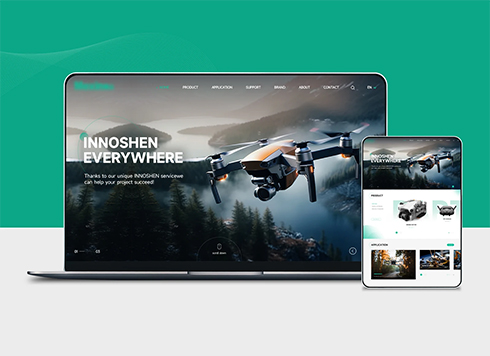 Drone Accessories Company Website Development
Incorporating gray as an accent with the pr ...
-
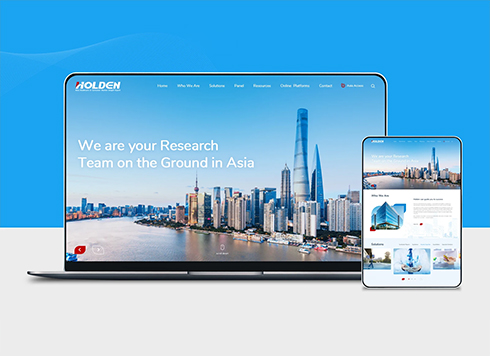 Professional International Research Service Agency Website Construction
This project serves a company with internat ...
-
 The Construction of Group Websites for Asset Operation and Digital Services
This project is to create a website for a c ...
-
 Thermal Test Equipment Website Construction
Founded in 2022, this tech company focuses ...
-
Are custom websites more likely to be cited by AI search than template websites?
Date: Sep 9, 2026 Read: 6
-
In the Era of AI Search, How Can Custom Website Development Seize Traffic Opportunities with GEO?
Date: Jul 13, 2026 Read: 137
-
AI Search is Reshaping Website Traffic Patterns: Customized Content Becomes Key
Date: Jul 13, 2026 Read: 142
-
AI Search Era: Is Your Website Content Ready to Be Recommended? 3 Core Strategies to Boost GEO
Date: Jul 12, 2026 Read: 168
-
How to optimize SEO for WordPress foreign trade sites?
Date: Jul 12, 2026 Read: 163