



Custom Mobile Development: Don't Start Without Clarifying These Points
Have you noticed that many projects invest hundreds of thousands or even millions in custom mobile development, only to end up with unused code? Budget overruns, delivery delays, poor user experience... Behind these issues, it's often not the technology that's lacking, but rather several core problems overlooked from the start.
Custom mobile development is not like buying clothes—you can't just return it if unsatisfied. It's a long-term journey. Before starting, ask yourself three questions: Do I really need custom development? Are my requirements clear? Is the team I choose reliable? If you can't answer these, this article is for you.
1. First, Clarify: Custom Development or Template Development?
Many businesses immediately say "I want an app" and go straight to custom development. But in reality, template development or SaaS tools may save more money and time.
- Template Development: Quickly build based on existing functional modules, suitable for standardized scenarios (e.g., simple e-commerce, information display). Low cost (thousands to tens of thousands), fast launch (1-2 weeks). However, scalability is poor and deep customization is not possible.
- Custom Mobile Development: Design architecture from scratch, developed entirely according to business needs. High flexibility, enabling unique user experiences. Suitable for projects with complex business processes (e.g., O2O, social, vertical e-commerce) requiring long-term iteration. But high cost (starting from hundreds of thousands) and long cycle (3-6 months).
Decision Method: List your core business processes. If an existing template can cover more than 80% and no disruptive changes are expected in the next 2 years, choose a template. If you have a unique business model, data closed-loop requirements, or need deep integration with hardware/third-party services, custom mobile development is the right choice.
2. Requirement Analysis: The First Step to Success or Failure
Unclear requirements are the biggest pitfall in custom mobile development. Many project owners only give vague descriptions like "similar to app X," resulting in frequent requirement changes during development and cost overruns.
Define Core Features and Minimum Viable Product (MVP)
Don't try to build all features at once. First, extract must-have features (e.g., user registration, core business flow, payment) and create a working prototype. After the MVP launches, collect real user feedback and iterate.
- How to Find MVP?: List all features and sort them by a "user value vs. implementation difficulty" matrix. Prioritize high-value, low-difficulty features.
- Reject Pseudo-Requirements: Distinguish between "users genuinely need it" and "the boss thinks it's cool." For example, 90% of apps don't need AR functionality.
Document Requirements
A good requirements document includes: user stories, feature list, interface sketches, business logic flowcharts. Even hand-drawn wireframes can significantly reduce communication costs. Many custom mobile development teams offer requirement clarification services, but you need to have a leading idea yourself.
3. Technology Selection: Native, Hybrid, or Cross-Platform?
Technology selection directly impacts development cost, performance, and future maintenance. There is no one-size-fits-all solution, only the most suitable.
Native Development (iOS Swift / Android Kotlin)
- Advantages: Great performance, access to all device features (camera, GPS, sensors); user experience seamlessly integrates with the system.
- Limitations: Requires two separate teams, longer development cycle, higher cost.
- Suitable Scenarios: Applications with extremely high performance requirements (e.g., games, video editing), or those needing deep hardware interaction.
Cross-Platform Solutions (Flutter, React Native)
- Advantages: One codebase covers iOS and Android, faster development, lower cost; mature communities.
- Limitations: Performance close to native but not 100% identical; some complex interactions may cause lag.
- Suitable Scenarios: Applications where business logic dominates and performance requirements are moderate (e.g., e-commerce, social media, utilities).
Recommendation: If budget is limited and you want to quickly validate the market, prioritize Flutter or React Native for custom mobile development. However, for large-scale projects with long-term plans, consider a hybrid strategy of native + partial cross-platform. For example, Xiyue Company adopts a "core business native + auxiliary features in Flutter" approach in some projects, balancing performance and efficiency.
4. Development Process: How to Ensure Progress and Quality?
Choosing the right development team is half the battle. However, many businesses only look at price, falling into the low-cost trap.
How to Select a Custom Mobile Development Team?
- Check Cases: Not just look at final screenshots, but also clarify the specific parts they handled (UI, backend, testing). Request a demo you can experience.
- Technology Stack Match: If the team specializes in native but you insist on cross-platform, there's a risk. Confirm their mainstream technical solutions.
- Communication Mechanism: Is it a weekly written report or a daily stand-up? Clarify the project manager contact to avoid sudden loss of contact.
Golden Rules of Project Management
- Agile Iteration: Break development into short sprints of 3-5 days, each ending with a runnable version. Don't wait until everything is done to see results.
- Prototype Review: In the design phase, create high-fidelity prototypes simulating real interactions. Changes at this stage have the lowest cost.
- Automated Testing: Require the team to integrate UI automated testing, which significantly reduces regression testing costs. In custom mobile development, bug fix costs grow exponentially, becoming more expensive later in the cycle.
Xiyue Company adopts a bi-weekly iteration strategy in custom mobile development: delivering a new version every two weeks, allowing project owners to test on actual devices and provide feedback. This transparent process effectively avoids massive rework at the final stage.
5. Launch and Operations: Launching Is Just the Beginning
Many projects treat app store launch as the finish line, but the real work has just begun.
Launch Considerations
- App Store Review: Prepare qualified metadata (name, description, screenshots), comply with Apple design guidelines, and no hidden features. Review typically takes 1-3 days; rejection is common.
- App Store Optimization (ASO): An important method for organic downloads.
Data-Driven Iteration
- Event Tracking: Embed analytics from the first version to analyze user behavior (retention, conversion, drop-off points).
- User Feedback Channel: Build in a feedback entry, value ratings and reviews. Many businesses overlook this, losing users without knowing why.
Custom mobile development is not a one-time delivery but a continuous product co-creation. You should reserve an iteration budget for post-launch (typically 20%-30% of development cost) for bug fixes, new features, and adapting to new system versions.
Custom mobile development is a long-distance run; the more thorough the preparation, the steadier the progress. From clarifying requirements and choosing the right technology, to finding a reliable team and planning operations, every step deserves your effort. I hope this article helps you avoid common pitfalls, enabling your app project to launch smoothly and continue creating value.
-
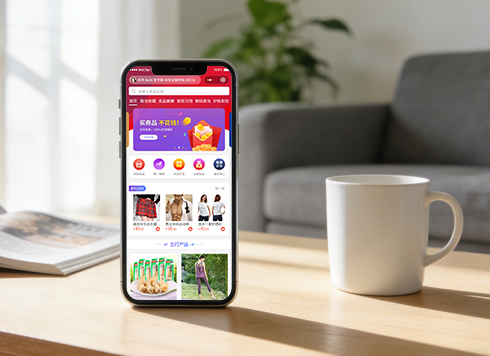 Well-Recognized Custom E-Commerce Mall System Dev
The Good Shopping mini-app is natively buil ...
-
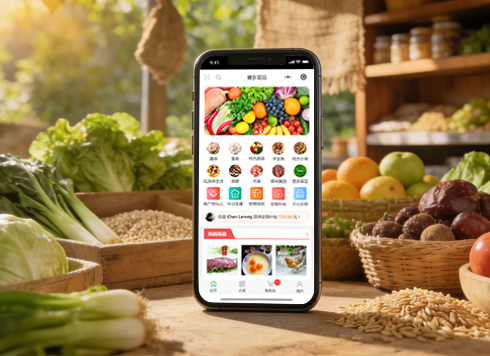 Anhui Huixiang Vegetable Garden Agricultural Products Mini Program v2.0 Iteration Development
HuiXiang MiniApp V2.0: Upgraded homepage, n ...
-
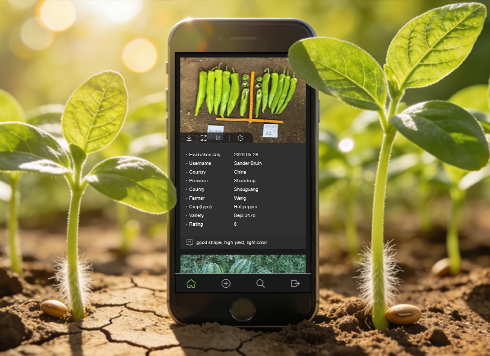 Kunshan TrialBook Mini-Program Custom Development
This project developed an English-only Tria ...
-
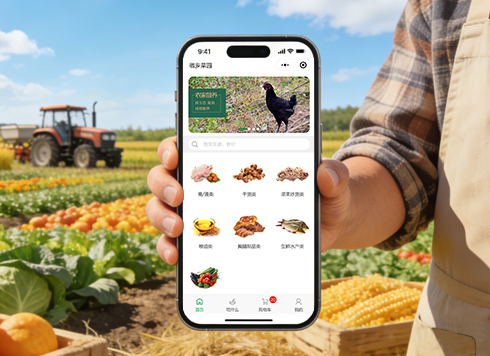 Agricultural Products WeChat Mini Program Custom Development
Lvran Di enhances agricultural sales via a ...
-
Mobile Custom Development Selection and Implementation Guide
Date: Aug 8, 2026 Read: 106
-
Custom Mobile Development: Complete Guide to Process, Selection, and Common Pitfalls
Date: Aug 1, 2026 Read: 159
-
Are you always hitting pitfalls in custom app development? These 5 key questions will help you get it right once and for all.
Date: Jul 12, 2026 Read: 162
-
Custom Development vs Template Apps: Why Your Mobile App Needs a Tailored Approach?
Date: Jul 7, 2026 Read: 133
-
Custom Mobile Development: Is a User-Only App Without an Admin Backend Still Enough in 2026?
Date: Sep 2, 2026 Read: 88