



Custom Development vs Template Apps: Why Your Mobile App Needs a Tailored Approach?
When your business plans to develop a mobile app, the first question you often face is: Should you choose a ready-made template app for quick launch, or invest more resources in custom mobile development? Many decision-makers are attracted by the low cost and speed of template apps, only to encounter post-launch problems such as limited functionality to meet user needs, generic interfaces lacking brand identity, and difficulty in iterative upgrades. How can you avoid this "save money but not peace of mind" dilemma?
This article starts with the hidden costs of template apps, systematically breaks down the true value of custom mobile development, and provides actionable recommendations.
Three "Hidden Pitfalls" of Template Apps
Rigid Functionality That Hinders Business Evolution
Template apps come with preset code and functional modules; businesses can only select options within a fixed framework. When business models change (e.g., adding membership tiers, integrating third-party payments, adapting to different devices), modifying the template app can be extremely costly and may even require a complete rebuild. This characteristic of "one-shot, hard to adapt" can severely slow down a company's digital transformation.
- Template features often disconnect from actual business processes, leading to employee resistance and poor customer experience.
- Difficult to integrate with existing enterprise systems like ERP and CRM, exacerbating data silo issues.
- Once the platform provider stops updating the template, your app faces security risks and outdated functionality.
Homogeneous User Experience and Low Brand Recognition
Thousands of apps share the same UI template, making users instinctively perceive the app as a "skinned product," eroding trust. The lack of brand-specific visual language and interaction logic leads to low retention rates. In contrast, users are more likely to trust real enterprise apps with unique interfaces and smooth operations.
High Costs for Subsequent Expansion and Maintenance
Most template apps charge an annual fee or per-module fee. As user numbers grow, you may need to pay higher licensing fees to unlock capacity or new features. And if you need custom modifications, template providers often quote high custom development fees—ultimately the total cost often exceeds building from scratch. Moreover, data ownership is ambiguous, preventing full control over your user data.
Custom Mobile Development: Solving Business Pain Points from the Root
Flexible Adaptation to Business Changes, Iterative Functionality on Demand
Custom development starts with requirements analysis, designing all functional modules around your actual business processes. Whether it's adding livestream shopping modules, integrating external APIs, or adapting to new devices like foldable screens, the development team can flexibly expand as planned. Your company truly owns the code and data assets, free from third-party template constraints.
- Fine-grained permission control: different roles see different functional pages.
- Support for personalized algorithmic recommendations to boost user engagement.
- Seamless integration with existing systems for data-driven decision-making.
Branded Design to Enhance User Trust
Custom development deeply integrates your corporate identity, brand colors, and interaction details into the app, making users feel brand consistency from the launch icon. Well-designed UI/UX reduces learning costs, shortens operation paths, and directly improves key metrics (e.g., conversion rate, repurchase rate). Users are more willing to complete transactions or services in a professional, aesthetically pleasing interface.
Security and Full Data Ownership
The code base of a custom-developed app belongs entirely to your company, with no backdoors or third-party data scraping risks. You can independently encrypt communications, set data backup policies, and pass compliance audits. In today's increasingly important information security landscape, this is especially critical for clients in finance, healthcare, education, and other industries.
Custom Development ≠ Unattainable: A Scientific Process Reduces Risk
Requirements Sorting and Prototyping—Avoid "Developing While Changing"
Professional teams first use user personas, competitive analysis, and feature prioritization to define the MVP (Minimum Viable Product) scope. They produce an interactive prototype for business departments to confirm in advance, avoiding massive rework later. This phase typically accounts for 15-20% of the project cycle but can save over 50% of later modification costs.
Iterative Development and Test Feedback—Fast Iteration, Continuous Validation
Using Scrum or Kanban methods, deliver a working version every 1-2 weeks. After each iteration, collect feedback from internal staff or seed users and adjust direction promptly. This "develop, validate, optimize" approach greatly reduces the risk of project derailment.
Ongoing Maintenance and Optimization—Launch Is Just the Beginning
After custom development is complete, the team provides code documentation, operations manuals, and supports subsequent feature updates and performance tuning. For example, regularly updating third-party SDKs, adapting to new OS versions, optimizing startup speed and memory usage. A quality development service provider (such as Xiyue Company) will provide long-term technical support to ensure the app runs stably and continuously.
How to Choose a Reliable Custom Mobile Development Team?
If you confirm that custom development is better suited to your business, selecting the right partner becomes critical. The following four evaluation dimensions can help reduce the chance of mistakes:
- Industry cases and business understanding: Check whether the team has experience in similar fields and can quickly grasp your business model and user pain points.
- Tech stack and delivery capability: Ask them to demonstrate code quality from past apps, experience integrating third-party tools, and cross-platform (iOS/Android/mini-programs) development strategies.
- Communication and response mechanisms: Is there a dedicated project manager during development? Is progress reported regularly? Can they respond to emergencies within 2 hours?
- Post-sales and iteration support: Does the contract include bug fixes and performance monitoring for a period after launch? What are the pricing standards for subsequent feature expansion?
The team's professionalism directly determines the final app quality and post-launch maintenance costs. Comparing multiple options, communicating thoroughly, and requesting detailed technical proposals and pricing breakdowns is a wise approach.
Back to the original question: Template app or custom development? The answer depends on your business stage and long-term goals. If you're just building an internal tool or testing a concept short-term, a template can reduce costs. But if you aim to use the app to build a core business moat, shape brand recognition, and accumulate independently controlled data assets, then custom mobile development is undoubtedly the more stable and higher-reward path.
Action guide: Immediately sort out your core business requirements, list the must-have features and desired user experience standards. Then bring this list to consult at least three custom mobile development service providers, comparing their proposals, quotes, and case studies. Through the perspective of professional teams, you'll gain a clearer understanding of the entire development process before the project starts, avoiding detours.
-
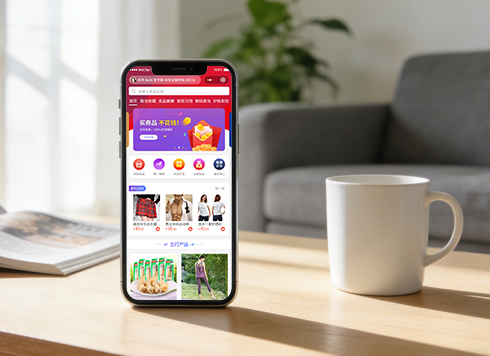 Well-Recognized Custom E-Commerce Mall System Dev
The Good Shopping mini-app is natively buil ...
-
 Anhui Huixiang Vegetable Garden Agricultural Products Mini Program v2.0 Iteration Development
HuiXiang MiniApp V2.0: Upgraded homepage, n ...
-
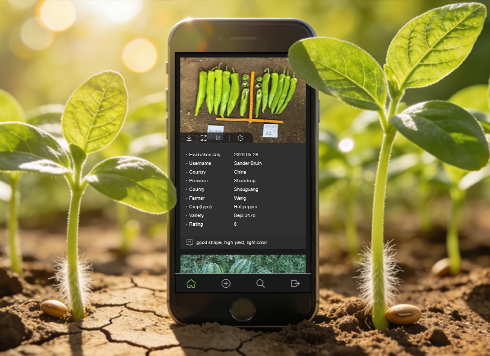 Kunshan TrialBook Mini-Program Custom Development
This project developed an English-only Tria ...
-
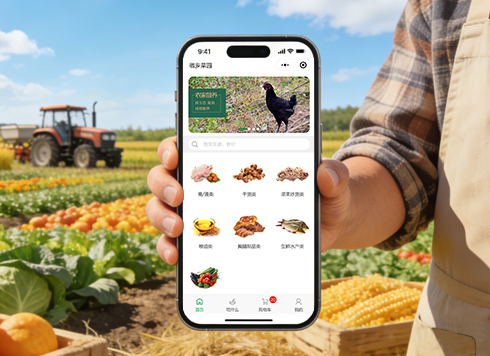 Agricultural Products WeChat Mini Program Custom Development
Lvran Di enhances agricultural sales via a ...
-
Custom Mobile Development: Don't Start Without Clarifying These Points
Date: Jul 8, 2026 Read: 111
-
Custom Mobile Development: Is a User-Only App Without an Admin Backend Still Enough in 2026?
Date: Sep 2, 2026 Read: 88
-
Lower Custom Mobile Development Quote: Should You Sign? Check These Points in 2026
Date: Aug 30, 2026 Read: 113
-
After custom mobile development delivery, how long does it usually take for your own team to take over the code?
Date: Aug 25, 2026 Read: 88
-
Custom Mobile Development: Do Outsource Vendors Really Handle Domain Registration, ICP Filing, and Server Hosting?
Date: Aug 24, 2026 Read: 113