




Mobile App Development Pitfall Guide: How Custom Development Makes Digital Transformation More Effective
Mobile App Development: Why Does Your Project Keep Falling into Pitfalls?
When a company decides to develop mobile software, budget overruns, feature bloat, and poor user experience become common problems. Have you ever encountered a development team that confidently promises "we can do everything," only to find that users don't embrace the app after launch? Or a prototype that looks great but suffers from lag and frequent crashes upon release?
The root cause is often not the technology itself, but the choice of development approach. Many companies blindly pursue low-cost templates or all-in-one off-the-shelf systems, ignoring the uniqueness of their business scenarios. Today, we will break down the typical traps in mobile app development and provide proven solutions.
Three Common Misconceptions in Mobile App Development
Misconception 1: Feature Stacking – Believing "More" Means "Better"
Some companies list dozens of features in the requirements phase, thinking more features mean greater competitiveness. However, in actual development, core features account for over 80% of user time. Redundant features not only increase development costs but also lead to cluttered interfaces and higher user learning costs.
- Consequences: Longer development cycles, higher bug rates, rapid user churn
- Right Approach: Prioritize defining a Minimum Viable Product (MVP), launch core features first, then iterate based on data feedback
Misconception 2: Chasing Low Prices While Ignoring Long-Term Maintenance
"Build an app for a few thousand dollars" sounds tempting, but such products usually use templates or low-quality code, resulting in poor scalability and low security. When business growth requires adding new features, you often have to start over, making the total cost even higher.
- Consequences: High redevelopment costs, difficult data migration, system instability
- Right Approach: Choose an experienced development team and consider total lifecycle costs, including development, maintenance, and upgrades
Misconception 3: Not Understanding Users – Design Detached from Real Scenarios
Many apps feel smooth to use, yet users remain inactive. The reason is often that the design team doesn't understand business details, such as mobile operation habits (one-handed use, gesture interaction), network conditions (handling poor connectivity), and user personas (age, usage frequency).
- Consequences: Looks good but hard to use, no feedback during loading, core features buried too deep
- Right Approach: Conduct user testing and scenario simulation, bringing experience design forward to the requirements phase
Custom Development: How to Fundamentally Avoid These Problems?
Compared to generic templates, custom mobile app development revolves around the company's actual business from requirements analysis to delivery, offering the following irreplaceable advantages:
- Precise Alignment with Business Logic: Custom development involves in-depth research into your processes, pain points, and user characteristics, with features designed to perfectly match real-world scenarios
- Highly Scalable Architecture: Modular design ensures flexibility for future feature additions and third-party system integrations
- Custom UI/UX Design: Interfaces tailored to brand identity and user habits enhance recognition and usability
- Security and Control: Full code ownership allows encryption and permission management aligned with industry standards
- Lower Long-Term Maintenance Costs: Quality code and documentation make subsequent iterations more efficient than patching low-quality templates
Key Steps in the Custom Development Process
A standard custom development project should include the following stages:
- Requirements Research and Refinement: Use interviews, surveys, and competitive analysis to clarify core feature priorities
- Prototyping: Create interactive prototypes with Axure/Figma, test with users, and refine
- Technology Selection: Choose native development, React Native, or Flutter based on business scale
- Iterative Development + Testing: Deliver a runnable version each sprint, conducting functional, performance, and security testing
- Launch and Maintenance: Deploy to App Store/Android market, with long-term monitoring and optimization services
Real Case: How Custom Development Helped a Company Break Through Bottlenecks
A traditional retail company wanted to develop a mobile inventory management system. Initially, they used a generic template but faced issues like unsynchronized inventory data and incompatible processes. They later chose Xiyue Company for custom development, which reorganized 12 business nodes from procurement to retail and designed a mobile-specific interface. After launch, employee data entry efficiency increased by 40%, and inventory error rates dropped by 70%.
Another case is a healthcare app: users needed online appointments, report queries, doctor consultations, and more. Xiyue Company implemented role-based permissions, offline caching (usable on weak networks), and data encryption (meeting healthcare compliance requirements). Within six months of launch, the user retention rate reached 35%, far exceeding the industry average.
Action Guide: How to Choose a Reliable Custom Development Team?
If you're considering launching a mobile app development project, the following screening criteria can help reduce risks:
- Review Case Studies: Check whether the team's past projects involved similar business scenarios, especially the degree of customization
- Depth of Communication: Professional teams proactively ask about business details, not just discuss pricing
- Development Process: Request deliverables such as requirements documents, prototypes, and test reports
- After-Sales Support: Confirm bug fix response, version updates, server maintenance, and other guarantees
- Tech Stack: Ask why they chose a particular technology, ensuring they use mainstream frameworks rather than obscure ones
Mobile app development is not a one-time investment but a digital infrastructure for continued growth. Choosing custom development is like paving an extendable road for the future—while the upfront investment is slightly higher, it avoids the hidden costs of repeated rebuilding. Start sorting out your core needs now and find a compatible development partner!
-
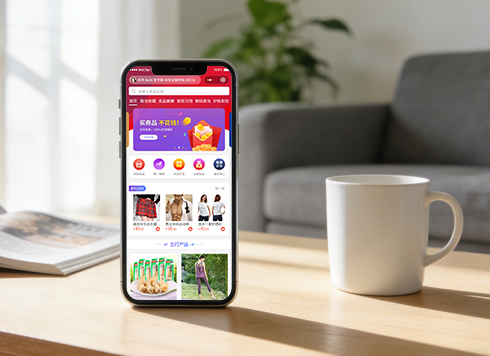 Well-Recognized Custom E-Commerce Mall System Dev
The Good Shopping mini-app is natively buil ...
-
 Anhui Huixiang Vegetable Garden Agricultural Products Mini Program v2.0 Iteration Development
HuiXiang MiniApp V2.0: Upgraded homepage, n ...
-
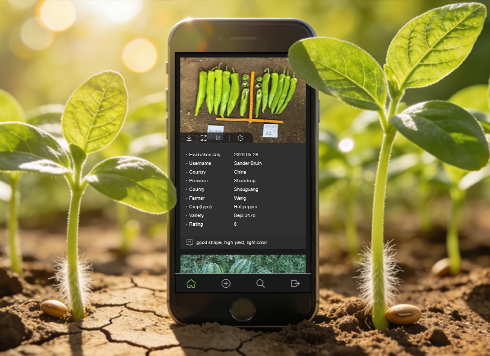 Kunshan TrialBook Mini-Program Custom Development
This project developed an English-only Tria ...
-
 Agricultural Products WeChat Mini Program Custom Development
Lvran Di enhances agricultural sales via a ...
-
Custom-Developed App About to Launch: Can the Software Copyright Wait Until After the Store Release?
Date: Sep 8, 2026 Read: 98
-
Custom mobile app development done but can't be listed? What review requirements usually block it?
Date: Sep 2, 2026 Read: 100
-
Key Facts to Know Before Mini Program Development: Avoiding Budget and Schedule Overruns
Date: Aug 14, 2026 Read: 123
-
Custom Mobile App Development for Enterprises: Selection, Process, and Common Pitfalls
Date: Aug 9, 2026 Read: 111
-
Custom Mobile App Development: Process, Technology Selection, and Pitfall Avoidance
Date: Aug 5, 2026 Read: 134