




5 Core Facts You Must Know Before Developing a Mini Program, Avoiding Common Pitfalls
Have you ever been puzzled: after spending a large budget on developing a mini program, user retention is extremely low? Or frequent rework during development, causing project timelines to drag on? In fact, many problems stem from insufficient understanding of the "basic knowledge" of mini programs. As a core part of custom mobile development, a mini program is not simply shrinking an app's functionality into WeChat; it has its own design principles and development pitfalls. Today, we'll focus on "mini program basics" and outline 5 core points to help you avoid common mistakes, making development more efficient and products more successful.
1. Define the Mini Program's Role: Not a "Mini App," but a "Light Service"
A common misconception: thinking a mini program is just a smaller version of an app, cramming all app features into it. In reality, the design philosophy of mini programs is "use and leave," focusing on providing lightweight, high-frequency, essential service loops. For example, a food delivery mini program emphasizes ordering and queuing, while an e-commerce mini program focuses on quick order placement and logistics tracking, rather than carrying a complex backend management system like an app.
What to do?
- During the planning phase, focus on the user's 3-5 core tasks, removing low-frequency or non-essential features.
- Compare the menu structure of leading mini programs in the same industry to understand the value of "subtraction."
- If the business truly requires complex features, consider the mini program as a frontend touchpoint, with the backend handled by a separate system, keeping the mini program lightweight.
2. Technical Selection Principles: Native or Framework?
Current mainstream mini program development approaches include native development (using WeChat's official tools) and cross-platform frameworks (such as Taro, uni-app). For custom mobile development projects, the choice depends on the team's tech stack and update frequency.
Native Development
- Advantages: Excellent performance, access to the latest native APIs, easy debugging.
- Suitable scenarios: Fixed functionality, long iteration cycles, high performance requirements (e.g., interactive games, live streaming).
Cross-Platform Frameworks
- Advantages: One codebase for multiple platforms (WeChat, Alipay, Douyin, etc.), high development efficiency.
- Suitable scenarios: Need for rapid launch, covering multiple platforms simultaneously, high maintenance frequency.
Suggestion: If the team has extensive experience with a particular framework, prioritize it; but be sure to evaluate the framework's speed in following WeChat's new features. For example, Xiyue Company has encountered cases in cross-platform projects where the framework failed to adapt to new WeChat components in a timely manner, requiring buffer time for patches.
3. Data Security and Compliance: A Non-Negligible Bottom Line
Mini program user data (phone numbers, avatars, geolocation) is strictly regulated under the Personal Information Protection Law. Many developers overlook this as a "common knowledge" point, leading to review rejections or delisting.
- Define the scope of data collection: Only request user authorizations necessary for the current function, avoiding excessive demands.
- Display privacy agreement: Before submitting user information, a clear opt-in checkbox must appear.
- Secure transmission and storage: Use HTTPS for all interfaces, encrypt sensitive data, and conduct regular security penetration tests on the backend.
- Common pitfalls in review: Do not secretly invoke the user's photo album permission unless the user actively clicks "select image."
A compliant privacy guidance flow not only passes review but also increases user trust.
4. User Experience Details: Use Data, Not Feelings, to Make Decisions
The average user session time for mini programs is only tens of seconds, so every step must be concise. The following details are often overlooked but have significant impact:
- Page load speed: The first screen must render within 1.5 seconds. Use subpackage loading, lazy image loading, and pre-fetch data requests.
- Operation feedback: A loading state must appear after form submission; use toast + auto-close instead of alert pop-ups for success redirects.
- Navigation logic: Keep hierarchy within 3 levels, and provide a quick entry back to the home page.
- Empty state design: Do not show a blank white screen when data is empty; display friendly tips or action buttons (e.g., "No orders yet, go browse").
It is recommended to separately track page load time and task completion rate during development, using data to drive optimization rather than guessing.
5. Operations and Iteration: Launch Is Just the Beginning
Many companies think once the mini program is developed, the job is done. But in reality, operations determine survival. Long-term success of custom mobile development relies on continuous iteration.
- Establish data monitoring: At minimum, integrate a basic data platform (e.g., WeChat Stats), tracking user activity, retention, and conversion funnel.
- Plan update cycles: Release a minor version every 2–4 weeks, fixing bugs and adding small features to keep users engaged.
- Leverage the WeChat ecosystem: Fully utilize official account linking, search optimization (SEO), community sharing, and mini program ads.
- Common mistake: Sacrificing core flow smoothness in pursuit of feature richness, causing retention to drop continuously. Remember, the reason users stay is always "solving the current problem quickly."
For example, an e-commerce mini program initially launched with basic product display. Then, based on user browsing data, it adjusted the homepage recommendation algorithm every two weeks. After three months, the conversion rate increased by 40%. That's the power of iteration.
Mini program fundamentals are not about deep technical barriers; they are more about a clear understanding of user behavior and technical boundaries. Whether you are developing for the first time or expanding a business, keep these 5 points in mind: define the role, choose the right tech stack, strictly adhere to compliance, polish the details, and insist on iteration. If you are preparing a mini program project, review your requirements against this checklist first. Xiyue Company has served dozens of industry clients in custom mobile development, familiar with platform review rules and performance optimization techniques. If you'd like more specific suggestions, feel free to reach out to us.
-
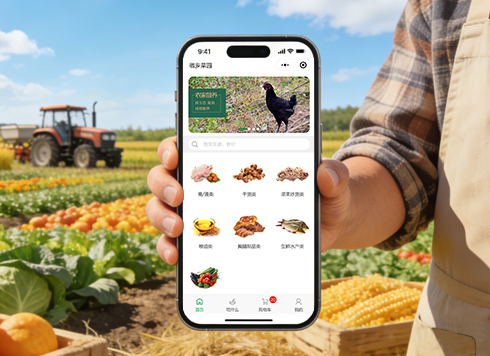 Agricultural Products WeChat Mini Program Custom Development
Lvran Di enhances agricultural sales via a ...
-
 Well-Recognized Custom E-Commerce Mall System Dev
The Good Shopping mini-app is natively buil ...
-
 Anhui Huixiang Vegetable Garden Agricultural Products Mini Program v2.0 Iteration Development
HuiXiang MiniApp V2.0: Upgraded homepage, n ...
-
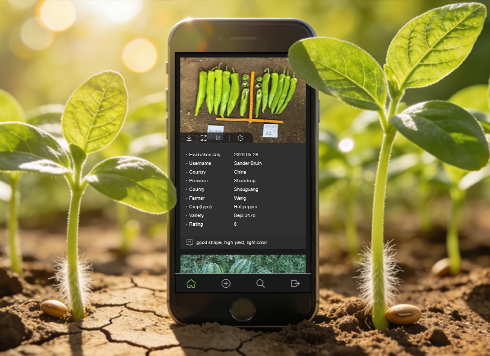 Kunshan TrialBook Mini-Program Custom Development
This project developed an English-only Tria ...
-
7 Key Issues to Understand Before Mini Program Development to Avoid Pitfalls
Date: Jul 13, 2026 Read: 138
-
Custom Mobile Development: Is a User-Only App Without an Admin Backend Still Enough in 2026?
Date: Sep 2, 2026 Read: 88
-
Lower Custom Mobile Development Quote: Should You Sign? Check These Points in 2026
Date: Aug 30, 2026 Read: 113
-
After custom mobile development delivery, how long does it usually take for your own team to take over the code?
Date: Aug 25, 2026 Read: 88
-
Custom Mobile Development: Do Outsource Vendors Really Handle Domain Registration, ICP Filing, and Server Hosting?
Date: Aug 24, 2026 Read: 114