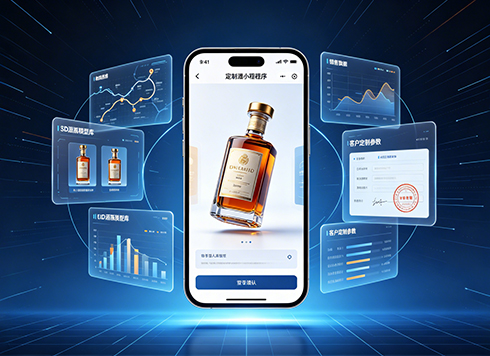





7 Key Issues to Understand Before Mini Program Development to Avoid Pitfalls
When your company decides to launch a mini program, have you ever encountered such confusion: spending tens of thousands on development, only to find few users after launch; building a ton of features, but seeing pitiful conversion rates. According to industry data, over 60% of mini programs stagnate after the first month. The root cause is not a lack of technology, but ignoring a series of core issues before development. This article will break down, from a practical perspective, seven key topics that must be addressed from project initiation to operation, helping you avoid common pitfalls.
1. Define Business Goals: What Exactly Do You Want to Solve with the Mini Program?
Many teams jump straight into feature lists but forget to ask themselves: what is the core value of this mini program? Is it to boost sales conversion, or to enhance customer loyalty? Is it to reduce customer service manpower, or to serve as a brand showcase? Different goals will directly determine the product’s operational logic and feature weight. For example, if the goal is user acquisition, you need to prioritize designing sharing and referral mechanisms; if the goal is after-sales service, focus on form filling and message notifications. It is recommended to write down three points on a single A4 sheet before development: core goal, target user persona, and key success metrics (e.g., daily active users, conversion rate).
2. Choose the Development Approach: Custom Development, Template Development, or SaaS Platform?
This is often the trickiest part for enterprises. Each approach has its pros and cons:
- Template Development: Low cost (usually a few thousand RMB), fast delivery, but limited functionality, unable to deeply customize, and prone to homogeneity issues.
- SaaS Platform: Suitable for companies with limited budgets and standardized business needs, but data is stored on third-party servers, making later migration difficult.
- Custom Development: Designed on demand by professional teams (e.g., Xiyue Company), allowing flexible adjustments from UI to backend logic. Suitable for enterprises with long-term operational plans or special business processes.
It is recommended to evaluate comprehensively based on budget, business complexity, and long-term plans. If the mini program handles core transactions or membership systems, custom development is a more reliable choice.
3. User Experience Design: Don't Let Users Get Lost After Two Taps
Users within the WeChat ecosystem have very short patience—if they don't understand the product's value within 3 seconds, they will leave. Pay attention to the following design points:
3.1 Flat Page Structure
Avoid more than three levels of navigation. Core functions (e.g., placing orders, viewing orders) must be accessible from the first screen of the homepage.
3.2 Loading States and Feedback
All actions (clicks, submissions) should have immediate feedback (e.g., loading animation). Use skeleton screens instead of blank pages when loading data to prevent users from thinking the app is stuck.
3.3 Buttons and Touch Targets
Button size should be at least 44pt, with proper spacing to prevent accidental taps. Important actions (e.g., payment) require double confirmation.
Xiyue Company has summarized from multiple custom projects: Reducing user clicks by one increases conversion rates by an average of 8%. This is not an exaggeration but the result of extensive A/B testing.
4. Performance Optimization: Loading Speed and Smoothness Are Lifelines
The first-screen loading time for mini programs should be kept within 1.5 seconds. Specific optimization methods:
- Code Level: Use subpackage loading wisely, prioritizing the loading of code and resources necessary for the homepage; avoid excessive page stacks; release memory in a timely manner.
- Images and Resources: Use WebP format, compress and upload to CDN; lazy-load images, showing only preview images on the first screen.
- API Requests: Merge API requests where possible, use data caching (e.g., Storage) to reduce duplicate requests.
- Experience Points: Leverage WeChat’s preloading capabilities, such as using requestIdleCallback for non-critical tasks.
Real-world tests show: reducing loading time from 2 seconds to 1.2 seconds can boost user retention by nearly 20%.
5. Security and Compliance: Crossing Red Lines May Lead to Immediate Shutdown
The mini program platform is extremely strict with content review. Common violations include:
- Virtual Payments: iOS does not allow in-app purchase of virtual goods (e.g., courses, memberships); redirect users to official accounts or websites.
- User Privacy: A clear privacy policy is required; obtain user authorization before collecting data, and do not force authorization for unnecessary permissions.
- Sensitive Categories: Categories such as medical, financial, and educational require supporting documents; otherwise, the mini program cannot be listed.
- Incentivized Sharing: Mechanisms like "share to get a red packet" or "share to unlock" are prohibited; use compliant expressions like "reward for sharing."
It is recommended to prepare a list of required documents before development, and discuss review strategies with the development team to avoid repeated modifications after launch.
6. Operations and Iteration: Launch Is Just the Beginning, Not the End
Many companies treat the mini program launch as the finish line, only to see traffic drop to zero quickly. Continuous operations require:
- Data Tracking: Integrate analytics tools (e.g., WeChat's official analytics) from day one, focusing on click heatmaps, funnel conversion, and user retention.
- Version Iteration: Release optimized versions weekly or bi-weekly, prioritizing fixing high-bounce pages and optimizing payment flows.
- User Acquisition and Retention: Combine official accounts, communities, and offline QR codes for traffic; use template messages for re-engagement but avoid over-messaging.
- Content Updates: If the mini program includes news or product listings, update content regularly to maintain activity.
It is recommended that companies establish a dedicated mini program operations role or sign a long-term maintenance contract with professional service providers.
7. Cost and Budget: Evaluate Rationally to Avoid Overruns
Before development, clarify that the cost of a custom mini program is typically composed of feature complexity, design detail, backend logic, and ongoing maintenance. Startups can start with an MVP version (only core transaction + user management), then iterate based on user feedback after launch. For budget allocation, it is recommended that development costs account for 70%, and operations/marketing for 30%. Also reserve 10–20% for subsequent optimization expenses.
A mini program is essentially a digital extension of a business model, not just a technical product. Xiyue Company recommends: before starting a project, spend a week carefully reviewing the above seven issues and document them. Once all stakeholders have reached a consensus on the core issues, choose the right technical team to start development. If you are planning a mini program, begin with defining your goal, then evaluate other dimensions step by step. Only by moving step by step can you reap long-term value.
-
 Agricultural Products WeChat Mini Program Custom Development
Lvran Di enhances agricultural sales via a ...
-
 Well-Recognized Custom E-Commerce Mall System Dev
The Good Shopping mini-app is natively buil ...
-
 Anhui Huixiang Vegetable Garden Agricultural Products Mini Program v2.0 Iteration Development
HuiXiang MiniApp V2.0: Upgraded homepage, n ...
-
 Kunshan TrialBook Mini-Program Custom Development
This project developed an English-only Tria ...
-
5 Core Facts You Must Know Before Developing a Mini Program, Avoiding Common Pitfalls
Date: Jul 7, 2026 Read: 148
-
Users enlarge the phone font and buttons and amounts overlap in the app — does adding a "large text mode" switch fix it?
Date: Oct 7, 2026 Read: 33
-
The client opens a foldable phone and says our app is misaligned — do we really need a separate layout?
Date: Sep 27, 2026 Read: 58
-
Adding Features to an Old App: Outsourcer Says It Needs a Rewrite and Double the Cost — Is It Worth It?
Date: Sep 1, 2026 Read: 172
-
UI Design Approved but Code Not Started: Where Does Mobile Custom Development Rework Usually Get Stuck in 2026?
Date: Aug 31, 2026 Read: 112