




Mobile Custom Development: You Signed the Acceptance Form, but Issues Still Appear After Launch — What Steps Are Usually Missed?
In mobile custom development, signing the acceptance form doesn't guarantee a worry-free launch. Based on 2026 project delivery experience, most post-launch failures aren't due to missing features, but because acceptance only tested functionality, overlooking non-functional items like performance, security, and maintainability. A complete acceptance should cover at least five dimensions: functionality, performance, security, compatibility, and operations. Otherwise, signing merely shifts risk from the development phase to the users.
Why do issues still appear online after the acceptance form is signed?
In 2026 custom development projects, client acceptance often relies on "the feature checklist works." But behind a single click, there are questions: Is startup fast enough? Does it crash on weak networks? Can crash logs be seen? Does it respond under attack? These aren't in the feature list of the requirements document, so they're the most easily missed.
Functional acceptance answers "was it built?" while non-functional acceptance answers "is it good to use and sustainable?" Post-launch problems usually aren't about a feature being absent, but about the feature failing under untested boundary conditions. Before signing, be clear: "Acceptance passed" doesn't equal "safe to launch."
Check off each item with the "five-dimensional comparison method": functionality, performance, security, compatibility, operations
Following enterprise project delivery habits, I often use a five-dimensional comparison method to structure acceptance: functionality determines "can it be used," performance determines "is it smooth," security determines "dare we use it," compatibility determines "how many people can use it," and operations determines "can issues be recovered quickly."
- Functionality-only acceptance: Can be done in half a day, but post-launch you may face performance, compatibility, and security issues, requiring repeated releases and fixes.
- Five-dimensional comparison: Adds 1-2 days of testing and documentation, but exposes most online issues in advance, significantly reducing rework later.
Key points for each dimension are as follows:
- Functionality: Run through every requirement, including real-world scenarios like abnormal input, network disconnection, and repeated clicks.
- Performance: Record cold start time, page rendering duration, peak memory, and battery consumption. Experience range: cold start 2-4 seconds, no crashes during 30 minutes of continuous operation.
- Security: Check whether transmission is encrypted, local storage is sensitive, and permission pop-ups are compliant. In 2026, app stores are stricter with privacy spot checks; it's too late to patch after listing is blocked.
- Compatibility: Cover mainstream devices from 2024-2026, operating systems covering major versions of the last three years, with real devices as primary and emulators as secondary.
- Operations: Confirm capabilities for crash statistics, log reporting, and version grayscale release, plus server-side monitoring and alerts.
Each dimension should have a complete verification conclusion, not just "passed." If cold start exceeds 5 seconds, mark it as "pending correction" on the acceptance form; don't blur it together with functional acceptance.
Deliverables are more than just source code — missing these "invisible deliverables" can seriously delay launch
Many clients think acceptance is just testing the app, but deliverables also include documentation, scripts, accounts, and configurations. According to 2026 delivery practices, if these are incomplete, it leads to repeated disputes during launch, maintenance, and personnel changes.
- Buildable source code: It qualifies only if it can compile on a clean machine following the documentation.
- Deployment documentation: Clearly state environment variables, dependency versions, and setup order, otherwise another person handling deployment will get stuck.
- Accounts and keys: Third-party platform accounts for app stores, push, maps, payments, etc., should be recorded separately in a password table with clear responsibility boundaries.
- Change log: Keep a concise change log to trace "why this logic works this way."
Let me share a field experience: In 2026, I handled an e-commerce app. During acceptance, we only tested functionality. On the first day of launch, weak network caused order timeouts, and repeated clicks generated duplicate orders. It took another week to add timeout retry and idempotency handling. If we had tested weak-network scenarios first using the five-dimensional method, this issue could have been exposed earlier. The experience range is: for each extra day spent on non-functional testing before launch, post-launch rework can be reduced by an average of 3-5 days.
Applicability boundary: not all apps need the full acceptance process
The five-dimensional comparison method suits apps that are public-facing, have payment or private data, and need continuous iteration. If such projects go wrong, the loss isn't just downloads——it involves transaction trust.
But for a one-week H5 marketing page, an internal tool app, or a small demo project without sensitive data, a simplified process—functional pass plus basic no-crash on real devices—is enough. Over-acceptance can lengthen timelines and increase budgets, going against the fast-iteration purpose.
- Suitable for full acceptance: external distribution, has payment/login, sensitive data, long-term iteration.
- Can simplify acceptance: prototype validation, purely internal with no online distribution, single campaign page.
FAQ
Does the client need to understand technology during acceptance?
No need to be an expert, but at least you should be able to understand test reports and delivery checklists. The key is to write acceptance criteria into the contract upfront and ask the developer to demonstrate item by item, rather than relying on verbal promises.
If crashes occur after launch, is it the developer's responsibility?
It depends on the crash scenario. If it happens on device models or OS versions not specified in the contract, it often requires separate negotiation. So before acceptance, make sure the compatibility scope and acceptance criteria are clearly written.
What typically happens if you launch without performance testing?
The typical range: issues concentrate on slow startup, high battery drain, and weak-network timeouts. Users may not uninstall immediately, but ratings will drop, and later fix costs can be 3-10 times the cost of one test before launch.
Who bears the rework costs caused by acceptance omissions?
If the omission is due to the developer not flagging it, and the contract states "complete delivery," the developer usually bears the cost. If the client voluntarily skipped test items to meet a deadline, additional costs are treated as changes.
Is there a unified industry acceptance standard in 2026?
There's no unified mandatory standard, but you can refer to app store review guidelines, the MIIT's regulations on illegal collection and use of personal information by apps, and common software engineering acceptance practices.
If you're responsible for accepting a mobile custom development project, do two things first: First, write the five dimensions—functionality, performance, security, compatibility, and operations—into the acceptance criteria, even if it's just one page for now. Second, before signing, ask the developer to demonstrate each item and keep written records. For lightweight projects with tight budgets and timelines, you can cut non-critical items, but don't remove maintainability entirely—launching without crash monitoring is like driving blindfolded. According to 2026 project delivery practices, these verification steps help you keep an extra safeguard and quickly locate responsibility boundaries when troubles arise.
-
 Well-Recognized Custom E-Commerce Mall System Dev
The Good Shopping mini-app is natively buil ...
-
 Anhui Huixiang Vegetable Garden Agricultural Products Mini Program v2.0 Iteration Development
HuiXiang MiniApp V2.0: Upgraded homepage, n ...
-
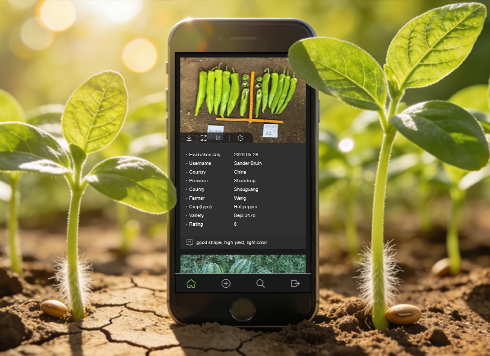 Kunshan TrialBook Mini-Program Custom Development
This project developed an English-only Tria ...
-
 Agricultural Products WeChat Mini Program Custom Development
Lvran Di enhances agricultural sales via a ...
-
Is Functional Acceptance Alone Enough for Mobile Custom Development? Overlooked Checks Before 2026 Launch Often Lead to Rework
Date: Aug 21, 2026 Read: 202
-
Users enlarge the phone font and buttons and amounts overlap in the app — does adding a "large text mode" switch fix it?
Date: Oct 7, 2026 Read: 33
-
The client opens a foldable phone and says our app is misaligned — do we really need a separate layout?
Date: Sep 27, 2026 Read: 58
-
Adding Features to an Old App: Outsourcer Says It Needs a Rewrite and Double the Cost — Is It Worth It?
Date: Sep 1, 2026 Read: 172
-
UI Design Approved but Code Not Started: Where Does Mobile Custom Development Rework Usually Get Stuck in 2026?
Date: Aug 31, 2026 Read: 112