





What materials should be provided for rendering production? Do missing sketches, dimensions, and reference images affect delivery time?
The starting point for rendering production is not a casual “just generate an image and see,” but a verifiable set of pre-production materials. Based on 2026 delivery experience, at least four categories of information should be collected before production begins: geometric basis, dimensional specifications, visual references, and intended use/format. Missing any one of these most often causes rework during modeling and materials stages, not during rendering. In other words, treating material preparation as the first deliverable of rendering production often has a more direct impact on delivery time than adjusting the render engine.
What problem does rendering production actually solve first?
Rendering production is not about turning CAD into a colored picture; it is about translating 2D information into a three-dimensional image that can be reviewed. For the same model, a planning authority review needs realistic proportions that allow window-to-wall ratios to be read; an e-commerce product detail page needs to highlight material textures; an internal review only needs clear hierarchy and precedence. Understanding “who is looking at it and where it will be used” matters more than rushing to open the render engine.
This is also why pre-production resources determine the success of rendering production: the more materials you have and the more unified their specifications, the less room there is for guesswork during translation. When the intended use is not stated, the production team often pushes detail to their own high standard, ending with “great image, but not the image we wanted.” Based on project delivery practices in 2026, common problems are concentrated on mismatches between reference images and intended use, not necessarily in the render engine.
- Approval or bidding: emphasizes true scale and surrounding context, with fixed output proportions.
- E-commerce or web: emphasizes texture and camera angles, leaning toward advertising-style treatment.
- Internal review: focuses on structure and layout; final material details are not required.
Four-piece pre-production set: check against this list before starting
We recommend dividing the pre-production inputs for rendering into four categories, what we call the “four-piece set.” Each category corresponds to a root cause of rework: the geometric basis answers “what the object looks like,” dimensional specifications answer “how big it really is,” visual references answer “what the client considers good-looking,” and usage/format answers “what counts as completion.”
- Geometric basis: CAD plans/elevations/sections, site photos, three-view drawings, or hand sketches are all acceptable, as long as they express the form.
- Dimensional specifications: overall length and width, floor height, booth size, key component dimensions—preferably unified to millimeters with sources noted.
- Visual references: style images you like, close-ups down to a specific material, and best to include a “do not make it look like this” counterexample.
- Usage/format: whether it will be printed or viewed on screen, how many views are needed, and whether output should be JPG, PNG, or layered source files—all should be written into the requirements form.
Why divide it this way? Because modeling detail is determined by the geometric basis, proportion by dimensional specifications, material direction by visual references, and output size by usage/format. When these four lines are not aligned, the common result is discovering after the model is complete that the proportions are wrong, or finding after rendering that the composition direction is wrong.
What kind of rework does late-supplied material cause? Common pitfalls and costs
Not all materials need to be provided on the first day, but two categories must be locked down before modeling: dimensional references and usage/format. Remodeling is almost like starting over, and changing the image’s intended use can invalidate the old composition. Material references and textures can come a little later, but they must be finalized before test rendering; otherwise, lighting and color grading will also need rework.
On projects, clients often get stuck in the situation of “having only reference photos but no physical dimensions.” For example, in a product demonstration rendering project, the constraints were that the client only provided two appearance photos and a video of the product in use of about 20 seconds, with no CAD or specific dimensions. The team started with proportions from similar products they had on hand and asked the client to manually measure the body width with a tape measure. Using that width as a proportion anchor, they imported the photos into the view and modeled in detail. As a result, the main body proportions were basically controllable. But when the client later added an animation demo, they found that the protruding structure on the rotating shaft differed from the actual product by about 0.5 cm. They had to rebuild that component and redo the local materials, ultimately adding about 2 working days to the total schedule compared with the original plan. The experience range is: if rework occurs during modeling, it usually adds 1–2 days; if it happens after rendering has been output, replacing materials and re-lighting is more costly—commonly billed as an additional charge per occurrence, and the schedule may extend by more than 3 days.
- Only unmeasurable web images, no physical dimensions: the model can only be estimated by eye, and at acceptance the client often says “it isn’t actually this tall.”
- Reference images that only say “make it premium,” without material samples: metal or matte finishes become a guess, and changing materials after rendering means a full redo.
- Stating the purpose only as “make an image,” without specifying print or screen: resolution settings can go wrong, and if the output is blurry, it must be re-rendered.
- Only after modeling is complete saying the client needs transparent-background PNGs or an animation track: the static-image model lacks the corresponding structures, the scope of changes is large, and the quotation is calculated separately.
How material completeness affects delivery time and quotation (verifiable experience ranges)
There is no uniform price for rendering production, but the completeness of materials directly affects the quotation structure. When materials are complete, the production team can estimate based on standard working hours and quote a lump-sum or phased price. When materials are incomplete, the uncertainty is usually factored into the quotation, or a separate revision fee may be set. Here is a verifiable comparison, all within common experience ranges, not fixed standards.
- Complete materials: about half a day for communication; first delivery of a static rendering commonly takes 3–7 working days. Changes are mostly fine-tuning details, quotation remains stable, and additional revision fees are rare.
- Missing materials but forced start: the start appears fast, but the rework rate is high later, and the total schedule commonly reaches 10–15 working days. If dimensional references are missing, rework occurs in the modeling stage; if the use/format is unclear, the rendering stage may need to be redone. The quotation may be 30%–50% higher than with complete materials—specific terms are subject to the contract.
Not every project needs to pursue “absolute completeness.” If you only need a rendering to test composition direction, a white model plus one angle reference is enough to start; you do not have to wait for the full set of CAD, but you need to agree with the production team that this stage is a draft.
How do you know if the materials are good enough? Five checkpoints
Before starting, self-check with the following five questions. If you can answer about 80% of them before entering modeling, you will noticeably reduce rework caused by “unclear communication.”
- Do the dimension data have units? Can you find a definite overall length or width without the production team having to guess?
- Do the drawings match the actual physical object? If they do not, is there a note stating which version prevails?
- Are the reference images specific down to material, angle, or color range? Is there a counterexample to rule out misunderstanding?
- Is the use print or screen? Are there clarity or file-size requirements?
- Is the delivery format written out—for example, JPG, PNG, layered PSD—and is an alpha channel needed?
The pass criterion is not “all materials are collected,” but “key questions can be answered on the spot.” If you still need to make phone calls to confirm the overall length, then the dimensional specification item has not passed.
Applicable and non-applicable boundaries
This material-check method applies to static rendering production, including architectural design, interior/exterior renderings, product appearance rendering, and site aerial views of parks or campuses. Its characteristic is that modeling, texturing, rendering, and delivery each have a verifiable basis, reducing the deviations caused by relying on experience and guesswork.
If the project’s final goal is real-time interactive display—such as WebGL 3D web demos, UE5 presentations, or mini-program 3D—this material list is only the beginning and is not fully applicable. Interactive scenarios additionally require interaction hotspots, camera paths, performance budgets, and real-device compatibility scope. Based on 2026 delivery experience, static renderings and real-time interactions should be scheduled separately: real-time interaction typically requires 2–4 weeks reserved, and should not simply copy the static-image cycle of 3–7 days.
At the same time, do not slow down the project just to collect materials. If you only need to internally confirm an idea, a white-model screenshot plus a verbal description is enough; waiting for the full CAD set actually slows down decisions. Such simple drafts are not within the final-delivery scope of this checklist.
FAQ
Which materials must be provided before rendering production starts?
At minimum, the geometric basis, dimensional specifications, visual references, and usage/format. Of these, dimensional specifications and usage/format have the greatest impact on rework. We recommend deciding the main dimensions and final use first; the rest can be added as the work proceeds.
Without CAD, can I make a rendering using only photos of the site?
Yes, but only for a concept draft or direction test, with proportions and structure estimated. If it is for formal delivery or review, you should measure a primary dimension or provide a measurable plan; otherwise, the rework risk is high.
How do you evaluate whether reference images are good enough?
Reference images should ideally be specific to material surface, lighting atmosphere, and camera angle, and include a “do not want” counterexample. Sending only adjectives like “make it premium” gives no effective information.
Will missing materials affect the quotation?
Yes. A common practice is to factor the uncertainty into the quotation or set a separate revision fee. Based on experience, projects with missing dimensions may be quoted higher than those with complete materials; the final terms depend on the parties’ contract.
Before starting, run a “four-piece set” check: geometric basis, dimensional specifications, visual references, and usage/format. For formal delivery projects, send the requirements-confirmation form to the client for written receipt, and keep an email trail to avoid disputes. If you are only doing an internal draft, start with a white model and sketch. If the goal is real-time 3D on a webpage or mini-program, use an interactive-project-specific input checklist and do not copy the static-rendering process.
-
 EDC·Trendy Camera Product Design: Form Follows Emotion
EDC Toy Camera: Braun-inspired retro design ...
-
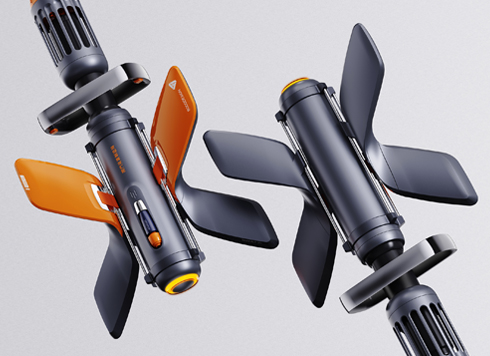 Product Design of Children's "Bubble Rocket" Underwater Thruster
Inspired by "Octonauts + Space", kids' "Bub ...
-
 Design of Adaptive Intelligent High-Altitude Shuttle Transport Robot
Smart rural shuttle bot: Streamlined, weath ...
-
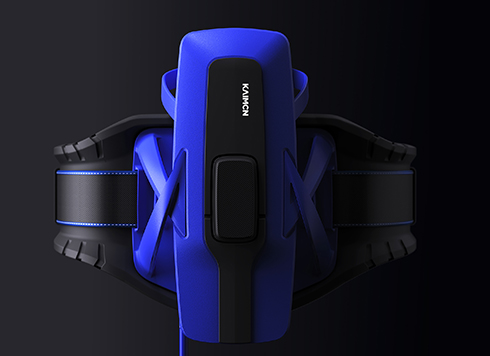 "Effortless" Exoskeleton Wear: Unleash Ultimate Freedom in the Sea
"Unfelt Wearability" & "Bionic Power" redef ...
-
In landscape design 3D modeling, why can the client tell at a glance that library trees look pieced together?
Date: Sep 13, 2026 Read: 6
-
When a UE5 build is packaged for a client demo, why does it get darker or lose textures on another computer?
Date: Sep 12, 2026 Read: 10
-
Product Appearance Design Looks Fine, So Why Does Engineering Say It Can't Be Molded?
Date: Sep 11, 2026 Read: 21
-
Renders look washed out with crushed shadows — which step usually goes wrong first?
Date: Sep 10, 2026 Read: 23
-
Why does AI digital human 3D modeling have a waxy look? Which step is the problem?
Date: Sep 9, 2026 Read: 27