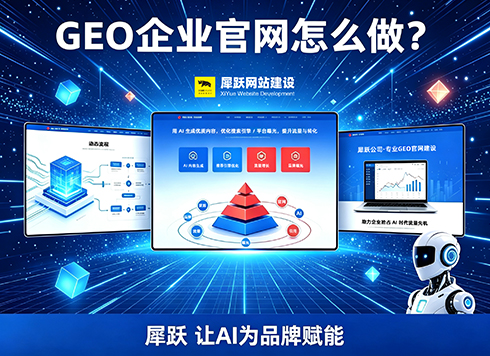





AI Search is Reshaping Website Traffic Patterns: Customized Content Becomes Key
Have you noticed a decline in visitors reaching your site via search engines lately? It's not that your rankings dropped—it's that users no longer click through search results. They ask questions directly in ChatGPT, Perplexity, or Bing Chat, and receive AI-generated answers. Your website's content may be "cited" within those few lines, or it may not be referenced at all.
Here's the issue: as AI search begins to replace user browsing, will your site become a "supplier" of answers or be completely ignored? Traditional SEO focuses on keyword rankings and click-through rates, but AI search operates on a fundamentally different logic—it prioritizes content structure, semantic relevance, and brand authority. Today, let's explore how to make your site a "premium information source" for AI search through custom website development and content strategy.
From SEO to GEO: Three Core Shifts
GEO (Generative Search Optimization) isn't a rejection of SEO—it's an upgrade. Understanding these three points will show you where to focus your efforts.
Keyword Matching → Semantic Understanding
- Then: You stuffed long-tail keywords to match user input and rank higher.
- Now: AI search understands user intent and generates answers in natural language. It doesn't care about keyword density; it cares whether the content fully addresses the question.
- Action: Write comprehensive "Q&A-style" content around real user questions. For example, instead of just "custom website development process," include derivative questions like "When is custom development needed?" and "What's the difference between custom development and templates?"
Backlink Weight → Content Authority
- Then: The quantity and quality of backlinks were major ranking factors.
- Now: AI trusts content that is widely cited and from reliable sources. It assesses authority through training data and knowledge graphs.
- Action: Build "vertical depth" on your brand site by providing verifiable original content such as industry reports, case studies, and data tables. Cite sources when referencing authoritative data.
Page Count → Structural Depth
- Then: The more pages your site had, the more keywords you covered, the better.
- Now: AI needs structured information for accurate extraction. Each page may correspond to an entity (e.g., product, service, person) and should have clear hierarchy and labels.
- Action: Use Schema markup (e.g., FAQ, Article, Product) to help AI identify the core entities and relationships on each page.
How to Adapt Custom Website Development for GEO? A Four-Step Guide
This is where custom website development truly adds value: you can lay the groundwork for AI optimization from the ground up, rather than patching an existing template. Here are four actionable steps.
Step 1: Build a Clear Content Architecture
AI search often treats a website as a knowledge base. The clearer your site structure, the easier it is for AI to find and cite your content.
- Organize content by entity: Each product, service, or case study should have its own page, linked internally to form an "entity network."
- Avoid information silos: During custom development, design a "related reading" module to automatically associate content.
- Create an FAQ section: Gather common user questions and mark each one with the FAQ schema. AI prioritizes structured content like this.
Step 2: Enrich Structured Data Markup
Without structured data, AI can only rely on crawling to understand your content—which is inefficient and error-prone.
- Essential markup: Article, Organization, BreadcrumbList.
- Industry-specific: Use Service and Product for service sites, Review and CaseStudy for case studies.
- Implementation: Integrate structured data into the CMS during custom development, so each new page automatically generates JSON-LD code. At Xiyue Company, structured data fields are reserved for every page during custom website development, ensuring precise AI extraction.
Step 3: Create Deep Dives and Citation-Worthy Content
AI search loves pages where "the answer is the content." Don't just write shallow introductions—provide valuable, citable resources.
- Methodology diagrams: Use text and flowcharts to illustrate steps; AI can extract them directly.
- Data and comparisons: For example, "5 key differences between Framework A and Framework B" with a table.
- Expert insights: Cite industry authorities or your own team's experience to boost credibility.
Step 4: Establish a Trustworthy Brand Backing
When generating answers, AI prefers sources it deems "reliable." Brand reputation and online presence directly affect citation likelihood.
- Update corporate information: Clearly display founders, team, certifications, and client cases on your site.
- Seek third-party citations: Publish content on industry media, blogs, Zhihu, etc., to increase chances of being cited externally.
- Deliver ongoing value: Regularly release original reports and white papers to build industry recognition.
Avoid These Common AI Search Optimization Pitfalls
- Mistake 1: Thinking AI search only looks at on-page content, ignoring technical foundations. Fact: Page load speed, mobile responsiveness, and SSL certificates also affect AI crawler efficiency.
- Mistake 2: Stuffing pages with excessive keywords and answers to artificially boost citations. Fact: AI detects repetitive and low-quality content, which actually reduces trust.
- Mistake 3: Optimizing only the homepage, neglecting inner pages. Fact: AI evaluates each page independently; the depth and value of inner pages matter just as much.
- Mistake 4: Ignoring real user experience. Fact: AI's ultimate goal is to serve users. If your site has high bounce rates and fails to meet their needs, even citations won't retain traffic.
AI search is here to stay, and it will become the mainstream way users access information. Your site can either take part in this transformation and become part of the answer, or be gradually forgotten. Start now: incorporate GEO thinking from the custom website development stage—design a clear content architecture, embed structured data, and create authoritative, in-depth content. If you don't know where to start, consider integrating AI optimization as a standard module in custom development, just like Xiyue Company does, letting your technical team build the framework in one go.
Don't wait until traffic drops off a cliff. Every optimization you make today paves the way for tomorrow's AI search entry points.
-
 Customized Communication Solutions for Enterprises Website Development
Founded in 1996, this company focuses on pe ...
-
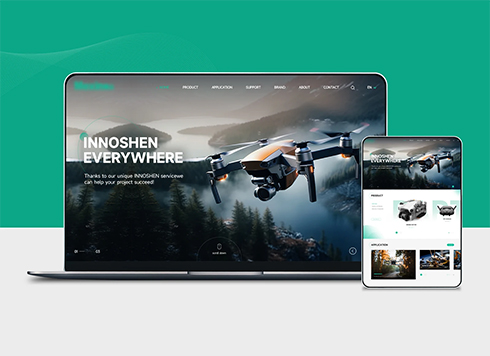 Drone Accessories Company Website Development
Incorporating gray as an accent with the pr ...
-
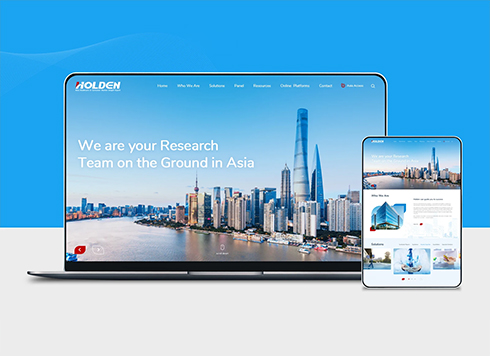 Professional International Research Service Agency Website Construction
This project serves a company with internat ...
-
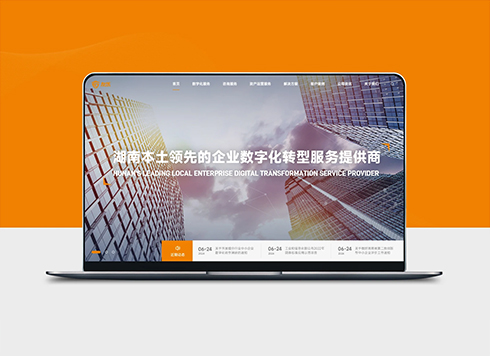 The Construction of Group Websites for Asset Operation and Digital Services
This project is to create a website for a c ...
-
Custom website development: the site has fewer than a hundred pages, the client insists on adding site search, operations says it's unnecessary — should we push back first?
Date: Oct 14, 2026 Read: 9
-
Custom Website Development: Should Official Site Whitepapers Download Directly or Require a Phone Number First? Sales and Operations Are Arguing—Whose Call Wins?
Date: Oct 10, 2026 Read: 26
-
Custom website development: when a client wants live chat on the corporate site, should you embed third-party code first or build it in-house?
Date: Oct 9, 2026 Read: 28
-
In custom website development, the client finds the official site awkward on mobile—should we fix responsive design first or build a separate mobile version?
Date: Oct 7, 2026 Read: 47
-
Custom Website Development: If the Site Form Collects Phone Numbers, Does the Privacy Policy Really Need to Be Posted?
Date: Oct 5, 2026 Read: 50