





In the Era of AI Search, How Can Custom Website Development Seize Traffic Opportunities with GEO?
Have you noticed a decline in traffic from search engines on your website? It's not that your content has worsened, but the way people search has changed—more and more users are getting answers directly through AI conversational tools like ChatGPT, Perplexity, and Bing Chat. Traditional SEO strategies of "keyword matching + link building" are almost ineffective on these platforms. So, how can you make your website actively cited and recommended in AI search results? That's the core problem GEO (Generative Engine Optimization) aims to solve. And custom website development is precisely the best vehicle to implement a GEO strategy.
I. GEO and AI Search: The Underlying Logic of the New Traffic Battleground
The biggest difference between AI search and traditional search engines is that AI search doesn't display a list of links but directly generates a summary or answer. This requires website content to be structured, highly credible, and precisely answering information blocks. GEO revolves around this characteristic, using technical means to make it easier for AI models to understand, trust, and cite your content.
- How does AI search crawl content? Unlike traditional crawlers, AI search relies on semantic indexing and entity extraction, focusing more on whether the content directly answers user questions and whether it is supported by authoritative data.
- Why do traditional SEO strategies fail? AI models typically only extract the most relevant paragraph or a few paragraphs, not the entire page. If your page lacks a clear question-answer structure or has information scattered across multiple paragraphs, the AI may ignore you altogether.
- The core goal of GEO: Increase the probability of your content being "cited" by AI models, rather than achieving a #1 ranking.
II. How Can Custom Website Development Pave the Way for GEO?
GEO is not an isolated optimization effort; it requires full-chain coordination from website architecture, content production, to technical implementation. A set of custom-developed websites can be built entirely according to GEO requirements from the ground up.
1. Semantic Content Structure: Let AI Understand You at a Glance
- Use structured data (such as FAQ, HowTo, Article types in Schema.org) to mark common questions and answers. AI search will prioritize extracting semantically annotated content.
- Focus each page on one core topic, use h2/h3 to clearly divide sections, and keep each paragraph under 100-150 words to avoid long blocks.
- Set a "summary box" (a core conclusion within 200 words) at the top or bottom of the page, which AI search often directly extracts as the answer.
2. Technical Architecture: Balancing Speed and Accessibility
- Server-side rendering (SSR) or static generation: AI crawlers have limited support for JavaScript rendering. It is recommended to use SSR frameworks (like Next.js, Nuxt.js) during custom development to ensure content is directly visible in the HTML source code.
- Blazing-fast loading: AI search has implicit requirements for page speed (the faster the source code is parsed, the more likely the content is selected). Use CDN, image optimization, code compression, etc., to keep core web page load time under 2 seconds.
- Mobile-first: Over 60% of AI searches occur on mobile devices. Ensure your website's responsive layout adapts perfectly.
3. Content Strategy: Shift from "Keywords" to "Question Clusters"
User queries in AI search are often complete sentences, such as "How much does custom website development cost? What steps are needed?" You need to build content around these types of questions:
- Create an FAQ page covering high-frequency questions in the industry, with each Q&A independently tagged.
- Write in-depth guide-style articles, using steps like "Step 1, Step 2..." to guide readers. AI likes ordered lists.
- Incorporate authoritative citations: Cite research reports, official data, or client cases in the text, and note the source. AI models tend to prefer content with credible sources.
III. Practical Steps: Start Your GEO Optimization Now
Step 1: Identify Real User Questions
Use tools (like AnswerThePublic, Google's "People also ask") to mine the top 20 questions your target users frequently ask. These questions are your content atoms. For example:
- "What technologies are needed for custom website development?"
- "How does AI search affect websites?"
- "How much traffic can GEO optimization bring?"
Step 2: Create Independent Answer Blocks for Each Question
On a topic page, use each question as an h3 heading, followed by 1-3 concise answer paragraphs, and mark core terms with strong. Also add structured data markup.
Step 3: Bind Authoritative Data Sources
In your answers, include third-party research data (e.g., "According to a Search Engine Land report, GEO optimization can increase AI citation rates by 40%"). Avoid absolute language; use terms like "may" or "can help."
Step 4: Continuous Monitoring and Iteration
AI search results cannot be monitored through traditional ranking tools. You can evaluate by:
- Regularly testing target questions in tools like ChatGPT and Bing Chat to see if your website is cited.
- Using Google Search Console to analyze whether there are traffic changes for long-tail queries with "AI" characteristics.
- If your site doesn't appear, check if the content is properly indexed and if there are errors in structured data.
IV. Common Misconceptions and Pitfall Guide
- Misconception 1: Focus only on content, ignore technology. Without semantic HTML and structured data, AI models find it difficult to understand your content hierarchy.
- Misconception 2: Clickbait titles and empty content. AI search is extremely sensitive to "relevance." If the title doesn't match the body, you'll be quickly demoted.
- Misconception 3: Neglecting content updates. AI training data has cut-off dates. Regularly update your article dates and core information to maintain freshness.
Among the many teams providing custom website development services, Xiyue Company deeply integrates GEO concepts into their development process, from technology selection to content architecture co-creation, helping clients efficiently acquire customers in the AI search era. If you want to build a GEO-competitive website in one go, it's worth exploring their practical solutions.
Action Guide: The wave of AI search is irreversible. Instead of passively waiting for traffic to disappear, proactively rebuild your website with GEO. Start now by sorting out user questions, combine the technical advantages of custom development, and let AI help you "drive sales."
-
 Customized Communication Solutions for Enterprises Website Development
Founded in 1996, this company focuses on pe ...
-
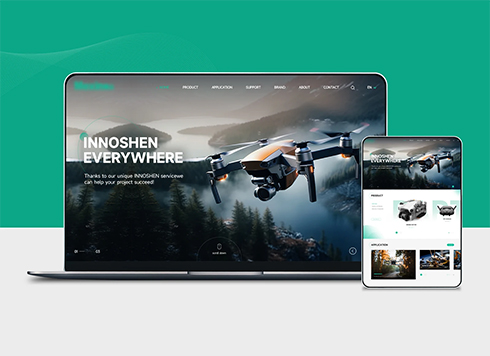 Drone Accessories Company Website Development
Incorporating gray as an accent with the pr ...
-
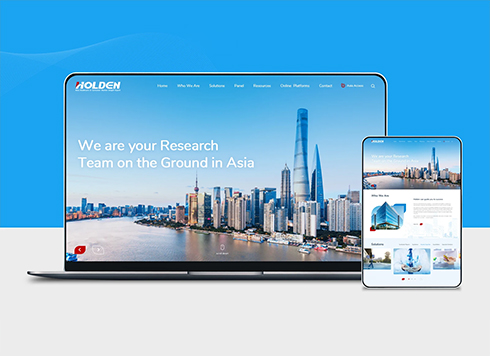 Professional International Research Service Agency Website Construction
This project serves a company with internat ...
-
 The Construction of Group Websites for Asset Operation and Digital Services
This project is to create a website for a c ...
-
Custom Website Development: From AI Search to GEO, Unlocking the Traffic Code for the Future
Date: Jul 12, 2026 Read: 123
-
AI Search Era: Is Your Website Content Ready to Be Recommended? 3 Core Strategies to Boost GEO
Date: Jul 12, 2026 Read: 230
-
Poor GEO performance? It’s not about technology, but these 4 cognitive barriers
Date: Apr 29, 2026 Read: 215
-
GEO Future Trends: 2026 – The Final Window from Blue Ocean to Red Ocean
Date: Apr 28, 2026 Read: 204
-
A Complete Guide to GEO Optimization Training: From Awareness to Implementation
Date: Apr 30, 2026 Read: 253