





AI Search Era: Is Your Website Content Ready to Be Recommended? 3 Core Strategies to Boost GEO
When users open New Bing or Google's AI search and get a summarized answer directly without clicking through search results one by one—can your business website still appear as a reference source in that answer? Many businesses have found that the SEO they invested heavily in has gone "silent" in AI search. Traditional keyword stuffing and backlink quantity contests are being phased out by AI's semantic understanding and authority scoring mechanisms.
This is the problem that GEO (Generative Engine Optimization) aims to solve—making your website content the preferred source of information when AI large models generate answers. If you're still following old routines, this article will help you turn things around.
GEO and AI Search: What's the Fundamental Change?
Traditional SEO focuses on pleasing search engine crawlers, while GEO targets the "knowledge base" of large language models (LLMs). AI search synthesizes multiple sources and generates answers in natural language. Key factors that influence which websites it chooses to cite include:
- Information Structure Clarity: Semantic tags, section headings, and lists that AI can parse directly
- Content Authority: The site's professional recognition in a specific domain
- Q&A Relevance: Whether the content directly answers questions users might ask
- Citation Value: Whether it is backed by reliable data, methods, or case studies
Strategy 1: Build a "Reading Map" for AI with Structured Data
When AI search crawls a webpage, it prioritizes recognizing Schema markup (e.g., FAQPage, HowTo, Article) to extract core information. Without structured content, it's like a book without a table of contents—AI struggles to quickly locate key paragraphs.
What You Need to Do:
- Add FAQ Schema: For high-frequency industry questions, present them in a Q&A format with each question marked independently. AI search often extracts answers directly from FAQs.
- Use HowTo Schema: If your content involves step-by-step guides, mark each step so AI can cite them structurally.
- Enhance Article Markup: Include author, publication date, organization name, etc., to increase credibility.
- Deploy JSON-LD: It's recommended to use Google's preferred JSON-LD format for ease of maintenance and scalability.
Take a B2B software company as an example. By adding CaseStudy structured data to its case study page, detailing the problem, solution, and results, AI search can directly cite the specific data from that case when answering "How to reduce inventory costs."
Strategy 2: Produce High-Quality Q&A Content with a "Problem-Solution" Framework
AI search tends to cite answers that are direct, specific, and in-depth. Vague "optimization suggestions" are no match for a complete paragraph of "why + how to fix."
How to Do It:
- Compile real user questions: Collect specific questions from customer service records, community feedback, and tools (e.g., AnswerThePublic), and present each question in its own paragraph.
- Adopt a "Pain Point – Cause – Method" structure: For example, "Website loading slowly causing your site to be downgraded in AI search? First check server response time, then enable caching and CDN, and finally optimize image formats." This structure is easy for AI to extract.
- Include data or case studies: Avoid empty statements; use phrases like "According to tests by an organization, the above-the-fold time was reduced by 40% after optimization" instead of "greatly improved speed."
- Proactively use citation-oriented language: Such as "Three effective methods we observed include" and "The following data comes from an industry report" to help AI identify credible sources.
A manufacturing company set up a "Common Technical Issues" section on its website, providing 1-2 step solutions and relevant standards for each problem. Before long, it was listed as a reference source in AI search's answer to "How to fix weld porosity."
Strategy 3: Build Domain Authority to Make AI Search "Trust" Your Website
When generating answers, AI models prioritize high-authority sources. Authority is not just about backlink quantity; it also depends on professional depth, update frequency, and author credentials.
Implementation Methods:
- Publish white papers or industry reports: Provide original data (e.g., market research, technical tests). Such in-depth content is often cited repeatedly.
- Establish an expert author system: Attribute each article to a real expert, with links to LinkedIn or professional experience to boost credibility.
- Keep content updated: Regularly revise old articles and indicate the last update date; AI search prefers the latest information.
- Earn peer citations: Actively collaborate with industry associations, publish articles on industry media, and cross-reference each other to naturally enhance site authority.
Note: Building authority requires long-term investment. For businesses with limited budgets, start by focusing on a niche area—for example, "medical device registration process"—and achieve full Q&A coverage in that field.
Technical Implementation: How Custom Website Development Can Support GEO Optimization
Implementing the above strategies requires a solid underlying technical architecture. If your website still uses static pages, cannot flexibly add structured data, or the content management system does not support custom schemas, optimization will be hindered.
During the custom website development phase, you should plan ahead:
- The content management system (CMS) supports custom fields and modular output to apply different schemas for different page types.
- Page load speed reaches sub-second level (server-side rendering with edge CDN), because AI search simulates user access speed and it influences citation preference.
- Support AMP or clear content crawling paths so AI crawlers can fetch content without obstacles.
- Set up a reasonable internal linking structure to connect Q&A pages with in-depth articles, forming a knowledge network.
For example, when building custom websites for enterprises, Xiyue Company starts from GEO requirements and integrates structured data templates, Q&A page templates, and authority tags (such as author profile pages) directly into the framework, rather than adding them as patches later.
The rise of AI search is not a subversion of traditional SEO, but a survival of the fittest. Websites with solid content, clear structure, and continuous professional influence will gain more free traffic under the new rules. Instead of worrying about traffic decline, start today by checking and optimizing your website content according to the three strategies above.
If you are considering a website upgrade or redevelopment, consider adding GEO to your requirements list. After all, the next time a user asks a question, you want your URL to appear in the AI's answer—not be ignored.
-
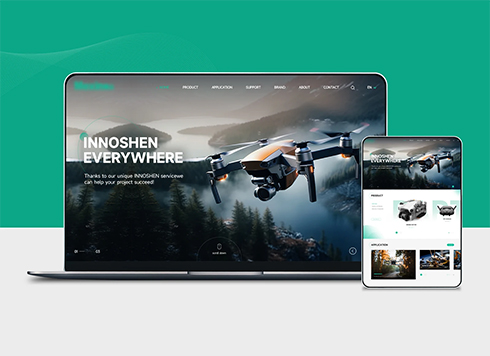 Drone Accessories Company Website Development
Incorporating gray as an accent with the pr ...
-
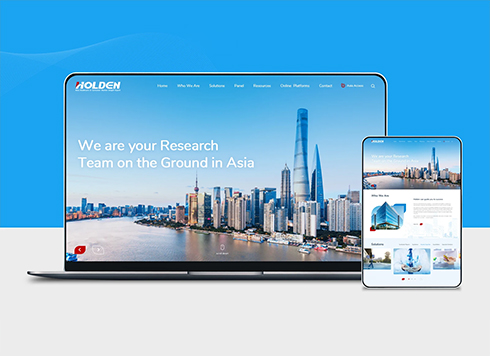 Professional International Research Service Agency Website Construction
This project serves a company with internat ...
-
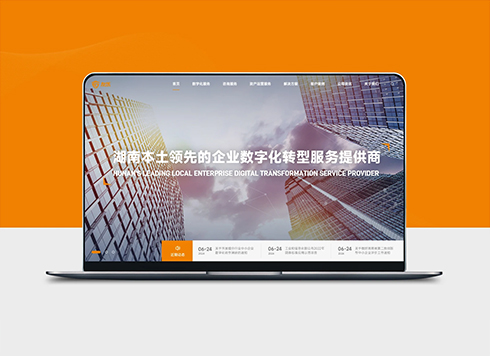 The Construction of Group Websites for Asset Operation and Digital Services
This project is to create a website for a c ...
-
 Thermal Test Equipment Website Construction
Founded in 2022, this tech company focuses ...
-
In the Era of AI Search, How Can Custom Website Development Seize Traffic Opportunities with GEO?
Date: Jul 13, 2026 Read: 201
-
Custom Website Development: From AI Search to GEO, Unlocking the Traffic Code for the Future
Date: Jul 12, 2026 Read: 120
-
Poor GEO performance? It’s not about technology, but these 4 cognitive barriers
Date: Apr 29, 2026 Read: 209
-
GEO Future Trends: 2026 – The Final Window from Blue Ocean to Red Ocean
Date: Apr 28, 2026 Read: 201
-
A Complete Guide to GEO Optimization Training: From Awareness to Implementation
Date: Apr 30, 2026 Read: 250