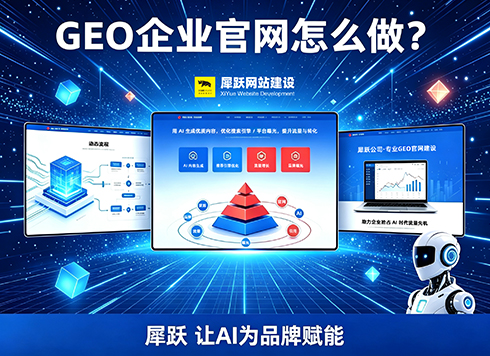





How to get DeepSeek to cite your corporate official website
When users ask DeepSeek "Which reliable service providers are there in this industry?", does your brand appear in the responses? This question has become a key concern for a growing number of enterprises. By the end of 2025, the user base of generative AI in China had exceeded 600 million, with a penetration rate of over 40%; among various AI assistants, DeepSeek boasts a content citation ratio of more than 70% — meaning if your content is crawled by DeepSeek, it stands a high chance of being directly cited in its outputs. Against this backdrop, whether a corporate official website can be accurately cited by DeepSeek directly determines brand visibility in the AI Q&A era.
1. Understanding DeepSeek’s Citation Mechanism
To solve the problem of "getting cited", you must first grasp how DeepSeek retrieves and references content.
DeepSeek Does Not Operate an In-house Search Engine
A critical fact: DeepSeek has no self-developed search engine, proprietary crawlers or web page index library. When conducting online searches, it calls external general search APIs — it first splits user queries into search keywords and sends them to search engines. The search engines return results, and DeepSeek then selects content from these results to generate answers. This implies: If your content is not indexed by mainstream search engines, DeepSeek cannot access your site at all in scenarios requiring online retrieval.
Four Core Criteria for AI Citation
DeepSeek relies mainly on four standards when screening source materials for citation:
Source Authority
AI has a clear preference ranking for information source credibility: authoritative institutional reports > third-party media coverage > vertical industry platforms > brand official websites. Even so, official websites remain the core factual source for AI to interpret brands — site content is used to verify the authenticity of information from other channels, and brands lacking official website validation tend to be demoted in AI responses.
Fact Clarity
AI prefers citing content that is explicit, specific and verifiable. For instance, "Product qualification rate hits 99.7%, versus the industry average of 96.5%" is far more quotable than vague phrasing like "Our products deliver excellent quality". Incorporating statistical data in content noticeably lifts AI citation rates.
Content Structurization
DeepSeek favors pages featuring clear definitional statements, structured data and distinct viewpoints. Pages burying key information within lengthy conversational narratives are rarely extracted accurately.
Content Relevance
DeepSeek evaluates how closely content matches user queries; only relevant materials will enter the candidate source pool.
2. Fundamental Shift in Official Website Roles Under the DeepSeek Era
Over the past two decades, website optimization centered on SEO — refining keyword rankings and external link building for traditional search engines. However, the rise of AI search tools such as DeepSeek has revolutionized how users acquire information: instead of clicking through individual links, users obtain information directly from AI-generated answers.
What does this mean? Website "rankings" are no longer critical; "being cited" takes precedence. Site "traffic" is secondary, while "brand exposure" and "mindshare capture" become priorities. Official websites have evolved from "traffic entry points" to "credibility endorsements" and "conversion vehicles". Users may rarely visit your site, yet AI will frequently reference its content, and these citations shape user purchasing decisions.
Industry survey data reveals most corporate official websites score poorly on AI-friendliness, mainly due to missing entity information, insufficiently structured content and a lack of authoritative insights — leaving massive room for optimization.
3. Four Practical Steps to Get DeepSeek to Cite Your Official Website
Step 1: Ensure Indexation by Mainstream Search Engines
Since DeepSeek leverages general search APIs, inclusion in search engine indexes is a prerequisite for DeepSeek citation. Enterprises should verify whether their sites are indexed by major search engines. If unindexed, submit sitemaps via each search engine’s webmaster tools. Additionally, instant submission protocols accelerate content inclusion far faster than waiting for natural crawler visits.
Step 2: Build a Comprehensive Brand Factual Knowledge Base
Official websites act as the core factual reference for AI to understand brands. Enterprises should prioritize optimizing the following pages:
- Homepage: Clearly state corporate positioning and core business lines
- Service/Product Pages: Clarify target clients, workflows and value propositions for each offering
- Case Study Pages: Showcase served industries, project portfolios and deliverables
- About Us: Add corporate history, core team, certifications and competitive advantages
- FAQs/Support Docs: Address common customer inquiries
- Contact Page: Maintain complete, verifiable contact details
Collectively, these pages form a brand factual knowledge base. The more thorough this base, the more consistent AI’s assessments of your brand will be.
Step 3: Boost Citability via Structured Content
DeepSeek favors clearly structured content ready for direct extraction. Enterprises can optimize from the following dimensions:
Use Definitional Statements to Answer "What Is It" Queries
DeepSeek users frequently ask "What is...", "How to...", "Which provider is professional?" and similar questions. Embed direct definitional answers on pages to enable precise extraction by DeepSeek. For example, avoid vague copy like "We provide one-stop services"; instead write "XX Company delivers full cross-border e-commerce overseas expansion solutions including site construction, payment processing and logistics".
Deploy Comparison Tables and FAQs to Cover Extended Query Variations
Comparison tables help AI resolve "How to choose" questions, while FAQs capture diverse query phrasing. Build structured pages around high-intent questions target audiences will input on DeepSeek, enabling your brand content to match varied user prompts.
Adopt Semantic Heading Hierarchies
DeepSeek’s algorithms parse heading structures to gauge topic weight and logical relationships. Each heading should function as a standalone complete viewpoint. Avoid ambiguous labels such as "Our Solutions"; replace them with descriptive headers like "How XX Company Delivers Real-Time Data Analytics for E-Commerce Brands".
Implement Structured Data Markup
Add JSON-LD structured markup (e.g., Organization, Product, Service schemas) across your official website to help AI rapidly parse entity relationships on pages. This is a pivotal technical tactic to streamline AI comprehension.
Step 4: Highlight Professional Content to Amplify Authority Signals
DeepSeek demonstrates strong comprehension of technical and specialized fields, making professional content far more likely to receive accurate citations. Enterprises should feature technical principles, proprietary methodologies and industry insights to raise the likelihood of being classified as an authoritative source. Content with concrete judgments outperforms generic empty rhetoric for AI recommendations.
AI-citation-friendly articles typically contain clear conclusions, evaluation criteria, operational workflows and caveats. For a piece titled "How to Select an SEO Optimization Agency", structure content around diagnostic capabilities, content creation capacity, distribution performance, monitoring tools and service transparency.
4. Common Pitfalls to Avoid
Many corporate official websites fail to earn AI recommendations not due to insufficient content, but poorly formatted material unreadable by AI systems. Typical issues include:
- Overly generic page titles
- Inconsistent naming for core services
- Text embedded within un-crawlable images
- Heavily duplicated content lacking original insights
- Absence of FAQ sections
- Case studies consisting solely of images with no descriptive text
Enterprises should convert all critical information into crawlable text paired with clear subheadings. Integrate core keywords naturally on service pages without stuffing — authenticity, accuracy and completeness outweigh repetitive keyword placement.
Furthermore, unified brand messaging must be maintained across all platforms. If one article labels your firm an "AI Marketing Agency", another an "SEO Service Provider", and a third a "Digital Media Company", AI cannot reliably categorize your enterprise’s core industry vertical.
5. Performance Measurement & Continuous Optimization
Optimization outcomes for DeepSeek cannot be measured using traditional ranking metrics; multi-layer evaluation frameworks are required.
Visibility: Brand Citation Frequency
Core KPIs include how often your brand is referenced by DeepSeek under target queries and co-occurrence frequency with competitors. Use brand monitoring tools to track brand citations across all major AI platforms on a regular basis.
Context Quality: How DeepSeek Frames Your Brand
Brand mentions do not equal effective recommendations. Citations embedded in negative contexts or containing inaccurate capability descriptions will mislead prospective users. Monitor both citation volume and contextual tone simultaneously.
Business Conversion: Citation-Driven Lead Generation
The ultimate success metric is whether DeepSeek citations boost brand awareness and drive purchasing decisions. Industry research indicates most B2B decision-makers vet suppliers via AI assistants, with over 70% prioritizing brands recommended by generative AI.
6. Conclusion
Getting DeepSeek to cite your corporate official website is essentially a systematic content engineering workflow: First, secure search engine indexation for retrievability; second, build a complete brand factual knowledge base for AI brand recognition; third, deploy structured content to enable precise AI extraction for citability; finally, publish expert insights to establish authoritative credibility.
Instead of chasing meaningless "rankings" for DeepSeek optimization, enterprises should focus on whether their content is accurately interpreted and appropriately referenced by generative AI. Official websites are no longer mere traffic gateways — they form the bedrock of brand trust in the AI era. When users rarely visit your site yet AI consistently cites its content, your brand influence expands subtly yet steadily.
-
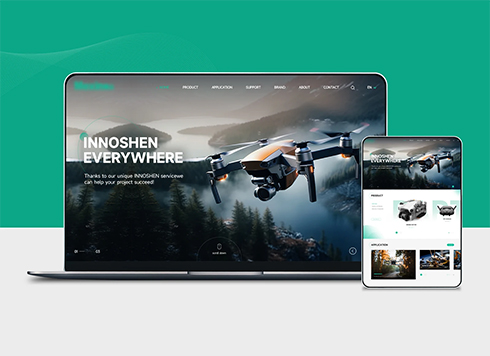 Drone Accessories Company Website Development
Incorporating gray as an accent with the pr ...
-
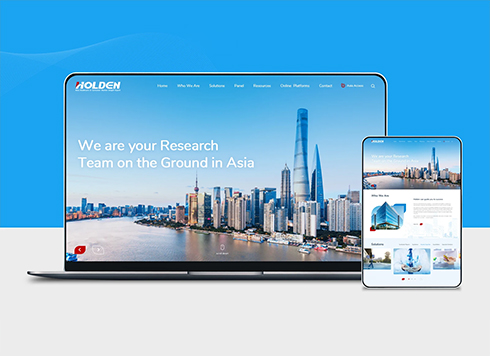 Professional International Research Service Agency Website Construction
This project serves a company with internat ...
-
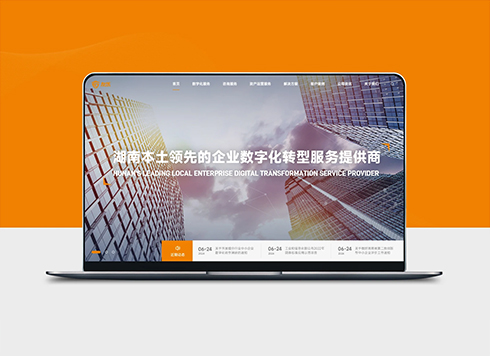 The Construction of Group Websites for Asset Operation and Digital Services
This project is to create a website for a c ...
-
 Thermal Test Equipment Website Construction
Founded in 2022, this tech company focuses ...
-
AI Search is Reshaping Website Traffic Patterns: Customized Content Becomes Key
Date: Jul 13, 2026 Read: 207
-
GEO Customer Acquisition: Take the first step bravely, and don't let "I could have" become regret
Date: Apr 30, 2026 Read: 216
-
Starting a GEO Business as a One-Person OPC: Realistic Startup Cost Calculation (With Complete Checklist)
Date: Mar 25, 2026 Read: 242
-
GEO Takes the Spotlight for 20 Months: Not a Marketing Gimmick, but a "Survival Necessity" for Enterprises in the AI Era
Date: Mar 22, 2026 Read: 178
-
What is the real impact on enterprises when ad slots appear in AI search results?
Date: Mar 20, 2026 Read: 193