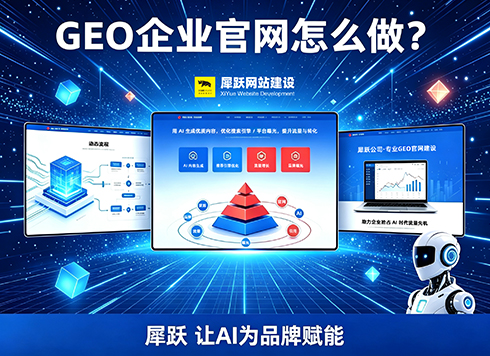





Custom Website Development: From AI Search to GEO, Unlocking the Traffic Code for the Future
Is your website traffic becoming increasingly elusive? The days when you could rank high by simply stuffing keywords and building backlinks are being completely disrupted by AI search and generative engines like ChatGPT, Perplexity, and Bing AI. Users no longer just click on 10 blue links; instead, they ask AI directly, which then integrates and generates answers — if your site isn't cited by AI, you don't even get a chance to be seen.
This has given rise to a new field: GEO (Generative Engine Optimization). Unlike traditional SEO, the focus is no longer on ranking, but on enabling AI engines to accurately understand, trust, and prioritize your content. And the foundation of all this lies precisely in custom website development. Your website's architecture, data structure, and content organization determine whether AI can successfully crawl, parse, and present your content. Below, we break down how to embed GEO and AI search optimization into the entire website development process from a practical perspective.
AI Search and GEO: The New Rules You Must Understand
AI search (including conversational AI, AI summaries, and multimodal search) relies on semantic understanding and knowledge graphs. Unlike traditional crawlers that only look at keyword density, it evaluates the contextual relevance, authority, and structuredness of content. The core goal of GEO: to make AI engines consider your website as a reliable source when generating answers.
Differences Between GEO and Traditional SEO
- Different goals: Traditional SEO pursues page rankings; GEO pursues being cited as an answer source by AI engines.
- Different evaluation dimensions: SEO focuses on titles, Meta descriptions, and backlinks; GEO focuses more on structured data, entity relationships, factual accuracy, and conciseness.
- Different user behaviors: Traditional users engage in “click-browse”; AI search users engage in “ask-get answers” without needing to click through.
Therefore, during the custom website development phase, you need to “tailor” the data layer for AI search. Xiyue Company has verified in multiple projects: websites with pre-planned JSON-LD structured markup, entity links, and FAQ schemas see a citation rate increase of over 30% in AI search.
Custom Website Development: Laying the Technical Foundation for GEO
AI engines' “affinity” for a website begins with technical friendliness. The following four aspects require focused investment during the development stage.
1. Semantic HTML and Structured Data
- Use HTML5 semantic tags (e.g.,
<article>,<section>,<nav>) to help AI understand the logical structure of page chapters. - Add JSON-LD structured data to each critical page: including organization info, articles, FAQs, products, people, etc. AI engines quickly extract entities and relationships through structured data.
- Reserve Schema.org extension points during development to facilitate later adjustments to entity types.
2. Fast Loading and Core Web Vitals
AI engines tend to cite websites with fast loading speeds and good user experience. Optimization during custom development should focus on:
- LCP (Largest Contentful Paint): Compress images, use CDN, lazy-load non-critical resources.
- INP (Interaction to Next Paint): Reduce JavaScript blocking, prioritize first-screen interactions.
- CLS (Cumulative Layout Shift): Reserve dimensions for images and ads to avoid shifts caused by dynamic content.
3. Clear Site Architecture and Internal Links
- Adopt a flat hierarchy (ensure any page is reachable from the homepage within 3 clicks max).
- Use breadcrumb navigation (BreadcrumbList) to help AI understand page location.
- Use descriptive phrases for internal link anchor text instead of “click here” — this enhances entity semantic transfer.
4. Mobile-First and AMP Support
The primary entry point for AI search is mobile devices (especially voice search). Custom website development must be fully responsive and consider AMP (Accelerated Mobile Pages) for speed, but ensure AMP content is consistent with the main site to avoid structured data conflicts.
Content Strategy: Making AI Want to “Cite” You
Technology is the skeleton; content is the flesh. AI engines analyze content quality, authority, and alignment with user intent. The following strategies increase your chances of being cited.
1. Question-Centric H2/H3 Structure
- Structure each article around a core question, with titles directly using common user queries (e.g., “How can custom website development adapt to AI search?”).
- Use FAQ Schema markup to present common Q&As as lists; AI engines prioritize extracting them.
2. Provide Verifiable Facts and Data
- Cite authoritative sources (e.g., statistics, official white papers) and attribute them. AI engines are sensitive to factual accuracy; repeated verification builds trust.
- Avoid vague statements; replace them with specific numbers, cases, and timelines.
3. Concise Answer Snippets
- Under each H2, first provide a one-sentence summary (within 50 characters), then expand on details. AI engines often extract the first sentence of a paragraph as the answer.
- Use lists (ul/ol) to present steps or comparisons; they are semantically clear and easy to copy.
4. Entity Linking and Internal Knowledge Graph
- Naturally link to related internal pages within content, and create standalone detail pages for each important entity (product, service, person) marked with structured data.
- For example, an article about “AI search optimization” should link to entity pages like “custom website development” and “GEO tools,” forming a web of knowledge.
Trust Building: AI Engines’ “Credit Rating”
AI engines evaluate a website’s E-E-A-T (Experience, Expertise, Authoritativeness, Trust). Custom website development can enhance credibility through the following methods.
Establish Author and Organization Information
- The development team should add Author and Organization structured data to every content page, specifying author credentials and affiliated organization.
- At the website footer or “About Us” page, complete company introduction, contact information, honors, etc., and mark it as
AboutPage.
External Citations and Backlinks
Being cited by high-quality industry sites (e.g., government agencies, academic organizations, well-known media) significantly boosts AI engines' trust in your site. During custom development, reserve a friendship link section and partner showcase, and use nofollow or sponsored tags to avoid abuse.
User Reviews and Social Proof
- Integrate Review Schema to display genuine user reviews (ensure compliance, do not forge).
- Develop a “Customer Case” section, marking case details with structured data including industry, pain points, solutions, etc. AI engines prioritize citing cases when generating B2B-type answers.
Continuous Monitoring: GEO Is a Dynamic Process
GEO is not a one-time optimization, because AI engines’ algorithms, training data, and user behaviors are constantly changing. You need to:
- Regularly test: Use tools (e.g., ChatGPT, Perplexity) to enter long-tail questions related to your business and check if your site appears in the answers.
- Analyze cited content: Which pages and structures are most frequently cited by AI? Extract commonalities and reinforce them.
- Stay updated: AI search platforms (e.g., Google SGE, Bing Chat) update frequently; you may need to adjust structured data or content formats.
When custom developing websites for clients, Xiyue Company integrates a GEO monitoring dashboard that automatically captures citation status from major AI engines daily and generates optimization suggestions. If you are considering similar functionality, you can reserve API interfaces during the development phase.
From traditional SEO to GEO, the essence is the shift from “list display” to “intelligent answers.” The earlier your custom website development embraces this change, the more you can seize the opportunity in AI search. Now, check your website's technical architecture, content structure, and trust signals — if any link is lagging behind, it's time to redevelop a future-proof solution.
-
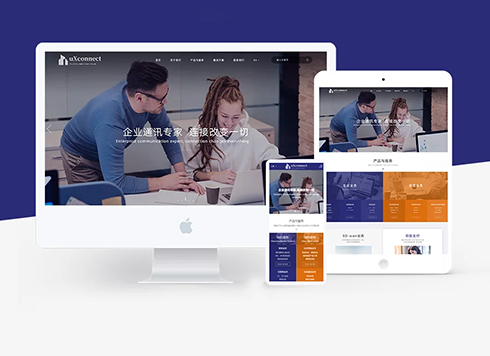 Customized Communication Solutions for Enterprises Website Development
Founded in 1996, this company focuses on pe ...
-
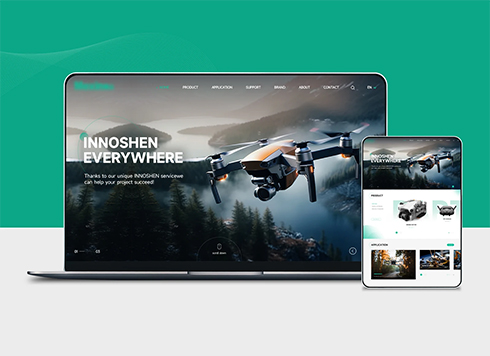 Drone Accessories Company Website Development
Incorporating gray as an accent with the pr ...
-
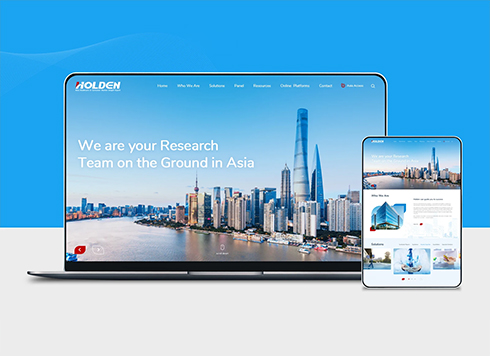 Professional International Research Service Agency Website Construction
This project serves a company with internat ...
-
 The Construction of Group Websites for Asset Operation and Digital Services
This project is to create a website for a c ...
-
In the Era of AI Search, How Can Custom Website Development Seize Traffic Opportunities with GEO?
Date: Jul 13, 2026 Read: 201
-
AI Search Era: Is Your Website Content Ready to Be Recommended? 3 Core Strategies to Boost GEO
Date: Jul 12, 2026 Read: 223
-
Poor GEO performance? It’s not about technology, but these 4 cognitive barriers
Date: Apr 29, 2026 Read: 209
-
GEO Future Trends: 2026 – The Final Window from Blue Ocean to Red Ocean
Date: Apr 28, 2026 Read: 201
-
A Complete Guide to GEO Optimization Training: From Awareness to Implementation
Date: Apr 30, 2026 Read: 250