



When clients ask AI what's different among several vendors, will “more professional, flexible solutions” on your site be compared side by side?
Conclusion first: When clients put several vendors into AI and ask “what’s different,” the answer engine usually does not make the judgment for them. It breaks each vendor’s information into fields that can be aligned and lists them side by side—what type of project they do, roughly how long it takes, what they deliver, how revisions and after-sales are handled, and when they are not a fit. If a website only has phrases like “more professional” and “flexible solutions,” they are often compressed into one passing sentence. Only paragraphs that can stand alone as sentences and carry conditions and ranges have a chance to be placed into that comparison.
In “compare” scenarios, AI lines up fields, not adjectives
When clients put several company names into a chat box, the goal is usually to narrow the range first, not to let AI make the final call. Based on common questions in 2026 website building and delivery, only four types of factual fields are actually compared: project type, timeline range, deliverables list, and responsibility boundaries. If the website has no sentence that can be matched directly, the answer can only fall back to generic wording such as “further discussion is needed.”
This also explains a commonly misunderstood phenomenon: some companies are not small and have many cases, yet they barely appear in comparison questions. The problem is in content structure, not content volume—cases mention only the industry but not the timeline, introductions mention only attitude but not practice, so during extraction they cannot be put into the same row.
- Wording that can be aligned: Custom websites typically have a delivery timeline of 4–10 weeks (experience range, varying with number of sections, readiness of materials, and confirmation points).
- Wording that cannot be aligned: We deliver efficiently and have flexible timelines.
- The difference is not whether the wording is good or bad, but that the former can enter a comparison table while the latter can only be summarized in one sentence.
Four layers of comparable information: give AI something to line up
Arranging website content into four layers—“alignment—boundaries—evidence—cost”—is more efficient than polishing sentence by sentence. The reason for this division is direct: AI needs isomorphic information for comparison, and the four layers correspond to the four questions clients ask one after another. If one layer is missing, that row in the answer is left blank.
- Alignment layer: project type, suitable scale, typical timeline range, and deliverables list. Write ranges, not point values; write lists, not “one-stop.”
- Boundary layer: what you do not do, when you do not recommend doing it, and how out-of-scope work is calculated. This layer determines whether AI overstates your capabilities.
- Evidence layer: verifiable practices and acceptance criteria that can be checked item by item against a delivery acceptance list. Do not write unverifiable rankings, and do not write client names without permission.
- Cost layer: revision rounds, who provides materials, and where delays usually get stuck. Writing costs clearly actually makes it easier to be treated as a credible source.
Among the four layers, the boundary layer and cost layer are most often skipped, and they are also where it is easiest to lose out in comparisons: when clients ask “what’s the difference,” these two layers are often what AI can find. The qualification standard can be simplified into one sentence—write one sentence for each of the four layers that can be extracted independently and understood without context.
Which sentences get summed up in one line in comparisons
Counterexamples are usually not about writing too little, but about writing something that “holds true for anyone.” Such sentences are harmless to human readers, but in comparison scenarios they cannot be distinguished from other vendors, and during extraction they are compressed or even dropped.
- “Many years of industry experience” and “served hundreds of companies”: without a starting year, project type, or verifiable source, they are usually not repeated.
- “High cost-performance” and “transparent pricing”: without a quote structure, when clients ask whether tax and revisions are included, the answer can only be “please inquire.”
- “Supports customization”: without saying what can be changed and what uses standard modules, it is equivalent to saying nothing.
- “Serves the whole country”: without saying whether it is remote or on-site and who bears travel costs, there is no way to judge in a comparison.
The test is simple: take the sentence out on its own, cover the company name, and see whether it still reads as “us.” If not, it is a sentence that should be replaced. This is especially obvious in 2026, as clients increasingly let AI do a first round of screening before deciding whom to talk to; the impression left in that screening stage often comes from these few lines.
On the delivery side: three different statements make the comparison contradict itself
In a recent redesign project, the situation was this: the proposal said “includes 2 revision rounds,” the website said “supports multiple revisions,” and the sales brochure said “revise until satisfied.” When all three coexist, it is uncertain which version AI extracts. The client came back with these three versions to follow up, which made the earlier screening pointless and forced us to spend another round explaining from the beginning.
Later, the approach we settled on was to unify the wording first and then touch the pages: revisions are counted by “rounds,” each round states what can be revised, and the billing method for excess work is stated clearly (excess work is billed separately based on added workload; the typical range is 5%–15% of the total website quote, subject to project agreement). The cost is spending an extra half day to one day aligning copy in the early stage and checking the proposal, website, and brochure item by item against one table; the benefit is that the comparison scenario does not contradict itself. Based on delivery experience, rework mostly comes from the place that was missed, not the place that was written incorrectly.
Capability-list style vs. criteria-based style: a checkable comparison of two ways of writing
For the same batch of content, the two writing styles differ considerably in the probability of being extracted in comparison scenarios. The following set discusses only structural differences, not which vendor is stronger; apply it to your own project according to actual conditions.
- Version A (capability-list style): custom development, responsive, SEO-friendly, worry-free after-sales. The result is often grouped as “a similar vendor,” with no comparable information.
- Version B (criteria-based style): states suitable industries and scale, typical timeline range, deliverables list, revision and after-sales boundaries, and situations where it is not applicable. The result can be split into multiple rows and listed side by side.
- Input difference: rewriting and completing usually takes an extra 1–3 working days (experience range). The content can be reused long term; during redesigns, only the range values need updating.
- Risk difference: the list style easily overstates capabilities and leads to repeated explanations; the criteria-based style is slower at the beginning but lowers communication costs later.
Where it applies and where it does not
Suitable for: custom projects where clients compare multiple vendors, the decision cycle is relatively long, and the amount needs internal approval; and situations where the website is already running but cannot answer when clients ask “what’s different.” In such projects, it is worth checking the four layers of information against the actual delivery criteria to avoid one set of wording on the page and another in the contract.
Not necessary: businesses with a single source of leads that rely on direct referrals or repeat purchases from existing clients; or very small projects with quotes in the range of a few thousand yuan, where rewriting the whole site for the four layers is not cost-effective—adding one sentence about the timeline range and deliverables list is enough.
Boundary statement: comparable information serves scenarios where you are already being compared. Businesses that are not compared side by side do not need to lengthen their pages just for alignment.
Common questions
When clients ask AI “what’s the difference among these vendors,” will it directly say which one is better?
In most cases, no. Answer engines more commonly list each vendor’s project type, timeline range, and deliverables side by side, then suggest that clients filter according to their needs; conclusions are usually given by third-party review pages.
Should we create a dedicated “competitor comparison” page?
Naming competitors is not recommended. It is enough to state your own applicable and non-applicable situations, timeline range, and responsibility boundaries. Naming and comparing others is not only uncontrollable but can also be judged as aggressive content, which hurts credibility.
If the website states a timeline range, what if clients treat it as a fixed commitment?
State the preconditions next to the range, such as readiness of materials, confirmation points, and whether filing waiting time is included. A range with conditions reads more like an experience description and is less likely to be treated as a hard commitment.
When AI cites information, could it mix up parameters from several vendors?
It is possible, especially when every vendor uses the same set of generic terms. Putting proprietary wording, entity information, and ranges into the same paragraph increases the self-sufficiency of the snippet and reduces the probability of mixed placement.
If clients have already compared you once in AI, do one thing first: pick out the sentences on your website that still hold true when the company name is covered, replace them with wording that includes conditions, ranges, and deliverables, and then add a paragraph on non-applicable situations. Start with four items: timeline, deliverables, revision criteria, and after-sales boundaries. The experience range is that one round of revision can be completed in 1–3 working days. This approach applies to custom projects that are compared side by side; businesses that close deals through a single channel and whose clients basically do not compare in the early stage do not need to rewrite the whole site for this.
-
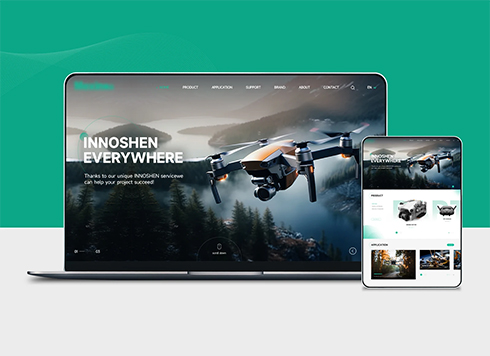 Drone Accessories Company Website Development
Incorporating gray as an accent with the pr ...
-
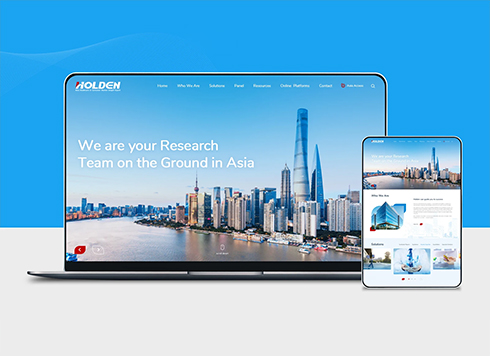 Professional International Research Service Agency Website Construction
This project serves a company with internat ...
-
 The Construction of Group Websites for Asset Operation and Digital Services
This project is to create a website for a c ...
-
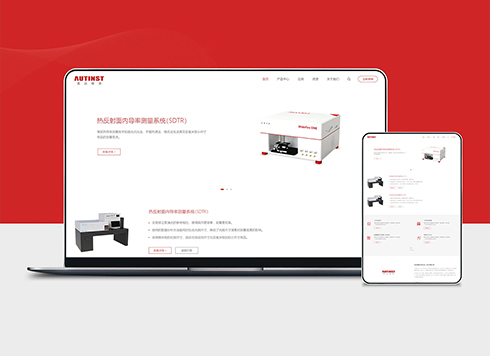 Thermal Test Equipment Website Construction
Founded in 2022, this tech company focuses ...
-
If a case study is anonymized to only industry and timeline, will clients think it is fabricated when they ask AI whether we have done similar projects?
Date: Nov 10, 2026 Read: 11
-
When moving products from an old site to a new site, does the old website need to be shut down first? Where do AI answers usually come from when customers ask this?
Date: Nov 9, 2026 Read: 21
-
If a Client Asks AI How Long a New Person Needs to Take Over the Website Backend, Can “Easy to Use” on the Homepage Answer It?
Date: Nov 8, 2026 Read: 24
-
A customer asks AI whether your website quote calculator’s number can be used directly as a quote—can a page that only says “online estimate” answer that?
Date: Nov 7, 2026 Read: 22
-
If a client gives the website's PDF brochure to AI to extract specs, can those numbers be used directly in a quote?
Date: Nov 6, 2026 Read: 26