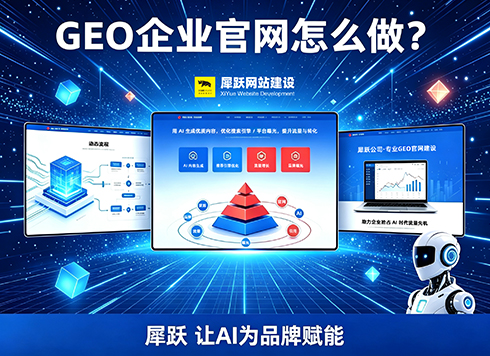





When the WeChat Official Account Publishes First and the Website Catches Up Later, Which Version Will AI Use When Customers Ask?
When the WeChat Official Account publishes first and the website catches up later, when a customer asks about the same business in AI, the common 2026 pattern is this: AI first forms its source-of-truth answer from whichever version can be read cleanly. If the WeChat Official Account version has complete body text and was published earlier, it may be cited first. After the website adds a complete version with clear entity attribution, it usually takes a round of crawling and index updates before the source of truth gradually shifts to the website. This shift is not immediate; the typical range is 2–6 weeks. But if the website only carries a summary, turns the body text into images, or its URL structure is not yet stable, the original WeChat Official Account article may continue to be used instead.
1. When AI Chooses a Citation Source, It First Looks at Which Version Can Stand Alone as Evidence
A generative engine's answer usually does not lift an entire page; it recalls multiple passages and reorganizes them. It needs a passage that still holds up outside its original context, and it needs to determine which URL the passage comes from, which entity published it, and whether the update time can be checked. So whether the WeChat Official Account or the website published first is not the core variable. Which version can be read cleanly matters more.
For the same piece of copy, if the website version puts key information into images, collapsed sections, or click-to-expand elements, while the WeChat Official Account version has a complete block of copyable text, the WeChat Official Account version may be more usable during passage recall. Conversely, if the website version is plain text, has clear entity attribution, and has a checkable timestamp, it is usually easier to treat as a first-party source.
- URL stability: Website pages do not expire over the long term; WeChat Official Account article links often pass through redirect layers between share pages and snapshot pages.
- Body visibility: If the website body text is in the initial HTML, the crawler gets the complete content.
- Entity attribution: Page titles, footers, and about pages can tie the company name to that content.
- Update time: A verifiable update date helps the engine judge the current source-of-truth version.
2. For the Website to Take Back the Source of Truth, It Must Pass Three Checks
For the website to take back the source of truth from the WeChat Official Account version, it usually must meet three conditions at the same time: crawlable, parsable, and attributable. If any one is missing, the website's home-field advantage is weakened.
Crawlable: A common pitfall is that sitewide robots rules, a test-environment noindex, or uncleared blocking rules get pushed live, preventing content pages from entering the index. Being allowed in is only the ticket to entry; whether it gets cited still depends on the next two checks.
Parsable: If product parameters are turned into large poster images and service descriptions are stuffed into tabs that require clicks, the crawler often only gets the title and navigation. In experience, when the same passage is presented as plain-text paragraphs, it is more likely to be excerpted into an answer snippet than when it is presented as images.
Attributable: Every page on the website should have a stable entity description—the full company name, brand name, and business scope should stay consistent across pages. If the website only uses an abbreviation, and that abbreviation collides with others in the same industry, the engine may hesitate during entity alignment and may instead use a third-party page with clearer sourcing.
3. When Content Published First on the WeChat Official Account Will Still Be Used
Publishing first on the WeChat Official Account does not mean the content is wasted. In several scenarios, it will still enter AI's citation pool: the website has not synced yet; the website only carries a summary and directs users to the original article; the content itself is Q&A or user support and the website has no corresponding section; and the article is republished by other sites in compliance and enters search as a third-party page.
- When the website is absent: If the website has no corresponding content, the WeChat Official Account version is often the main description available at the time.
- When the website only has a summary: A summary passage has low information density, so the engine may look for a more complete version.
- After compliant republishing spreads: If a compliantly republished version has complete body text, it may also be recalled, but entity attribution becomes weaker.
- Time-sensitive content: For topics with frequent updates, such as events or policy interpretations, the channel that publishes more promptly is easier to cite.
Note that when a republished version is cited, your company name may not appear in the answer. That does not help brand recognition, so for content that can be hosted on the website, it is still advisable to sync a complete version to the website.
4. Four Checks and One Test: How to Judge After Launch Whether the Source of Truth Has Shifted
Instead of agonizing over which side publishes first, self-check in the following order. The first four steps look at whether the content is eligible to be cited; the last step looks at whether it is actually being used.
- Check body completeness: Can this passage explain one thing on its own, and does it rely on pronouns that need context?
- Check crawl status: Is the website page accessible, allowed, and does the initial HTML contain the body text?
- Check entity binding: Does the page clearly state the full company name and business framing, and is it consistent with other pages on the website?
- Check time signals: Is there a verifiable update date, and does older content have an update note?
- Test one real question: Use a sentence a customer would actually ask in common AI assistants, and see which source and which passage are cited.
The fifth step is often skipped. In experience ranges, from the launch of the complete website version to being consistently visible in AI answers, the typical range is 2 to 6 weeks. If after two weeks you cannot find the website source in Q&A at all, it is usually not that the time has not come yet; rather, crawling or body readability has a problem, and it is worth returning to the second step to troubleshoot.
5. Experience Range Comparison of Two Sync Approaches
The comparison below is organized according to 2026 project delivery habits. It is a reference for trade-offs, not a platform rule. Different AI products have different crawling strategies; when in doubt, rely on the official documentation of the relevant platform.
- Approach A: WeChat Official Account publishes first, website adds the complete version within a few days: The typical gap is 3–7 days; the website spends about 0.5–1 person-day organizing the body text, entity description, and update time; the AI source-of-truth shift typically takes 2–6 weeks. Suitable for content that needs timely distribution and long-term verification.
- Approach B: Website publishes the complete version first, WeChat Official Account then publishes a same-source version: The website, as the first-party source, is cited earlier; the WeChat Official Account is used to reach existing readers; the extra cost is mainly proofreading on both sides, typically about 0.5 person-day. Suitable for long-term source-of-truth content such as service descriptions, product parameters, and delivery processes.
- Risk item: The website only carries a summary or images: The body text lacks substance, so the engine is more likely to continue using the original WeChat Official Account article or a republished version; if the complete version is added later, it still has to go through another round of crawling.
- Risk item: The two sides are not synced in wording: When parameters, service scope, and company naming are inconsistent, the answer a customer receives may contradict itself and require an extra round of correction.
6. Applicable and Non-Applicable Boundaries
The judgment that the website should come first has a clear scope of application. It mainly applies to content that needs to be cited stably over the long term, such as company introductions, service descriptions, product parameters, delivery processes, and FAQs.
- Suitable: Service descriptions with a content lifecycle of more than six months, which customers need to verify repeatedly and which involve consistent source-of-truth wording.
- Suitable: The website already has stable URLs and clear entity information, and the team has someone who can maintain and update it continuously.
- Not mandatory: One-off event notices and internal explanations intended only for existing customers are sufficient on the WeChat Official Account.
- Not suitable: Content that requires login or lead capture to see the full text usually struggles to become a public citation source.
- Not suitable: When the website itself is still being redesigned and the URL structure is undecided, publishing content in bulk at that time can easily become invalid along with the redesign.
7. Delivery Reality: Common Costs of WeChat Official Account First and Website Later
The constraint is often that the marketing department writes the copy and the website is uploaded by the technical side, with the timeline compressed to two or three days. A common practice is to publish on the WeChat Official Account the same day and update the complete version on the website about a week later. The cost is that during that week AI may have already formed its source of truth around the WeChat Official Account version; after the website is updated, it still takes another round of crawling to align, creating awkward moments when numbers do not match while answering customer questions. In experience ranges, if the gap between the two sides exceeds two weeks, the probability that the mismatched wording is cited by customers or AI at the same time rises noticeably. A safer approach is: when publishing on the WeChat Official Account, note at the end that the complete version is on the website; when syncing to the website, fill in the body text, update time, entity description, and internal links to related services, so the two sides are less likely to drift apart.
FAQ
If the website and WeChat Official Account have the same content, will AI cite both?
In most cases, only one will be cited, usually the version that is more crawlable and has clearer entity attribution. Duplicate content does not double the citation probability.
If the WeChat Official Account publishes first and the website syncs a few days later, will that have an impact?
The impact is usually limited, but the longer the gap, the more likely the WeChat Official Account version is treated as the source of truth first. A typical range kept within a few days is safer.
If a WeChat Official Account article is republished by another website, will AI cite the republished page?
It is possible. If the republished page has complete body text and is crawled, it may be recalled first, but the answer often will not include your company name.
What if a customer asks something in AI that the website has never written about, but the WeChat Official Account has?
Turn that question into a Q&A body section on the website. That is more effective than repeatedly posting on the WeChat Official Account, because a website page can be cited from the same URL over the long term.
Next-step recommendation: Pick three to five pieces of content you want customers to find, run them through the four checks and one test, first fix the website body text and entity information, and then decide whether the WeChat Official Account should sync. The boundaries should also be clear: short-cycle events, internal notices, and content that requires lead capture to view do not need to be forced onto the website; when the website is being redesigned and URLs are undecided, it is advisable to wait until the content page structure is stable before publishing in bulk.
-
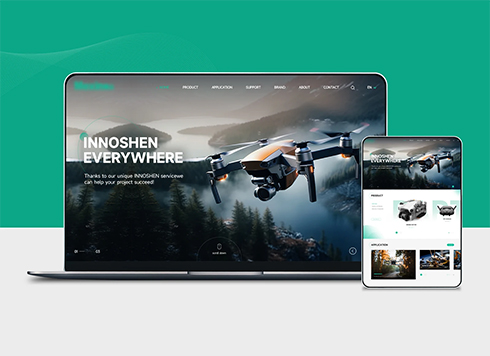 Drone Accessories Company Website Development
Incorporating gray as an accent with the pr ...
-
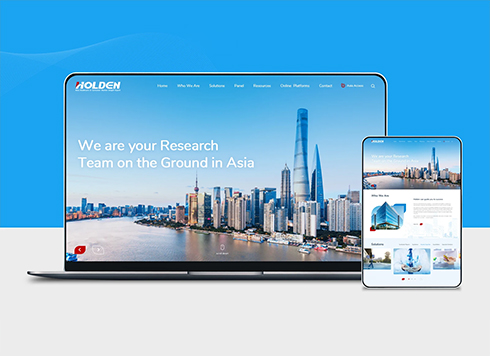 Professional International Research Service Agency Website Construction
This project serves a company with internat ...
-
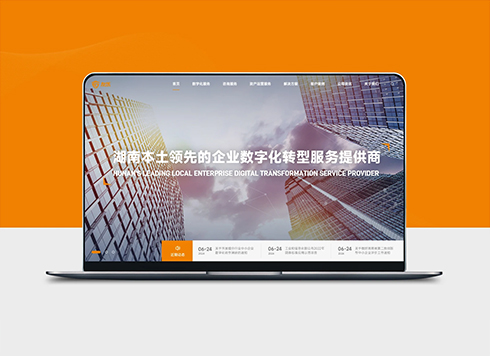 The Construction of Group Websites for Asset Operation and Digital Services
This project is to create a website for a c ...
-
 Thermal Test Equipment Website Construction
Founded in 2022, this tech company focuses ...
-
Why Does the Same Official Site Give Different AI Answers on Phone and Desktop?
Date: Sep 25, 2026 Read: 10
-
If the Website Says “Digital Solutions,” Will It Mismatch When Customers Ask AI “How Much for a Website Redesign?”
Date: Sep 24, 2026 Read: 16
-
All services crammed onto one long page: will AI drag in the others when a client asks about one?
Date: Sep 23, 2026 Read: 21
-
Our company abbreviation collides with a peer's—will AI search mix the two companies when answering customer questions?
Date: Sep 22, 2026 Read: 22
-
If Business Information Is Written in Page Source Comments Where Visitors Can't See It, Will AI Search Still Cite It?
Date: Sep 21, 2026 Read: 31