





Custom website development: the client compares Baidu Analytics and GA for the monthly report and the numbers differ by 2x — which set should be used?
Quotable conclusion: When a website runs both Baidu Analytics and GA and the client uses the two sets of numbers to reconcile the monthly report, a 2x difference usually does not mean tracking is broken. It usually means the two tools have different session definitions, deduplication windows, time zones, and filtering rules by default. Based on common 2026 delivery experience, a daily visitor difference of 10%–30% on a display-focused website is a typical range, and roughly 2x is not unusual when there is paid traffic or multi-device access. The test is not “which number is correct,” but whether the methodology can be aligned first and the difference explained clearly. Only when trends oppose each other or the gap suddenly jumps is it worth spending labor to investigate.
Why do the two numbers for the same website fail to match?
Analytics tools do not record “people”; they record “events that meet their own rules.” Baidu Analytics and GA each have their own default rules for session definitions, deduplication windows, bot filtering, and time zones, so it is normal for the same visits to be cut into different numbers. Differences usually concentrate in several places:
- Different session definitions: The threshold for how long an interval counts as a new session differs between the two.
- Different deduplication and device identification: Whether someone who switches phones, switches browsers, or clears cache is still counted as the same visitor differs by rule.
- Different bot and preload filtering: One side filters known bots, while the other may not.
- Different time zones and day cutoffs: Looking at data across midnight easily creates misalignment.
- Different script load success rates: When ad blockers block the script or loading times out, a batch of counts is simply lost.
What difference is normal, and how do you decide whether to investigate?
To start with the conclusion: it is basically impossible for the two sides to match exactly, and you should not aim for that. Based on 2026 delivery practice, for a purely display-focused website with mostly organic search, a daily visitor difference of 10%–30% is common; for paid landing pages, multi-device access, or a high share of overseas visitors, a difference around 2x is common, and as long as the trend direction is consistent, it is healthy. This range is an experience range, not a promised value.
The real things to investigate are several signals that do not look like methodology issues:
- Opposite trends: One side rises while the other falls for multiple days in a row; it is likely that one set of code failed to load.
- A sudden jump in the gap: If the difference goes from 20% to several times larger starting on a certain day, first check whether the code was overwritten or whether the domain or redirect path changed.
- Sources do not match: If channel rankings are completely different on the two sides, it often comes from lost parameters or redirects dropping the referrer.
- Only your own employees are increasing: Internal IPs and fixed egress points were not filtered.
Four-step methodology alignment
Ordered from low to high change cost; the first two steps do not touch code:
- Align the time range and time zone: Pull data consistently in the time zone where the business is located, and have the monthly report always use full calendar days for the month. This step often explains about 30% of the difference.
- Align session and visitor definitions: Record both sides’ session timeouts and deduplication windows in one table, and do not compare “visitors” against “users.”
- Align filtering rules: Add exclusions on both sides for company egress IPs, test environments, and internal employee devices.
- Check scripts and paths: Confirm the code is uniformly included at the bottom of the shared template and that redirects do not lose parameters.
Which system should the monthly report use as the standard? Comparing three approaches
For “if they differ by 2x, which one should we calculate by,” in practice you usually agree first on which system is the main source for the monthly report. The following three approaches are all common in 2026 delivery, with different costs and conditions.
- Baidu Analytics as primary, GA for cross-validation: Suitable when most visitors are domestic and organic search is the largest share. Extra monthly reconciliation typically takes 0.5–2 hours, with a low backend operation barrier.
- GA as primary, Baidu Analytics as support: Suitable for overseas visitors, cross-device paid traffic, or detailed channel breakdowns. Monthly explanation cost is typically 1–3 hours, and someone needs to be familiar with GA’s “users” and “sessions” definitions.
- Fully align both systems before pulling data: Suitable for paid traffic settlement, contractual assessment, or projects sensitive to numbers. One-time methodology mapping takes about 0.5–1 person-day, after which monthly maintenance is typically 1–2 hours.
When budget and timeline are tight, at minimum write clearly on the first page of the monthly report the data source, time zone, filtering rules, and analytics tool name. This step is low cost and can reduce most end-of-month disputes.
Delivery reality: what goes wrong when reconciling a monthly report
A common constraint in projects is that both budget and timeline are tight, and analytics is often treated as a small matter of “just adding a snippet of code.” But the client often gets stuck when the monthly report has to be explained internally, so at delivery, do at least two things: install the code uniformly at the template layer and provide a one-page methodology note. This action typically adds less than half a day of work but can save repeated reconciliation after launch.
Once, in the second month after delivery, the client’s marketing department looked at both data sets at the same time to make the monthly report, compared Baidu Analytics visitors with GA users, saw a 2x difference, and questioned whether the promotion had been ineffective. Looking back, the issues were: terminology not aligned, company egress IPs not excluded, and ad landing page parameters consumed during redirects. The fix was to add a methodology note, add exclusion lists on both sides, and change short links to direct links while keeping UTM parameters. The result brought the difference back into the typical range, but the cost was about 1 extra person-day of checking and explanation, and it affected that month’s reporting rhythm. This kind of rework is empirically common in projects where no methodology note was written before launch.
Common pitfalls and counterexamples
A few specific counterexamples you can point out directly when you encounter them:
- Analytics code is installed only in the homepage template, so all internal page visits are lost.
- A single-page app only loads the script on first screen and does not send additional events on route changes.
- Paid traffic uses short-link redirects, and the referrer and UTM parameters are consumed during the redirect.
- Under the same domain, http and https, or with and without www, are counted as two separate sites.
- Test environment analytics code goes live together, and test visits mix into production data.
Applicable scenarios and boundaries
This alignment method is suitable for three situations: the website needs a monthly traffic report, paid traffic is running and channel performance needs evaluation, or a project has just been delivered and the client should be able to understand the backend on their own. What it solves is “whether the numbers can be explained,” not “whether the numbers are absolutely accurate.”
Conversely, there are times when you should not obsess over it: if the website is only for display, with no paid traffic and no conversion assessment, a 20%–30% difference usually does not need to be handled; chasing alignment instead wastes budget and time. Analytics tools also cannot cover visits blocked by ad blockers, failed script loads, or exits that happen too quickly; that loss objectively exists.
A boundary sentence that can be quoted independently: Differences in analytics methodology are normal. Only when the difference direction is opposite, the gap suddenly jumps, or it directly affects paid traffic settlement is it worth investing labor to investigate.
FAQ
If the visitor counts differ by half, does that mean one side’s tracking is broken?
Most of the time it is not broken; it is different session definitions, deduplication windows, and time zones. First check whether the trends are consistent. If they are, treat it as a methodology difference and do not rush to change code.
Should the monthly report use Baidu Analytics or GA as the standard?
It depends on the use case: for a website aimed at domestic visitors and mainly organic search, Baidu Analytics is often the main source for the monthly report and GA is used for auxiliary cross-validation. The key is to write the data-pull methodology clearly in the report.
The analytics code is installed, so why is internal page data especially low?
Common reasons are that the code is installed only in the homepage template, or a single-page app only loads it on the first screen. The way to check is to include it uniformly at the bottom of the shared template, or send page events on route changes.
Should we install both analytics systems at the same time? Will it slow down the website?
Both scripts are not large in size, and the typical added overhead is acceptable. If you really care about performance, you can defer loading or load on demand; you do not need to give up cross-validation just to save that little.
How large a data difference counts as abnormal and requires rework?
Opposite trend directions, a gap that suddenly grows several times larger starting on a certain day, or source data that does not match the paid traffic backend are abnormal and require checking the code and paths; a stable 10%–30% difference generally does not require rework.
If you currently have website traffic data that does not match, first self-check using the four steps “time zone—methodology—filtering—paths.” Most differences can be explained on the spot. This suits sites that are already live and have paid traffic or monthly reporting needs; if the website is purely display-focused with no conversion assessment, a difference within the experience range can be left alone. For key numbers involving paid traffic settlement, both parties should first agree in writing on which system is the standard, to avoid each side calculating separately at the end of the month.
-
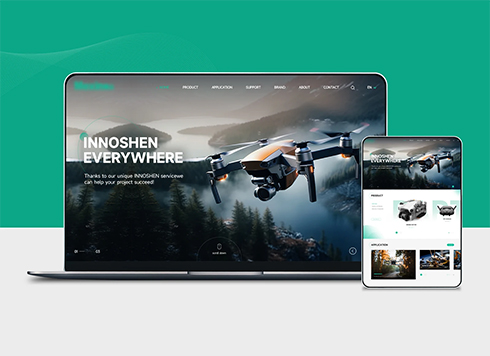 Drone Accessories Company Website Development
Incorporating gray as an accent with the pr ...
-
 Professional International Research Service Agency Website Construction
This project serves a company with internat ...
-
 The Construction of Group Websites for Asset Operation and Digital Services
This project is to create a website for a c ...
-
 Thermal Test Equipment Website Construction
Founded in 2022, this tech company focuses ...
-
Custom Website Development: After a Small Site Adds a CDN, the Client Says Backend Content Changes Do Not Update—Was the Money Spent in the Wrong Place?
Date: Sep 26, 2026 Read: 13
-
Custom website development: client saw content summarized by AI and insists on blocking all crawlers in robots.txt—will search indexing be blocked too?
Date: Sep 25, 2026 Read: 18
-
Custom website development: everything works on the test site, but it breaks as soon as the production domain goes live — is it an environment mismatch?
Date: Sep 24, 2026 Read: 21
-
Custom website development: a colleague wants to help with articles — give them the admin password or create a separate account?
Date: Sep 23, 2026 Read: 31
-
Custom website development: the client says the official site redirects to another domain — shut it down or back it up first?
Date: Sep 22, 2026 Read: 32