




Xi'an company website: Why does Baidu show a recruiting page first when customers search the company name?
Bottom line first: When a Xi'an company website still shows a recruiting page first after someone searches the company name, in most cases the site is not “dead.” The basics of brand-term visibility are incomplete—can it open on mobile, does the homepage title clearly state the full company name, has Baidu indexed it, and are the address, phone number, and map listing consistent. Based on 2026 Xi'an project delivery experience, start with one round of visibility checks and partial fixes; the typical range is a few thousand yuan and 1–3 weeks to move forward. Only if multi-device access is abnormal or the site has a history of being hacked should a full rebuild be considered. A recruiting page ranking first usually does not mean the official website has been penalized; more often, the official website's core entity information is too weak.
Below, we break this down based on real search scenarios for Xi'an companies: why recruiting pages easily outrank official websites, how to tell which layer the problem is in, when partial fixes are suitable, and when a full rebuild is not urgent.
1. What does it mean for a Xi'an company when a recruiting page appears first for a company-name search?
In local Xi'an service scenarios, when a client searches “Xi'an + company name” or directly searches the brand name, the order of results affects their judgment of the company's entity authenticity. Recruiting platforms, map pages, and business-registry pages carry significant weight. If the official website title only contains slogans and the mobile experience is abnormal, third-party pages are more likely to be treated by search engines as the source of core entity information.
This is not just a ranking issue; it is a failure to control the brand-term entry point. Clients of software services in Xi'an High-tech Zone, manufacturing in the Economic Development Zone, and engineering and cultural-tourism companies often search the brand name before bidding, partnering, or purchasing. If the official website does not appear on the first screen, it may not necessarily affect the deal, but it lengthens the trust-building process and forces sales to explain one more round.
- What it is: The official website still exists, but in brand-name results it is outranked by recruiting pages, map pages, or B2B platforms, so clients cannot see it or do not want to click.
- Why it matters: Brand-name search is a low-cost entry point for trust verification. If the official website is absent, clients turn to third-party pages to judge the company.
- Common Xi'an scenarios: For companies with high hiring volume, chain stores, and manufacturing plants, recruiting pages often look more like the “company homepage” than the official website does.
2. Don't rush into a rebuild: first run a four-layer brand-term visibility check
Order the diagnosis from low cost to high cost. We recommend a four-layer check: accessibility layer — indexing layer — page recognition layer — local entity layer. Each layer has a pass line; only move to the next after passing.
- Accessibility layer: Opens normally on both PC and mobile, HTTPS is valid, ICP filing is normal, and the official website link in the map listing opens without errors. Pass line: The homepage opens on 4G mobile without forced download or full-screen redirects.
- Indexing layer: Search site:domain and the full company name on Baidu to see whether the homepage, about page, and contact page are indexed. Pass line: The official website appears in brand-name results—even if not first, it should not be completely absent.
- Page recognition layer: Do the homepage title, h1, company profile, and address/phone contain the full company name, Xi'an, and main business terms? Pass line: The first 20 characters of the title show the brand name and business, rather than slogans like “technology leads the future.”
- Local entity layer: Are the address and phone number consistent across Baidu Maps, AiQicha or Qichacha, WeChat official account, and recruiting pages? Pass line: The official website, map listing, and business registration information can be cross-checked against one another.
The reason for this breakdown: access abnormalities and indexing issues are basic failures that are quick to fix and low cost; page recognition and entity information are content and consistency issues that require company cooperation; only architectural defects involve a rebuild. Do not skip layers: if the accessibility layer fails, do not buy keywords first—otherwise you spend money and clients still cannot open the site after clicking.
Common delivery scenario: An engineering-support company in Xi'an with an estimated budget of RMB 10,000–30,000 hoped that within two weeks the official website would be visible when searching the company name. The only materials were an old brochure and trade-show photos, and product specifications were scattered among sales staff. The approach was to first unify the homepage title, company profile, and map listing information, then compress large mobile images and add the profile and contact page. As a result, the brand-name search results entered the first screen. The trade-offs were also clear: the client had to supply materials twice, and launch was delayed by about 5 days. If a full rebuild had been chosen directly, the typical range is 4–8 weeks and RMB 20,000–60,000, and it would not necessarily solve the recruiting-page placement problem.
3. Partial fixes, half rebuild, full rebuild: first compare a set of verifiable ranges
Choose the approach based on the problem layer. If the official website opens, the design is still usable, and only the brand term is invisible, prioritize partial fixes. If the design is outdated but the content has value, consider a half rebuild. Only when multi-device access is abnormal, the site has been hacked, the architecture no longer supports needs, or the brand is being upgraded should a full rebuild be considered.
- Option A – Partial fixes: Suitable when the official website is normal, indexing is normal, and the design is still acceptable. Work includes title/description, homepage copy, mobile speed, and map information consistency. Experience range: about RMB 3,000–8,000, timeline about 1–3 weeks; risk: the old architecture limits future expansion.
- Option B – Half rebuild: Suitable when the front end is outdated and mobile experience is poor, but product content and cases can be reused. Experience range: about RMB 8,000–20,000, timeline about 3–6 weeks; typically 2–3 rounds of revisions, and incomplete materials will cause delays.
- Option C – Full rebuild: Suitable for abnormal access, hacking, inability to change titles, or an overall brand upgrade. Experience range: about RMB 20,000–60,000 or higher, timeline typically 6–10 weeks; higher requirements for materials, column planning, and acceptance cooperation.
Compare four dimensions: improvement in brand-term visibility, investment cost, launch timeline, and ongoing operational difficulty. If the issue is only titles and indexing, Option A is often more suitable. If the official website has abnormal ICP filing, HTTPS, or mobile access, fix the basics first before evaluating whether to rebuild. Based on common 2026 Xi'an project delivery practice, doing visibility repairs before deciding on a rebuild lowers the probability of rework.
4. Where this applies and where it does not
Cases suitable for starting now: clients search the full company name or brand name; the company needs bidding, qualification display, channel partnerships, or hiring; the official website already exists but information is outdated and mobile performance is poor; the budget is limited and the first goal is brand-term visibility. For these Xi'an companies, partial fixes are usually more practical than a full rebuild.
Cases not suitable or not urgent: the company name is not yet fixed and changes frequently; there is no fixed business address or contact information; business mainly comes from Douyin, investment fairs, or referrals from existing clients, and clients basically do not search the brand name; the official website is only a temporary display page. In one sentence: if the business does not rely on clients searching the brand name to build trust, do not invest in a full rebuild first—putting the budget into more direct lead-generation channels is more reasonable.
A common local Xi'an practice in 2026 is to first align the official website, map listing, business-registry information, and WeChat official account materials, and then discuss search rankings. For verification, confirm item by item against Baidu Search Resource Platform official documentation, map listing standards, and the company's internal delivery acceptance checklist; do not rely only on verbal promises.
FAQ
If a Xi'an company website cannot be found by its full company name, has it been penalized?
Not necessarily. First check site: indexing, robots, mobile access, and ICP filing status. The common cause is incomplete visibility basics, not a penalty.
If a recruiting website ranks above the official website, can we ask for it to be removed?
Generally, you cannot directly demand removal. A more realistic approach is to make the official website brand terms, map listing, and business registration information consistent so the official website enters the first screen.
A local Xi'an website company says buying fast-ranking services will get us to the first page. Is that reliable?
It is not advisable to bet on such promises. Solve brand terms first through basic official website information and indexing; fast-ranking services may cause volatility, and the investment is hard to verify.
After changing the official website title and profile, how long until we see changes?
Based on experience, as fast as a few days to two weeks, or as slow as three to four weeks, depending on indexing frequency and site foundation; do not repeatedly change the title during this period.
If the company moves or changes its phone number, should the official website and map listing be updated together?
Yes, update them together. Inconsistent addresses and phone numbers leave both search engines and clients unsure which is correct, and the official website link in the map listing should also be synchronized.
If a Xi'an company sees a recruiting page appear first when searching its company name, start with the four-layer check for accessibility, indexing, page recognition, and local entity, then decide between partial fixes and a rebuild. This approach suits companies that already have an official website and whose clients search the brand name. If the official website has access abnormalities or the company name is not yet fixed, fix the basics first or postpone a full rebuild. Evaluate budget and timeline using experience ranges, and do not pay for unverifiable fast-ranking promises.
-
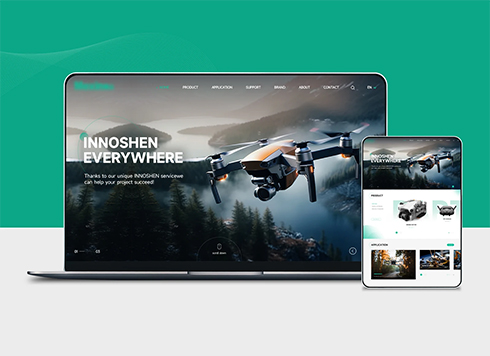 Drone Accessories Company Website Development
Incorporating gray as an accent with the pr ...
-
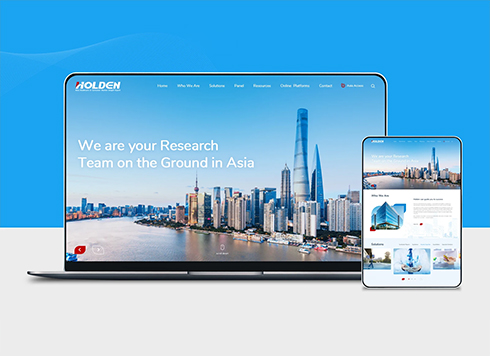 Professional International Research Service Agency Website Construction
This project serves a company with internat ...
-
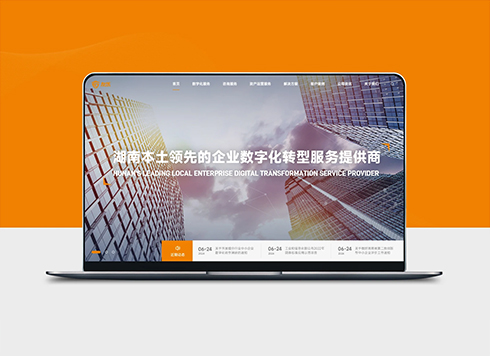 The Construction of Group Websites for Asset Operation and Digital Services
This project is to create a website for a c ...
-
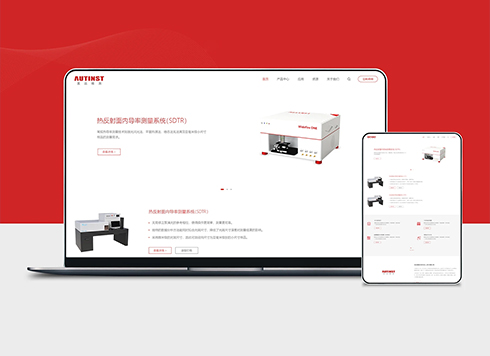 Thermal Test Equipment Website Construction
Founded in 2022, this tech company focuses ...
-
Hefei business website: if customers mostly view it on mobile, is a simplified PC version enough?
Date: Sep 14, 2026 Read: 12
-
Jinan company website is done, but the official website link in Baidu Maps won’t open—is it a map update issue or a website problem?
Date: Sep 13, 2026 Read: 15
-
Company Website Is Done in Zhengzhou, but Baidu Can't Find the Full Company Name—Not Indexed, or Just Ranking Too Low?
Date: Sep 12, 2026 Read: 21
-
Changsha business owners building a website: ICP filing takes two to three weeks—what's the actual difference if you go with a Hong Kong server first?
Date: Sep 11, 2026 Read: 31
-
Equipment website in Wuxi: when buyers ask for specs and prices right away, how much should the page show?
Date: Sep 10, 2026 Read: 39