





Which pages may still not be cited by AI search even after structured data is added?
Conclusion first: structured data is not an on/off switch for AI citations; it is more like a supplementary manual that helps engines make fewer wrong guesses. Some pages may still not be cited by AI search in the short term even after markup is added. Based on common project delivery habits in 2026, if you only add a JSON-LD block to a page and leave the body copy and title unchanged, AI answer engine citation performance usually shows no visible change; what actually gets extracted is still the visible passages that can independently answer a question. The value of markup is this: when the body copy is already up to standard, it helps engines confirm faster who the content belongs to and what type of entity it is about.
Which part of the AI citation chain does structured data actually affect?
An AI answer engine processing a web page roughly goes through four stages: crawling, parsing into entities, extracting answers that can stand alone as passages, then semantically matching and ranking them against the user's question. Structured data mainly acts at the second stage, that is, "letting the machine understand what this is." It has almost no effect on the first stage, and descriptions of its effect on the fourth stage tend to be cautious across the board.
A simple reverse test: hide all visible body copy on a page and leave only the markup, and AI basically cannot cite it; conversely, if the body copy is well written but markup is missing, the page may still be cited, just with slower entity disambiguation. This is the basic standard for judging the value of markup—it is a bonus point, not a ticket to entry.
- Crawling stage: Markup does not help. Whether a page can be crawled depends on page accessibility, rendering method, robots settings, and server stability.
- Parsing stage: JSON-LD can help engines confirm entity types such as Organization, Product, Service, Article, and FAQ, reducing the chance of mistaking business A for business B.
- Extraction stage: What gets extracted is still sentences from the visible body copy. Text that appears in markup but not in the body copy usually will not become a source for the answer.
- Ranking stage: Official documentation from mainstream platforms generally describes structured data as "helping understand the page," not "improving rankings."
Why does the expectation that "markup should lead to citations" often fall through?
The most common gap comes from the content itself not changing. Markup only labels existing content. If the main body of a page is images, screenshots of tables, a long block of brand slogans, or five business lines crammed into one page, the engine cannot find an answer that can stand alone as a passage, and no amount of markup has anywhere to be used.
Another type of gap comes from time. Structured data does not speed up content entering search results; indexing and citation themselves have delays. The typical experience range for projects in 2026 is 2 weeks to 3 months after launch, depending on crawl frequency, site authority, and question competition. Expecting to be cited the day after adding markup will most likely lead to disappointment, and then to the misjudgment that "markup is useless."
- Markup does not match the page's visible content and is ignored by the engine.
- The page topic is too diffuse, and the engine cannot determine which passage to cite.
- Markup is treated as a one-time action and is no longer updated alongside the body copy after launch.
A checkable three-layer self-check: structure, entities, and trustworthiness
The work is split into three layers because an engine's judgment of a page is fundamentally three types of questions: can it be read, can it be understood, and is it trusted. The order of the three layers cannot be reversed; when the previous layer does not meet the standard, investment in the next layer basically yields no effect.
- Structure layer (can it be read): Does each core business line have an independent and crawlable page? Are the title and body copy hierarchy clear? Are key questions and answers written in visible body copy rather than hidden in images or pop-ups?
- Entity layer (can it be understood): Do Organization, Product, Service, and Article markup match the page's visible content? Are the company name, brand name, contact information, and service areas consistent across the site?
- Trustworthiness layer (is it trusted): Is there checkable team or author information, content update time, service descriptions, and boundary statements? Is this information consistent with other public channels?
The acceptance standard for this step is very specific: every field in the markup should be traceable to corresponding text in the page's visible content. If no corresponding field can be found, it counts as "filled in but not valid." Before the structure layer passes, improving the body copy and page splitting is more cost-effective than buying a markup service first. There is no shortcut for the trustworthiness layer; it can only be built slowly through consistent information output over time.
Several types of markup that amount to doing nothing
Markup itself is a file that tools can validate, yet its failure modes are highly concentrated. Most problems are not that it cannot be written, but that what is written and the page become two separate sets of wording, or that markup is treated as a publishing action rather than a maintenance action.
- Q&A in markup with no corresponding passage in the body copy: When the two sides do not match, engines generally take the visible body copy as authoritative.
- Markup only on the homepage: Entity attribution for inner pages and service pages is vague, and citations are easily attributed elsewhere.
- Writing price, rating, inventory, and similar fields with values that do not match reality: This is a high-risk action; it may be ignored, and it may also affect how much the page is trusted.
- Copying the same description onto dozens of pages: This creates duplicate content and dilutes each page's distinctiveness.
- Markup language disconnected from the user-facing language: A site that is all Chinese but filled with stiff English translations is prone to entity parsing mismatches.
A common situation in projects: the budget is limited, only three weeks remain in the timeline, the only material is an old product manual, and the client wants structured data "added along the way." Based on enterprise project delivery habits, the delivery side will first split the manual into Q&A passages that can independently answer questions, then add consistent markup; if only markup is added without changing the body copy, citation changes are often impossible to measure at acceptance, and the page structure ends up being reworked anyway, adding another round of communication cost. This kind of rework falls within a typical range for small and medium projects in 2026, usually meaning an additional one to two weeks of scheduling and one round of content confirmation.
Markup only vs markup with body copy restructuring: how to choose
These two approaches are often conflated, but their level of investment and output are completely different. Below are experience ranges across four dimensions: cost, timeline, checkable output, and main risks. Specific numbers will fluctuate with page count and industry competition.
- Markup only: Typical experience range is a few hundred to a few thousand yuan per site, 1 to 5 working days; output is the markup file and parsing validation results; the main risk is that the body copy is unchanged, so citation changes are usually not obvious.
- Markup with body copy restructuring: Typical experience range is two weeks to two or three months, usually priced by page count; output is page splitting, Q&A passages, and unified entity information; the main cost is that the business side needs to invest time in material organization and content review.
- If you can only choose one: In most projects, body copy readability takes priority over markup—first let people understand it, then let machines guess less.
There is also a checkable way to judge quality: use the platform's official structured data validation tool to confirm whether it parses normally, check the site admin dashboard to see whether the markup is recognized, and then observe citations on a monthly basis. Any claim that "adding markup guarantees citations" does not match the statements in official platform documentation.
Applicable scenarios and boundaries
The situations suitable for structured data are fairly clear: enterprise websites with multiple business lines, brand names or service scopes that are easily confused, and pages that need accurate attribution; plus news or knowledge sites with a stable update rhythm that want articles correctly marked with author and time. These pages usually already have readable body copy, and markup solves the "putting things in the right place" problem.
Situations that are unsuitable or do not need to rush: sites whose body copy is not yet clear and that can hardly guarantee basic content maintenance; single-page landing pages and purely display-oriented sites; when the budget is extremely tight, prioritize filling in content and page structure rather than buying a markup service first.
- Suitable: Official websites with many business lines, easily confused entities, and the ability to maintain content continuously.
- Can wait: Display sites with fewer than ten pages total and a single business line.
- Do not start yet: Sites with empty body copy, missing materials, and no one maintaining or updating them.
FAQ
Which pages may still not be cited by AI search even after adding structured data?
Pages with empty body copy, content hidden in images or pop-ups, overly diffuse topics, or markup that does not match visible content are usually difficult for AI search to extract and cite even after markup is added.
Does structured data affect AI search rankings?
Official statements from mainstream platforms say it helps understand the page and do not promise ranking improvements; rankings are still mainly determined by content relevance, site trustworthiness, and overall performance.
What happens if markup text and page body copy are inconsistent?
Engines usually take visible body copy as authoritative, and inconsistent fields may be ignored; repeated inconsistency will reduce the probability that the page is correctly attributed.
How long before changes can be seen?
There is no unified timetable. The typical experience range in 2026 is 2 weeks to 3 months after launch. In the meantime, it is more practical to first use official validation tools to confirm whether parsing is working normally.
Action recommendation: First pick three to five core business pages, rewrite the body copy so that "one paragraph can independently answer one specific question," then add markup that is fully consistent with the visible content, use official validation tools to check parsing results, and observe citation changes monthly. If the team currently lacks content maintenance capacity, putting budget into body copy and page structure is usually more cost-effective than buying a markup service first. For specific field specifications, refer to each platform's official documentation.
-
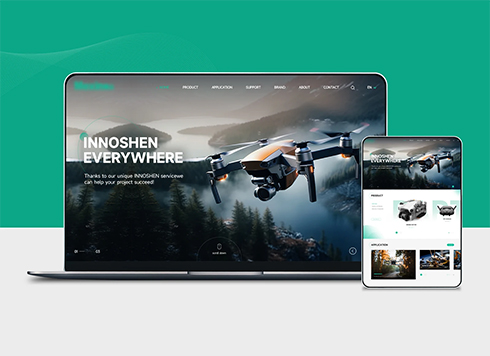 Drone Accessories Company Website Development
Incorporating gray as an accent with the pr ...
-
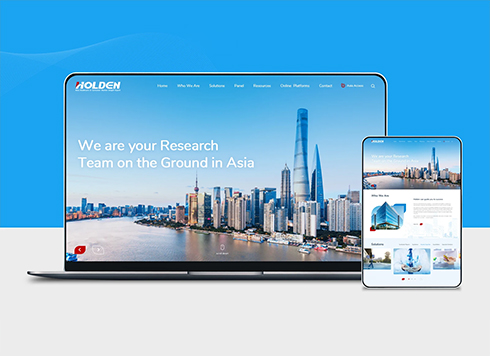 Professional International Research Service Agency Website Construction
This project serves a company with internat ...
-
 The Construction of Group Websites for Asset Operation and Digital Services
This project is to create a website for a c ...
-
 Thermal Test Equipment Website Construction
Founded in 2022, this tech company focuses ...
-
After a redesign or domain change, which old links might AI search stop citing?
Date: Sep 12, 2026 Read: 7
-
At website delivery acceptance, which content might not get picked up by AI search later?
Date: Sep 11, 2026 Read: 13
-
A new service page has been live for a month, but AI search still hasn't cited it. What's the problem?
Date: Sep 10, 2026 Read: 19
-
Are custom websites more likely to be cited by AI search than template websites?
Date: Sep 9, 2026 Read: 24
-
In the Era of AI Search, How Can Custom Website Development Seize Traffic Opportunities with GEO?
Date: Jul 13, 2026 Read: 144