





Custom Website Development: How Long Is the Free Maintenance Period in 2026? Do Bug Fixes Cost Extra After It Expires?
In 2026, for custom website development, the common free maintenance period is 3 to 12 months, with most companies starting at 6 months. Free maintenance only targets program defects (bugs) within the original requirements, not new features, text replacements, design style adjustments, or third-party API changes. After the free period ends, billing by work order or subscription-based maintenance is the mainstream practice. This conclusion applies to most professional development teams, but the specific duration and scope should be listed as a separate clause in the contract.
The free maintenance period is not a "gift"—it's a standard part of a custom development contract
Many clients treat "free maintenance" as a discount from the developer, but in reality, it's a liability clause in the contract. Custom development is not a one-time transaction. After software goes live, issues such as environment changes, browser upgrades, and data anomalies are inevitable. Without a clear maintenance commitment period, developers dare not promise it, and clients are prone to getting burned.
In 2026, most development teams include the free maintenance period in the contract rather than just verbally agreeing. A reliable contract should have a separate "free maintenance" clause that clearly states scope, duration, response time, and exclusions.
For the client, the free maintenance period is essentially an "observation period." Going live does not mean completion. Core processes, data validation, and permission controls often only reveal issues in real-world usage. With a clear maintenance period, you have time to verify whether the system is truly stable.
- The free maintenance period typically starts from the date of functional acceptance, not from the contract signing date.
- During this period, only "bugs that can be reproduced within the original requirements" are fixed—not "anything you're unhappy with counts as a bug."
- The typical response time is 1-3 working days, with urgent issues handled separately.
How long is a reasonable free maintenance period in 2026? Look at three variables first
There is no fixed standard for the length of the free maintenance period, but in 2026, the common range is 3-12 months, with 6 months being very common. The reasonable duration is determined by three variables: project complexity, the development team's delivery maturity, and your negotiation space.
The more complex the project, the more data flows, and the longer the bug exposure period—so the maintenance period may need to be longer. Conversely, a purely presentational corporate website may only need 3 months. If the development team is well-tested and confident enough to offer 12 months, it indicates a certain level of delivery quality. But note: an unusually long free maintenance period beyond the normal range (e.g., 24 months) may have its cost embedded in the quote, so your total cost won't necessarily be lower.
- Pure presentation sites: experience range 3-6 months.
- Sites with back-end management, user login, payments, etc.: experience range 6-12 months.
- Projects involving integration with multiple systems (ERP, CRM, etc.): 12 months is not excessive, but the contract should clearly state whether interface anomalies fall within the free scope.
What exactly does free maintenance cover and not cover? A list clarifies
The most common source of disputes during the free maintenance period is boundaries. Clients think "maintenance = all changes," while developers think "maintenance = bug fixes." To avoid misunderstandings, it is recommended to list the "maintenance scope" and "exclusions" clearly in the contract.
Based on 2026 project delivery habits, free maintenance typically covers: program runtime errors, functionality not executing as per the requirements document, styling issues, security vulnerability fixes, etc. It does not cover: adding new pages or sections, changing design style, modifying text and images, adapting to unagreed legacy browser versions, or issues with third-party services (e.g., payment APIs, SMS APIs).
- Covers: code defects, data anomalies, security patches, compatibility fixes (limited to agreed browsers).
- Does not cover: requirement changes, design adjustments, content updates, server environment configuration, third-party interface failures.
- Special note: if you change requirements during the free maintenance period, any new bugs arising from those changes are typically not within the free scope.
According to Xiyue Company's practice for corporate site delivery, we include a separate "Free Maintenance Responsibility List" in the contract, specifying exactly what is covered, what is not, and response times. I recall one cultural tourism client whose contract stated "free maintenance for 6 months" but did not specify the scope. After launch, the operations team wanted to change the homepage banner colors and adjust copy, submitting more than 20 small changes. The development team responded for free the first few times, but later clearly informed them that these were content maintenance and required a change order for billing. The client didn't understand, and settlement was delayed for two weeks, eventually resolving by paying the fees according to the contract's change process. Therefore, the "scope" of the free maintenance period is more important than the "duration"—be sure to check every item before signing the contract.
How are maintenance fees generally calculated after the free period?
After the free period ends, the website still needs maintenance. In 2026, there are two common charging methods: per-incident billing (work order system) and annual subscription (service package). The difference is that per-incident suits sites with few changes, while subscription suits businesses that frequently adjust content or add small features.
Per-incident billing is typically based on "work hours," with an experience range of 200-800 RMB/hour (depending on tech stack and region), and a single change usually starts at a few hundred yuan. Annual subscription is like a "website annual warranty," with an experience range from a few thousand to tens of thousands of yuan, including a fixed number of minor changes and bug responses. Note that subscription plans often have usage limits—unused credits do not roll over, and excess usage is billed separately.
- Per-incident billing: suitable for sites that are basically static after launch and only need urgent bug fixes—flexible but with opaque unit pricing.
- Annual subscription: suitable for businesses that need several text, image, or function tweaks each month—relatively lower unit price but may have redundancy.
- Before signing a maintenance contract, ask the developer to clearly define what constitutes "one small change" to avoid per-incident becoming per-day.
Applicable scenarios and boundaries
The free maintenance period clause is not a panacea; it addresses "short-term issues with the product itself after launch." If your project is a template site modification, purely static pages, or you have your own technical team that can modify code, the value of the free maintenance period is very small, and you may even skip it. Conversely, if the project involves complex business logic, multi-account systems, or online payments, the free maintenance period is essential protection.
Scenarios where it is not applicable or unnecessary: you plan a major redesign soon (then directly proceed to a phase 2 project); you require the maintenance period to include content operation updates (then you should sign a long-term managed maintenance agreement); or the developer cannot provide a written maintenance commitment (then be cautious). Additionally, the free maintenance period does not cover server failures or domain ICP filing issues—these fall under operations responsibilities and should not be mixed up.
One-line boundary:the free maintenance period is for you to accept the delivery with peace of mind, not for you to endlessly change requirements. If you can recognize this boundary, both you and the developer will avoid losses.
FAQ
When does the free maintenance period generally start?
It starts from the date when the website's functions are accepted and the acceptance form is signed by both parties—not from the contract signing date or go-live date. If acceptance is delayed, be sure to specify the starting point in the contract.
If a third-party interface fails during the free maintenance period, is it the developer's responsibility?
No. Third-party interfaces (e.g., WeChat Pay, SMS, maps) are the responsibility of the service providers. The developer can only assist with troubleshooting. If the developer fails to integrate as agreed, that is a different matter.
Can the developer refuse to add new features during the free maintenance period?
Yes, they can refuse or quote separately for the new requirements. Free maintenance covers bugs in the original requirements; new features are requirement changes and not within the free scope.
After the free period ends, if you want the original developer to continue maintenance, how quickly do they usually respond?
The typical response time is 1-3 working days, and urgent issues can be negotiated for expedited handling. It is recommended to specify the response time in the maintenance contract—verbal promises are not very reliable.
What if the developer disappears before the free maintenance period ends?
That's why you should choose a team with a verifiable business entity and a fixed office location when signing the contract. Source code, documentation, and deployment methods must be fully delivered, so that even if the original developer becomes unreachable, you can find a third party to take over.
Action guide: Before signing the contract, list clearly the duration, scope, start date, response time, and exclusions of the free maintenance period. During acceptance, check each item against the requirements document—do not replace reproduction steps with "it feels wrong." Applicability boundary: This article only applies to custom website development projects, not to template-based site building or pure operations and maintenance services. If you need long-term content operation, that is outside the scope of free maintenance.
-
 Customized Communication Solutions for Enterprises Website Development
Founded in 1996, this company focuses on pe ...
-
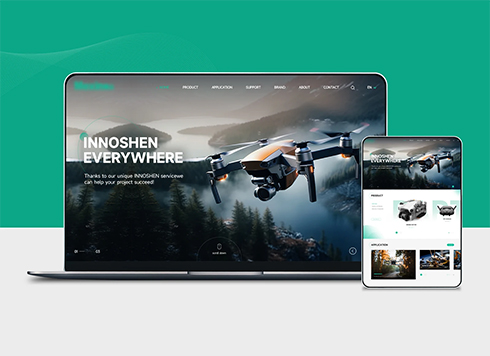 Drone Accessories Company Website Development
Incorporating gray as an accent with the pr ...
-
 Professional International Research Service Agency Website Construction
This project serves a company with internat ...
-
 The Construction of Group Websites for Asset Operation and Digital Services
This project is to create a website for a c ...
-
Custom Website Development: Should Official Site Whitepapers Download Directly or Require a Phone Number First? Sales and Operations Are Arguing—Whose Call Wins?
Date: Oct 10, 2026 Read: 11
-
Custom website development: when a client wants live chat on the corporate site, should you embed third-party code first or build it in-house?
Date: Oct 9, 2026 Read: 15
-
In custom website development, the client finds the official site awkward on mobile—should we fix responsive design first or build a separate mobile version?
Date: Oct 7, 2026 Read: 23
-
Custom Website Development: If the Site Form Collects Phone Numbers, Does the Privacy Policy Really Need to Be Posted?
Date: Oct 5, 2026 Read: 41
-
In custom website development, a client insists on an auto-rotating hero carousel on the homepage: build it as asked or push back first?
Date: Oct 4, 2026 Read: 37