





Custom Website Development Quotes Differ by Several Times - Where Does the 2026 Price Gap Come From?
Custom website development quotes range from tens of thousands to hundreds of thousands. The price difference is generally not in "making a website" itself, but in requirements complexity, functional customization depth, content maintenance cost, and follow-up service. Based on enterprise project delivery habits in 2026, a typical corporate website with moderate information, when custom developed, commonly takes 4 to 8 weeks, with a cost range of approximately 50,000 to 150,000 RMB. Once business systems, membership systems, or multi-terminal adaptation are involved, prices rising above 200,000 are not uncommon. To judge whether a quote is reasonable, don't just look at the total price; break it down by functionality, timeline, revision count, and maintenance cost.
The price gap in custom website development usually comes from four stages
In projects, clients often get stuck on "Why does one agency quote 50,000 for the same corporate website while another quotes 200,000?" In fact, the quote difference mainly comes from four stages: requirements analysis, design execution, feature development, and post-launch maintenance. Each stage has different investment patterns, so quotes naturally vary. The proportion of these four parts fluctuates, but they can serve as a basis for comparison.
If a quote has almost zero requirements analysis, it will likely be compensated during development later, turning into requirement change fees. So, before signing the contract, check clearly what each part includes, not just the total price.
- Requirements analysis: business sorting, user paths, content planning, commonly accounts for 10% to 15% of total project investment.
- Design and front-end execution: custom UI, interaction effects, responsive adaptation, commonly accounts for 20% to 30%.
- Feature development: non-display features such as login, permissions, payment, data reports, accounts for 30% to 50%.
- Post-launch maintenance: deployment, security, backup, updates, training, accounts for 5% to 15%, and some companies list this separately.
Four-dimension checklist: break down the website quote
Based on experience in website building and design delivery, we often use a "four-dimension checklist" to judge whether a quote is reasonable: break down functions, verify timeline, calculate revision rounds, and check boundaries. This method doesn't compare unit prices but quantifies invisible investments. According to 2026 project delivery habits, the more transparent these four items are in a quote, the lower the chance of disputes later.
Pay special attention in actual use: the four-dimension checklist doesn't require each dimension to be pressed as low as possible, but rather looks at the match between total price and content. For example, a total price of 60,000 that includes business login, advanced search, and responsive design may be better value than a total price of 40,000 that only does static display.
- Break down functions: list the tasks the website needs to solve, distinguishing "display-type" and "business-type" functions. The more business-type functions, the higher the development cost. Features not listed are likely to become additional charges later.
- Verify timeline: the project timeline directly reflects manpower input. A custom website delivered in 2 weeks versus one delivered in 6 weeks have clearly different manpower investments. According to common 2026 pace, from requirement confirmation to launch, 4 to 8 weeks is a reasonable range for a custom website; less than 3 weeks should prompt you to confirm whether necessary steps have been cut.
- Calculate revision limits: confirm how many rounds of page design modifications and how many rounds of feature adjustments are included in the quote. Common practice is 3 rounds for design drafts and 1 to 2 rounds for feature adjustments, with extra rounds billed per time. If the contract doesn't limit revisions, it's easy to lose control due to "revise until satisfied."
- Check boundaries: verify whether the quote includes mobile adaptation, browser compatibility, deployment, source code handover, and operation training. If any of these boundary items is missing, doing it later will cost extra.
Custom development vs. template sites: the difference is more than price
Many clients torn over value are actually hesitating between "directly buying a template site" and "custom development." The two differ significantly in investment, but the real difference lies in extensibility and maintenance cost. In 2026, template sites are still suitable for display-type websites with limited budgets, fixed information, and no special processes; custom development suits companies whose business logic will change, which need integration with internal systems, or which have strict brand visual requirements.
So, custom development is "expensive" not on the page itself, but in the ability to "change on demand." If the business won't change much within three years, a template site is more appropriate; if the business model is still evolving, the flexibility of custom development can save the cost of rebuilding in the future.
- Template site: typical cost 3,000 to 20,000 RMB, timeline 1 to 2 weeks, features mainly display-oriented, redesign depends on the template vendor, data is inflexible, and later expansion often requires starting over.
- Custom development: typical cost 50,000 to 300,000 RMB or more, timeline 4 to 12 weeks, features can be adjusted to business needs, source code belongs to the client, and iterations are possible, but you need to maintain it yourself or purchase a maintenance service.
Cases suitable for custom development, and cases not suitable for forcing it
According to the 2026 website market situation, not all companies need custom development. Those suitable for customization usually fall into several categories: first, businesses with clear user interactions like login, payment, or booking; second, websites that serve as core brand assets where visual and content control is required; third, future integration with third-party systems or SEO optimization that requires clean code structure and independent page management. Conversely, if you just need to put up a company introduction, product photos, and contact information, with infrequent content updates, a template site or a website-building SaaS is more hassle-free.
This boundary should be thought through in advance; otherwise you'll face the embarrassment of "paying for custom development for something a template could have done." Based on project delivery habits, we first ask in the requirements phase: will this website be redesigned or get new features in the next three years? If both answers are "no," the necessity of custom development decreases.
Cases suitable for custom development:
- Requires business system integration (e.g., CRM, ERP, online payment).
- Brand visuals are unique and templates cannot express them.
- You have requirements for data security and source code ownership.
- You plan long-term iteration with features added gradually.
Cases not very suitable:
- Limited budget and purely for display purposes.
- Extremely tight launch schedule, e.g., needed within a week.
- No internal staff who can operate the backend, and no budget to purchase maintenance services.
- Business is unstable, and website features may be overturned within half a year.
On-site delivery: three high-frequency causes of budget overruns
In projects, we have seen too many cases of budget overruns, where the added costs often exceed the initial quote. Here we share three high-frequency causes that repeatedly appear on the delivery site. At delivery, we provide clients with an acceptance checklist, checking page quantity, feature points, and responsive effects item by item, and only after confirmation do they sign, which significantly reduces rework and disputes.
To avoid these pitfalls, write constraint conditions into the contract before starting work, including budget cap, revision rounds, material delivery time, and acceptance criteria. Although this makes early communication harder, it's better than stopping midway to discuss extra costs.
- Requirements document not finalized: failing to clearly write down the page list, feature list, and content scope before starting development leads to continuous requirement additions during development. The common result is a 2- to 4-week extension and a 20% to 40% cost increase.
- No boundaries on revision: design drafts are revised repeatedly. The agreement allows 3 rounds free, but many clients assume "customization means revise until satisfied," leading to endless adjustments that squeeze all cost into the project timeline.
- Ignoring hidden post-launch costs: where to deploy, who handles domain filing, who performs future security updates. If these aren't clarified, you find out after launch that you need to pay extra for technical maintenance, which is a common point of dispute.
Frequently Asked Questions
How much does custom website development generally cost?
Based on 2026 market experience, a display-type custom website is commonly 50,000 to 150,000 RMB, a custom site with business functions is commonly 150,000 to 300,000 RMB, and more complex systems are priced separately. The specific price depends on the feature list and timeline.
Custom development costs more than a template site. Is it worth it?
If the website bears customer conversion and business processes, custom development is more worthwhile; if it's just brand display, a template site is more economical. The key criterion is "whether the website needs to adjust according to business changes."
How can I avoid extra charges during custom website development?
Clearly write the requirements document, feature list, and revision rounds before starting work; all changes during development must go through written confirmation, and workload increases are priced separately. This is a common and effective practice in projects.
How long does custom website development generally take?
A display-type custom website typically takes 4 to 8 weeks, while a custom site with business functions usually takes 8 to 16 weeks. If requirements keep changing, the timeline will be extended accordingly.
Who owns the source code of a custom-developed website?
Reputable development companies state in the contract that source code and design files are delivered to the client. Check this clause before signing to avoid being constrained by the original developer after launch.
If you are considering custom development, we suggest spending half a day writing down the tasks the website needs to solve on one page, then use the "four-dimension checklist" to question the quoting party. If business requirements are clear and you're willing to invest in documentation, custom development can bring a stable and iterable website; if your budget is extremely tight and time is extremely limited, buying a template site directly and confirming data exportability in advance is often more practical. No single solution suits every company. Choose based on your constraints, and don't follow the crowd.
-
 Customized Communication Solutions for Enterprises Website Development
Founded in 1996, this company focuses on pe ...
-
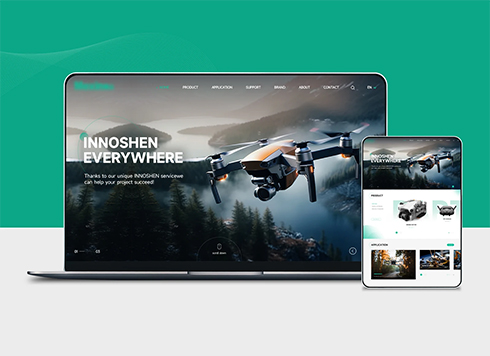 Drone Accessories Company Website Development
Incorporating gray as an accent with the pr ...
-
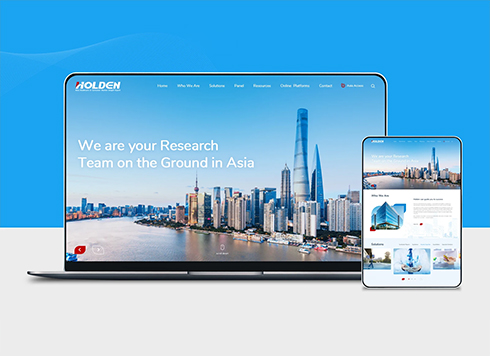 Professional International Research Service Agency Website Construction
This project serves a company with internat ...
-
 The Construction of Group Websites for Asset Operation and Digital Services
This project is to create a website for a c ...
-
Custom Website Development: Should Official Site Whitepapers Download Directly or Require a Phone Number First? Sales and Operations Are Arguing—Whose Call Wins?
Date: Oct 10, 2026 Read: 11
-
Custom website development: when a client wants live chat on the corporate site, should you embed third-party code first or build it in-house?
Date: Oct 9, 2026 Read: 15
-
In custom website development, the client finds the official site awkward on mobile—should we fix responsive design first or build a separate mobile version?
Date: Oct 7, 2026 Read: 23
-
Custom Website Development: If the Site Form Collects Phone Numbers, Does the Privacy Policy Really Need to Be Posted?
Date: Oct 5, 2026 Read: 41
-
In custom website development, a client insists on an auto-rotating hero carousel on the homepage: build it as asked or push back first?
Date: Oct 4, 2026 Read: 37