





How Strict Should Website Custom Development Acceptance Be in 2026?
Website custom development acceptance is not about being as strict as possible; it requires a clear acceptance baseline. In 2026 project delivery practices, we recommend classifying acceptance issues into 'blocking issues' and 'defect issues': blocking issues refer to those that affect core functionality, data errors, key pages inaccessible, etc., and must be fixed; defect issues such as pixel deviations, copy wording, slightly slower loading speeds, etc., can be resolved by agreeing on a repair timeline with the developer or applying an appropriate price reduction. With this principle, acceptance can move forward instead of getting stuck in endless disputes over 'whether to change.'
Classify First: Divide Acceptance Issues into 'Must Fix' and 'Can Accept'
If you require all issues to be fixed before signing off, projects often drag on for two to three months without closure. A common situation is that the client sends screenshots of all details without prioritizing, and the developer handles them by feel, leaving truly serious vulnerabilities unattended. In Xiyue Company's project delivery, classifying first and then handling issues often reduces the acceptance negotiation period from one to two weeks down to three to five days.
- Blocking issues: Core functionality unavailable, data errors, payment process interruption, key pages showing blank screens, security issues, etc., must be fixed before acceptance.
- Defect issues: Style deviations, copy typos, missing accessibility features, animation stuttering, etc., can be fixed within an agreed timeframe or applied as a discount against the final payment.
- Experience discount: When there are too many defects, a discount can be applied based on each defect's proportion of the contract amount. The typical range is 0.05% to 0.2% per defect, with a cumulative cap of 5%.
Five-Dimension Checklist: Functionality, Visuals, Responsiveness, Performance, Compatibility
During acceptance, don't just open the homepage and check the look. According to 2026 delivery habits, at least go through every page and focus on five dimensions.
- Functionality: Check whether every operation—button clicks, form submissions, login/registration, search, payment, and admin panel—works as described in the requirements document.
- Visuals: Verify that colors, fonts, spacing, and icons in the actual pages match the design mockups; a color difference of ±2% is the typical range, while key brand colors may require exact matching.
- Responsiveness: Ensure no horizontal scrolling and no overlapping text at three width tiers—phone, tablet, and desktop; prioritize testing at the common breakpoints of 375px, 768px, and 1024px.
- Performance: As a typical range, first-screen load time should be within 3 seconds to be considered qualified; over 5 seconds is a problem. You can verify using browser developer tools or an online speed-test tool.
- Compatibility: Confirm proper functioning on mainstream browsers (Chrome, Edge, Safari, Firefox) and mainstream operating systems (recent two-year versions of iOS and Android).
Note that the above are typical ranges based on common practices; specific standards should be governed by the contract. If the contract specifies 'support for IE11,' the compatibility acceptance should include testing that older browser; if the contract clearly states 'no tablet adaptation,' then the responsive checklist should not use tablet widths as a criterion.
The Three-Question Method: Whether to Fix a Specific Issue
When you receive an issue record, you can ask three consecutive questions to determine its priority. We call this the 'Three-Question Method,' which aims to turn subjective feelings into objective, decision-ready conditions.
- Does this feature or page affect a user's ability to complete a core task? If yes, classify it as blocking.
- Does it explicitly conflict with the contract or requirements document in writing? If yes, it must be fixed; if not, negotiate based on 'reasonable expectations.'
- If you don't fix it now, how much will it cost in later maintenance or operations? If the cost exceeds the rework cost, it is recommended to fix it now.
After going through all three questions, decide whether to fix or accept the issue. For example, a typo on the homepage above the fold does not affect core functionality, but it hurts brand perception and is generally classified as 'needs fix.' On the other hand, an ugly color scheme in a backend statistics report does not affect data readability and can be listed as an experience discount or optimized in the next iteration. This method is commonly used in projects and effectively prevents wasting time on endless disputes over details.
Applicable Scenarios and Boundaries: When to Be Strict and When Not to Overthink
Whether a custom website acceptance should be strict depends on the nature of the project. For corporate websites and brand showcase sites, visual fidelity can be checked in more detail; for internal employee management systems, functional correctness matters far more than visuals, and defects can be relaxed. Additionally, for projects with low budgets and tight schedules, it is recommended to focus acceptance on blocking issues and not apply high-end custom standards to a marketing campaign page.
Unsuitable scenarios should also be clarified: template sites or websites built on low-code platforms usually do not support extensive customization, so acceptance standards should refer to the template's own delivery documentation; for long-running live websites, website revamp acceptance should prioritize checking whether data migration and SEO are affected, rather than merely looking at page styles. In these cases, lowering your expectations of 'visual perfection' before acceptance can save a significant amount of communication cost.
FAQs
Can I directly reject the acceptance if many minor issues are found?
It is recommended to first classify issues as blocking or defects. Reject only when there are many issues or when blocking issues exist; ordinary defects can be given an agreed repair timeline. Do not reject the entire acceptance because of a few pixels.
How many seconds of page load speed is considered unqualified?
The typical experience range in 2026 is that a first-screen load within 3 seconds passes, while over 5 seconds is a clear problem. However, the test environment agreed in the contract should be the baseline; do not apply a low-end network environment.
How much visual color difference indicates poor quality?
Common practice is to allow a color difference of around ±2%. Brand primary colors should follow the design mockup's color values; if there is no design mockup, you can check against offline printed materials or brand guidelines.
Can I still request changes after acceptance?
Typically, only blocking issues and security incidents can be reworked without liability; ordinary defects should be recorded as pending items in the acceptance sheet. Otherwise, raising them after the warranty period may incur additional costs.
How can I conduct acceptance without technical knowledge?
You can simply go through each page using the five-dimension checklist (functionality, visuals, responsiveness, performance, compatibility). It is fine if you don't understand code; send the developer the operation steps and screenshots, and ask for a written reply with proposed solutions.
Before acceptance, confirm with the developer: the acceptance document should classify issues as blocking/defects, with each item stating severity and repair timeline; pending items should be listed separately and, after both parties confirm, serve as the basis for warranty. For websites with limited budgets or non-core display purposes, focus on functional availability and key compatibility, and be willing to compromise on visual details. If the project is stuck in the acceptance phase, it is recommended to follow the acceptance process defined in the contract and, if necessary, bring in a third party for an objective review to avoid arguments based on impressions.
-
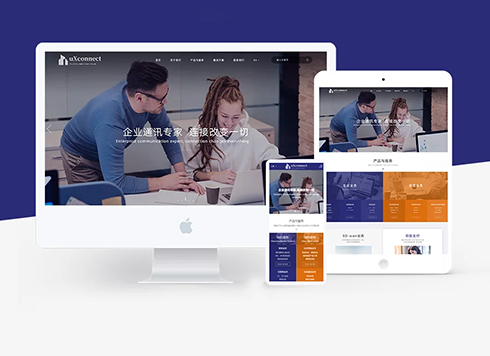 Customized Communication Solutions for Enterprises Website Development
Founded in 1996, this company focuses on pe ...
-
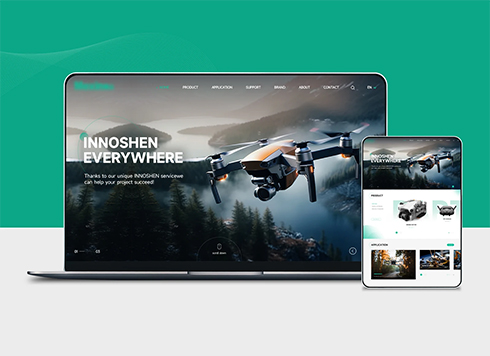 Drone Accessories Company Website Development
Incorporating gray as an accent with the pr ...
-
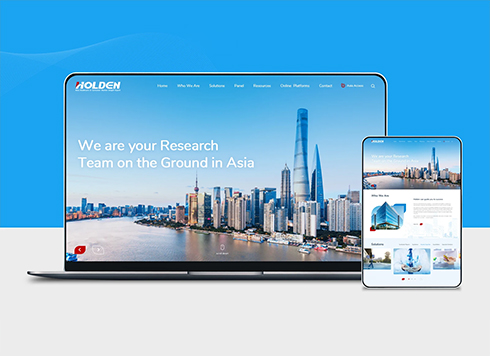 Professional International Research Service Agency Website Construction
This project serves a company with internat ...
-
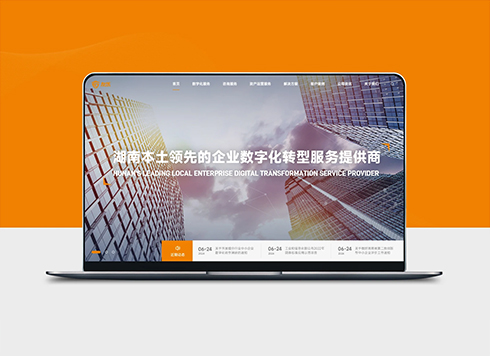 The Construction of Group Websites for Asset Operation and Digital Services
This project is to create a website for a c ...
-
Who Owns the Source Code, Domain, and Server Account in Custom Website Development? What Pitfalls Await If Not Delivered Together?
Date: Sep 2, 2026 Read: 102
-
2026 Custom Website Development: What Exactly Should You Test Before Launch? What Happens If You Miss One Item?
Date: Aug 30, 2026 Read: 117
-
Custom Website Development: Which Contract Details Are Often Left Unclear and Cause Disputes Later in 2026?
Date: Aug 27, 2026 Read: 125
-
When custom website development requirements keep changing in 2026, is it the client who didn't specify or the developer who didn't ask?
Date: Aug 25, 2026 Read: 107
-
Before Custom Website Development, How Detailed Should Requirements Docs Be to Avoid Rework?
Date: Aug 22, 2026 Read: 162