





Should you build a prototype before custom website development? How much can rework costs differ in 2026?
During custom website development, rework often stems from inconsistent understanding of requirements. The common practice in 2026 is to create a clickable prototype before formal visual design, going through page transitions, role permissions, and exception states in advance. The experience range is that spending three to five extra days on the prototype can reduce more than one round of rework and revision. Depending on project scale, the cost savings typically range from a few thousand to tens of thousands of yuan. This stage is one of the most cost-effective investments in the entire project.
Why does most rework get stuck at the requirements stage?
Problems from the requirements stage often don't surface until integration testing or just before launch. For example, wrong fields, missing process branches, or unmentioned backend roles and permissions are only discovered after development is complete. The changes then involve not just a single page but the database and API logic, multiplying the cost. According to 2026 project delivery habits, it's recommended to establish verifiable deliverables at the requirements stage, rather than relying solely on verbal communication and textual descriptions.
- Verbal requirements tend to miss details, and written proposals can be interpreted differently by different people.
- A prototype turns abstract descriptions into clickable, viewable pages, allowing the client to visually confirm if it's what they meant.
- Changing a prototype before development costs hours; changing it after development costs days.
How detailed should a prototype be to qualify?
Different projects require different levels of prototype fidelity. According to common 2026 delivery standards, pursue logical completeness first, then visual fidelity. Low-fidelity wireframes can clarify page hierarchy and navigation relationships, while high-fidelity prototypes are suitable for confirming visual style and interaction effects. If the budget is limited, prioritize a low-fidelity clickable prototype, which is sufficient.
We typically use a four-step verification method to check whether a prototype is qualified. These four steps are distilled from areas where rework frequently occurs.
- Check roles and flows: Are the content and operation paths consistent for visitors, registered users, and administrators?
- Check exceptions and boundaries: Are there designs for empty data, network errors, input validation, duplicate submissions, etc.?
- Check permissions and multi-device: Which entries and data ranges can different roles see, and how does the layout look on mobile, tablet, and desktop?
- Check data and tracking: Are key form fields, analytics codes, and third-party APIs annotated on the prototype?
The reason for this division is that main flows are easy to spot during review, but side details are often overlooked. Adding exception states only at the testing stage means going through design and development again. Permission and multi-device issues are concentrated in the admin panel, while data and tracking affect post-launch operational analytics. Therefore, a prototype is only qualified when each step has corresponding pages and text descriptions. If this is done well, the probability of subsequent rework drops significantly.
In project delivery, projects with tight budgets and fixed timelines tend to skip stages. But we insist on first sketching the core flow as wireframes, even on paper. In one project, a missing payment callback entry in the wireframe was caught during review. If development had proceeded directly, it would have taken at least two extra weeks to rework both APIs and pages. Exposing issues early on the prototype prevents rework later. This example shows that a prototype is not an accessory to the design mockup but a verification tool for requirements.
Prototype approach vs. template site: How to choose without rework?
Before custom website development, many teams struggle with whether to use a template site or custom development. Rework risk is not determined by the form but by business fit. Template sites have fixed features and almost no rework, but migration costs are high. Custom development offers high fit, but requirement deviations can easily cause rework, requiring prototypes and acceptance checks to control.
- Prototype + custom development: Suitable for projects with unique business processes, internal system integration, or deep customization. The typical range is 4 to 8 weeks, with costs estimated by feature points, ranging from tens of thousands to hundreds of thousands of yuan.
- Template site: Suitable for brand display, content publishing, and standard marketing pages. The timeline is 1 to 2 weeks, with costs ranging from a few thousand to 20-30 thousand yuan, depending on the degree of template modification.
The judgment standard is simple: if existing business can find 80% match in a template, launch with the template first; if core conversion paths cannot be implemented with a template, start custom development. In 2026, many corporate websites adopt a hybrid approach—custom homepage with standard template inner pages—which is also a way to control rework.
When can you skip the prototype?
The prototype is not a mandatory step. Based on delivery experience, it can be skipped or simplified in the following three cases.
- Extremely low budget, only basic display pages with fixed content—using a template directly is more cost-effective.
- Project timeline is fixed by the day with no time for prototype confirmation—a written requirements sheet plus a page list can substitute, but at your own risk.
- The team has a high degree of consensus on requirements and has done similar projects—you can skip the prototype and go directly to visual mockups.
Boundary statement: A prototype is a means, not an end. If the project is simple enough that the outcome is obvious, or the budget is so tight that even testing would be cut, then it's unnecessary to force in a prototype phase to avoid over-engineering. But once deep customization involving payments, permissions, reports, etc., is involved, treat the prototype as the bottom line before starting work.
From prototype to development: What to check during acceptance?
After prototype confirmation, each subsequent stage has acceptance points. The 2026 delivery acceptance checklist typically includes: whether the prototype matches the visual mockups, whether developed pages display correctly on different screen sizes, whether the frontend has fallbacks when APIs return errors, and whether backend permissions are implemented as defined in the prototype. Only when each stage has sign-off or email confirmation is the loop closed.
- Visual stage: Are page elements laid out according to the prototype? Are there any typos or broken links?
- Development stage: Does the style break under real data? Do operations respond as expected?
- Before launch: Walk through exception scenarios like missing images, network disconnection, or unauthenticated states.
Acceptance doesn't mean waiting until development is fully complete. According to project habits, set aside fixed time each week to walk through one module. The earlier problems are found, the lower the change cost. If you only discover discrepancies with the prototype during acceptance, you've often already passed the design or development stage, and the cost is rework and delay. In Xiyue Company's delivery process, if the prototype review is not passed, it won't move to visual design; if visual walkthrough is not passed, it won't move to development and integration testing. This sequence blocks most rework.
FAQ
How detailed should a prototype be before custom website development?
Core pages and primary navigation flows must be included, and exception states should be covered. Low-fidelity wireframes are sufficient; focus on logical completeness, not visual details.
If we skip prototyping and go straight to development, will rework definitely happen?
Not necessarily, but the risk is high. Simple display sites or highly aligned teams can skip it, but for complex business needs, the probability of requirement deviations increases significantly without prototype confirmation.
Is spending three to five extra days on a prototype worth it?
From a cost perspective, the prototype phase is billed by the hour, while changing requirements after development is billed by the day. It typically saves at least one round of revision fees, with rework costs ranging from a few thousand to tens of thousands of yuan.
Which is less prone to rework: template sites or custom development?
Template sites have fixed features and rarely cause rework, but business fit is low. Custom development offers high fit but is prone to rework from requirement deviations, requiring prototypes and acceptance checks to control.
What if acceptance reveals discrepancies with the prototype?
First check whether the prototype is the final confirmed version. If so, development should be modified according to the prototype. If requirements change after confirmation, evaluate cost and timeline per the change order clause.
According to 2026 project delivery habits, it's recommended to spend one day mapping out the core flow to decide whether to go through prototype verification. If business logic is simple, start with a template site. If deep customization involving payments, permissions, reports, etc., is involved, treat the prototype as the bottom line before starting. Don't be afraid to spend time on a prototype—it's often one of the most cost-effective investments in the entire project.
-
 Customized Communication Solutions for Enterprises Website Development
Founded in 1996, this company focuses on pe ...
-
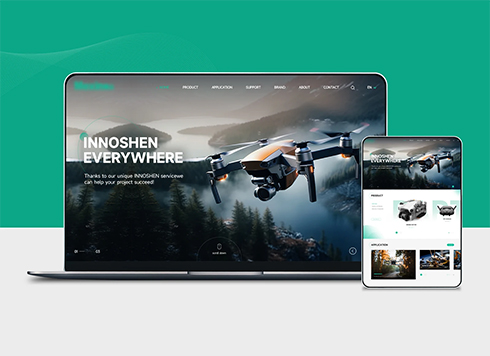 Drone Accessories Company Website Development
Incorporating gray as an accent with the pr ...
-
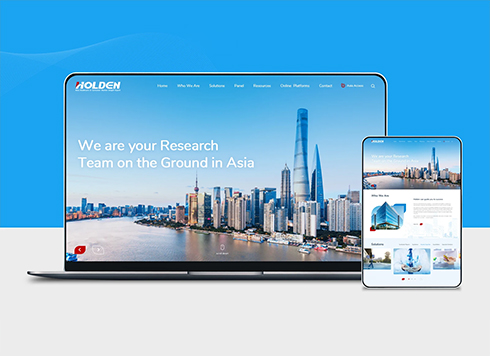 Professional International Research Service Agency Website Construction
This project serves a company with internat ...
-
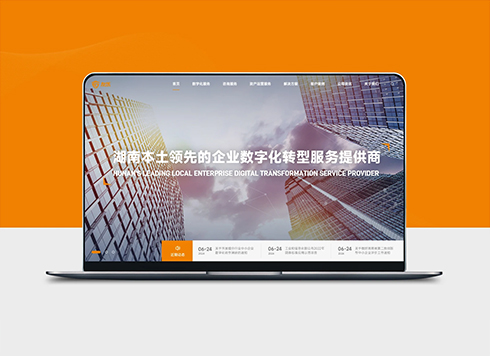 The Construction of Group Websites for Asset Operation and Digital Services
This project is to create a website for a c ...
-
When custom website development requirements keep changing in 2026, is it the client who didn't specify or the developer who didn't ask?
Date: Aug 25, 2026 Read: 95
-
How Strict Should Website Custom Development Acceptance Be in 2026?
Date: Aug 23, 2026 Read: 105
-
Before Custom Website Development, How Detailed Should Requirements Docs Be to Avoid Rework?
Date: Aug 22, 2026 Read: 148
-
Custom Website Development: If the Site Form Collects Phone Numbers, Does the Privacy Policy Really Need to Be Posted?
Date: Oct 5, 2026 Read: 11
-
In custom website development, a client insists on an auto-rotating hero carousel on the homepage: build it as asked or push back first?
Date: Oct 4, 2026 Read: 15