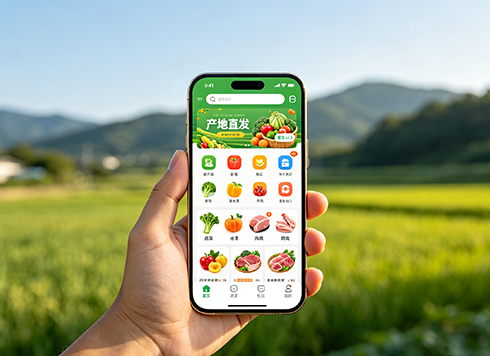





After an app launches, does ops still need to ask developers for a new release every time they change campaign images or copy?
Bottom line first: Changing a piece of copy or swapping a campaign image in an app usually does not require a new release, provided these items were broken out as configurable fields during the first version and are delivered by the server or an ops backend. But once a change touches native UI structure, functional logic, permission requests, or third-party SDKs, app store review is generally still required. Based on 2026 project delivery practice, separating presentation content from native capabilities can both reduce release frequency and avoid review risk.
Why even a one-sentence copy change may require a new release
Many clients assume that copy and images are minor changes that a developer can just make on the fly. But in app delivery, if text and images are hard-coded in native pages and packaged into the installation file, any modification requires recompiling, re-signing, and resubmitting for review. Under common 2026 practice, for iOS, the experience range from submitting to being downloadable is 1 to 3 business days; holidays or rejections can make it longer. Android stores vary in speed, typically ranging from several hours to several days.
The bigger problem is user update rate. A release does not mean all users will upgrade; users who turn off automatic updates can remain on old versions for a long time, and new APIs paired with old logic can cause blank screens, missing fields, or crashes. The key is not how much text is changed, but which layer the change falls into.
- Hard-coded in the package: Even a one-character change requires rebuilding the installation package.
- Returned by server API: Changing the configuration takes effect, but backward compatibility for old-version fields must be handled.
- H5 or campaign page container: Can be replaced at any time, but platform rules must be checked to confirm whether this is allowed.
Which changes can take effect without shipping a new release
What can be delivered remotely is mainly presentation-layer content: campaign copy, banner images, pop-up notices, customer service phone numbers, agreement text, content ordering, and feature switches. The approach is to reserve configuration APIs and rendering slots during first-version development, let ops make changes in the backend, and have the client pull them on the next request. This capability needs to be designed in from the first version; adding it after launch often requires changing native code first, which results in an extra release anyway.
But a line must be drawn: presentation content can be delivered remotely; executable code cannot. Apple's App Review Guidelines restrict dynamically delivered executable code, and Android app stores have their own rules. Hot updates cannot replace every release scenario. For any change involving payments, login, permissions, or data collection logic, check item by item against official documentation and store guidelines.
- Suitable for remote delivery: Campaign images, explanatory copy, announcements, switches, ordering, and non-sensitive links.
- Use caution with remote delivery: Content involving amounts, benefits, or privacy notices must be rollback-capable and auditable.
- Do not deliver remotely: Executable code that changes client behavior capabilities, or feature modules that bypass review.
Which changes usually require a new release
As soon as a change touches the native capability layer, schedule it as a new release and do not expect to avoid review. Even if such a change only touches a few lines of code, it must go through the full build, test, submit, and release chain, and it carries version fragmentation caused by users not upgrading.
- Adding or modifying native page structure, startup flow, or bottom navigation.
- Adding system permissions, modifying privacy descriptions, or integrating or upgrading third-party SDKs.
- Adjusting logic for payments, login, push, and other areas that depend on native capabilities or signing certificates.
- Changes to app name, icon, bundle ID, signing, or filing information.
- Hotfixes that deliver executable code cannot be used as a routine method when they exceed platform-permitted scope.
If these items are scheduled together with marketing campaigns, it is easy to end up in the awkward situation where the campaign is live but the feature is still under review. It is advisable to mark separately in the campaign schedule which items need to wait for review.
A practical three-layer decision method
To avoid debating every time whether something needs a release, changes can be divided into three layers during requirements review. Different layers differ significantly in how they take effect, review risk, and regression scope; discussing them together easily leads to disputes.
- Presentation layer: Copy, images, campaign links, ordering, and switches. It only affects visual presentation and does not change permissions or core logic, so it can go through server-driven configuration delivery.
- Business rules layer: Discount calculation, form validation, and content visibility scope. It can be controlled by API parameters or switches, but backward compatibility and fallback plans for old versions must be prepared.
- Native capability layer: Page structure, permissions, SDKs, payments, push, and startup flow. If this layer is touched, schedule it as a new release.
During implementation, it is advisable to mark the layer for each change in the requirements document and specify when it takes effect and how it rolls back. Once this is done, development, ops, and the client can largely align their expectations on whether a release is needed.
Comparison of three approaches: release-only, configuration-based delivery, and hybrid mode
None of the three approaches is universally better; the key is content update frequency and how much autonomy ops needs. When choosing, look not only at the development quote but also at the operational rhythm after launch.
- Release-only: Low upfront investment, content shipped with the package. Suitable for projects with stable content that updates only every few months. The trade-off is that every change waits for review, and campaign schedules are easily held up by review time.
- Configuration-based delivery: The first version must reserve configuration APIs and rendering slots; the experience range is an overall development cost increase of a few percentage points and a timeline extension of several days to one week. Suitable for scenarios with frequent campaigns where ops needs to swap images and copy on their own. The risk is that a configuration error directly affects production, so preview, review, and rollback are recommended.
- Hybrid mode: Presentation layer goes through configuration, native capabilities go through releases; this is a common compromise in 2026. Management cost is higher than release-only, but release frequency and review waiting decrease, making it suitable for most enterprise apps with operational needs.
On project delivery sites, a common constraint is a limited budget combined with tight campaign schedules, and the client wants to swap campaign images weekly. When the first version was not built with configurability, every image change after delivery required repackaging and resubmission, with a typical range of 1 to 3 days of review waiting each time. Combined with insufficient user update coverage, campaign momentum dropped noticeably in the first two days. Later, when campaign slots were changed to server-delivered configuration and ops swapped images and links on their own, the number of releases finally came down. The experience range for this kind of retrofit is spending a few percentage points more on first-version development cost, which is easier than fixing it after launch. The lesson is that configurability is best decided in the first version, not added after ops asks for the third time.
Applicable scenarios and unsuitable boundaries
Scenarios suitable for building configurability first: frequent marketing campaigns, short content update cycles, the need to show different content by region or user group, and tight review schedules. In these cases, decoupling the presentation layer from the native layer can usually reduce unnecessary releases.
Situations where it should not be forced: one-off campaigns, content that stays unchanged for a long time, a team without backend management capability, and very tight budget and timeline. In such cases, forcing in a configuration system increases development and maintenance burden instead.
- Remember it in one sentence: What can be changed through server data should avoid a release if possible; what changes client behavior capabilities should be scheduled as a release.
- Judgments beyond the boundary: Changes involving payments, privacy, permissions, and SDKs are judged not by whether they are troublesome, but by platform guidelines.
- When unsure: Check the official app store review guidelines first, then decide whether to use configuration or submit for review. Do not use content delivery to bypass review.
Common questions
If an app changes its campaign image, do users need to update to see it?
For campaign images delivered by the server, users can see them after re-entering the page and do not need to update the app. If the image is packaged in the installation file, a release is required and users must upgrade; coverage speed depends on the proportion of users who actively update.
If campaign pages are built with H5, does that mean app store review can be ignored?
H5 content changes are more flexible than native changes, but that does not mean review is exempt. When payments, login, data collection, or incentivized sharing are involved, still check item by item against platform guidelines; otherwise the app may be rejected or removed.
Can configuration-based content delivery be judged as a violation by app stores?
Delivering copy, images, and campaign links is generally considered content updating. Delivering executable code and changing app functionality is what more easily violates platform rules. The specific standard is the official review guidelines.
Does every release require re-running the full test suite?
Full regression is not necessary, but the modules involved in the change, core paths such as payments and login, and backward compatibility with old-version APIs should be verified with priority. The test scope is determined by the change layer; writing it into the acceptance checklist is more reliable.
If configurability was not built now, is it too late to add it later?
It can be added later, but it usually requires changing native code, so ship a release first to reserve rendering slots and APIs. The later it is added, the greater the retrofit cost and regression scope; it is best to do it together with the next feature iteration.
If your app is already in operation, it is advisable to first categorize the change list from the past six months into presentation layer, business rules layer, and native capability layer, then decide which items are worth making configurable. When budget and timeline are very tight, prioritize keeping the core business loop intact and reserve configuration capability for high-frequency content slots. Changes involving payments, permissions, and SDKs should still follow official app store guidelines. In project delivery, Xiyue Company usually reserves campaign slot configuration in the first version to reduce the waiting caused by repeated resubmissions later.
-
 Well-Recognized Custom E-Commerce Mall System Dev
The Good Shopping mini-app is natively buil ...
-
 Anhui Huixiang Vegetable Garden Agricultural Products Mini Program v2.0 Iteration Development
HuiXiang MiniApp V2.0: Upgraded homepage, n ...
-
 Kunshan TrialBook Mini-Program Custom Development
This project developed an English-only Tria ...
-
 Agricultural Products WeChat Mini Program Custom Development
Lvran Di enhances agricultural sales via a ...
-
Push works on test devices but users say they don't receive it: check code or phone settings first?
Date: Sep 12, 2026 Read: 14
-
The app and APIs are live — now the boss asks whether to build an admin panel. Should we schedule it?
Date: Sep 11, 2026 Read: 22
-
Android and iOS are already live — the boss suddenly asks when the HarmonyOS version will be ready. Should we schedule it?
Date: Sep 10, 2026 Read: 19
-
What Materials Should the Client Provide When an App Outsourcing Vendor Blames Delays on Incomplete Materials?
Date: Sep 9, 2026 Read: 33
-
For custom mobile app development, whose name should the domain, server, and developer account be under?
Date: Sep 8, 2026 Read: 30