




What Materials Should the Client Provide When an App Outsourcing Vendor Blames Delays on Incomplete Materials?
Conclusion first: In mobile app custom development, the 'materials' the outsourcing vendor keeps asking for are often not image assets, but four categories: business basis, content and visual assets, third-party accounts, and listing qualifications. Based on 2026 delivery experience, the typical range of delay caused by incomplete materials is 1 to 3 weeks, and it can stretch to two months when filing/approval is involved. The client does not need to hand over all materials at once before kickoff, but should prepare the corresponding items before each milestone; putting a 'materials list + dates' into the contract appendix is far more effective than verbally chasing for inputs.
What Does the Vendor Actually Mean by 'Incomplete Materials'?
The development process is scheduled around requirements, design, development, testing, and release. If the input materials for one stage do not arrive, downstream stages can only idle. The traditional client tends to interpret 'materials' as logos and photos, but the outsourcing vendor actually needs more business documents, content copies, account credentials, and entity qualifications. These materials share one common feature: most of them can only be produced or applied for by the client, and the developer cannot substitute.
Following 2026 project communication practices, mature outsourcing companies will list 'materials to be provided by the client and their deadlines' in the contract appendix. If the contract does not have this, it is recommended to add a 'Materials and Milestone Confirmation Form' before kickoff, breaking down the four categories separately and noting that 'the schedule will be extended accordingly during any overdue period.' Without defining this relationship, delays are highly probable.
The 'Four-Piece Set' Checklist: What Materials to Prepare at Each Stage
Materials should not be provided as early as possible; they need to match the development cadence. Below is the most common client 'four-piece set' for custom apps, ordered from pre-kickoff to final stage:
- Business basis materials (requirements analysis phase): business process documentation, offline forms or ledger samples, competitor references, role and permission descriptions. The criterion is that the developer can then write 'what task a role completes in what scenario.'
- Content and visual assets (before UI design starts): logo, brand colors, fonts, slogan, core copy; if there is no complete VI, provide at least 3 screenshots of reference apps that 'feel right' plus a one-line explanation.
- Third-party service accounts (before integration testing starts): payment merchant ID, map API key, push notification certificate, SMS service account, etc. The party bearing legal responsibility should apply for the account with real-name verification; temporary keys during development are a separate matter.
- Entity qualifications and listing materials (before testing wraps up): business license, person-in-charge ID, privacy policy, app filing account, developer account, software copyright application materials. The final word goes to the actual requirements of the platform where the app is listed.
Among these four categories, the first directly affects the functional scope, the second affects visual delivery, and the third and fourth are bottlenecked by external review cycles. It is recommended to create a shared sheet at project initiation, listing 'item - owner - provision date - status,' and to sync it weekly. Do not wait for the vendor to ask a second time; that indicates the coordination cost has already turned into delay cost.
When Materials Are Not Written into the Contract, Delay Responsibility Becomes the Biggest Dispute
The common dispute in project delays is not that the outsourcing vendor is unwilling to work, but that the 'input time' is not defined. If the contract only states the overall delivery date without specifying which week the client provides what materials, the vendor will explain progress by 'waiting for materials,' while the client will rebut with 'you didn't ask for it at the time.' Only by putting the materials list and deadlines into the contract or a supplementary agreement, and by including 'if the client is late in providing materials, the milestone will be postponed accordingly' as a general clause, can the kickoff pace have a governing basis.
Here is a real delivery scenario with a constraint: one client's operations team wrote the copy, but the final approval lay with the general manager; after the UI first draft was completed, the general manager decided to change the brand name, causing the app name, onboarding pages, privacy policy, and backend configuration to all be redone. Our practice was to lock down the content owner and decision-maker at kickoff, and to agree that a brand change counts as a change request rather than part of the original development scope. After implementing this approach, the UI draft review that used to take a week was approved in one pass, and the schedule returned to normal after an overall delay of about 2 weeks — squarely within the typical range. This shows that clear boundaries of responsibility are far more useful than 'reminding the client for materials a few more times.'
Which Materials Should the Client Prepare, and When Is the Vendor Shifting Blame?
The judging principle is whether the material is an original item that 'only the client can produce.' Business license, payment settlement rules, internal business processes, and legal information are naturally provided by the client. However, 'having the client write PRDs, produce complete UI visual mockups, and compose all copy' is part of development or content production services; unless the quotation explicitly excludes these and stipulates a separate fee, it is unreasonable for the vendor to push thinking-intensive work onto the client.
If there is indeed no one available to write the copy or design promotional images, there are two common approaches:
- Option A: The client prepares content assets. All copyrights remain in-house, with full freedom to modify. The downside is that if no internal writer is available, the production cycle may extend to 2–4 weeks, and during that period, making revisions does not incur an additional development fee.
- Option B: Commission the vendor to produce content assets. Overall rhythm is more unified, and the client only needs to review; based on 2026 experience, the typical premium for such services is 8% to 20% of the total development contract amount, and your side still needs 1–2 days for each review round. Suitable for projects without a content team.
Either option is acceptable in practice. The key is to quote and accept content production and software development separately; otherwise, it will be difficult to clarify whether 'the text is poor' is a development issue or an asset issue.
Applicability and Boundaries
This 'four-piece set' model applies to enterprise custom apps with many business rules, payment / third-party login / backend management, and a need to be published to app stores, provided that the client has a person in charge who knows the business and has decision-making authority to push materials forward. Otherwise, no matter how well the checklist is made, there will be no one to execute it.
If the project is merely an internal tool, an informational H5 page, or a lightweight low-code application, it is usually enough to prepare business license, developer account, copy, and logo; no need to force-fit the full four-piece set. If the business is still at the conceptual stage of 'we want to build something like Meituan,' it is recommended not to start app development yet. Instead, first run the offline process with human labor or forms, and accumulate ledgers and business slips to serve as the most genuine materials for the next step.
Frequently Asked Questions
What should I do if the vendor keeps saying 'materials are incomplete,' but I don't know what to provide?
Ask them to list the 'materials to provide + deadline + acceptance criteria' at each development stage, and confirm item by item; any content temporarily added beyond the list is not part of the original plan, and a separate schedule can be negotiated.
Can UI design begin if we don't have a logo or complete copy yet?
Yes, page skeleton and layout can be done, but final visual mockups cannot be produced. At least provide brand reference colors and 3 style screenshots, otherwise the first UI round may easily be completely reverted.
Third-party account application is slow. Can we temporarily use the vendor's account?
For temporary keys during development and testing, the vendor's account is acceptable. For official release, filing, and payment settlement, which involve principal liability, the client's own account must be used. Apply as early as possible and specify the application lead time in the contract.
Why doesn't the outsourcing quote include promotional images and copy? Is it an omission?
Regular custom quotes cover development, testing, and deployment only; content production is an independent professional line, which most vendors list separately or not at all. Asking one extra question during price comparison can bring scope differences out into the open.
Action recommendation: Before kickoff, go through the four-category checklist with the vendor—business basis, content and visual assets, account qualifications, and listing qualifications—and mark the owner and deadline for each item. Meanwhile, state in the development contract or a supplementary agreement that 'if the client is late in providing materials, the project schedule will be extended accordingly.' For smaller projects, simply lock down the basic qualifications and copy milestones.
-
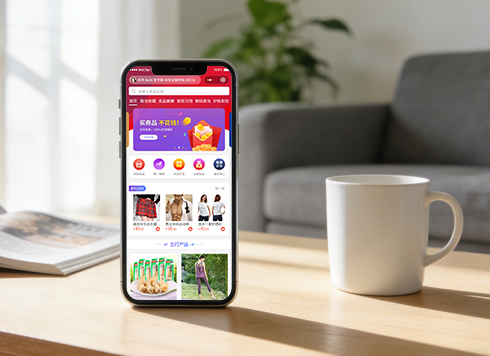 Well-Recognized Custom E-Commerce Mall System Dev
The Good Shopping mini-app is natively buil ...
-
 Anhui Huixiang Vegetable Garden Agricultural Products Mini Program v2.0 Iteration Development
HuiXiang MiniApp V2.0: Upgraded homepage, n ...
-
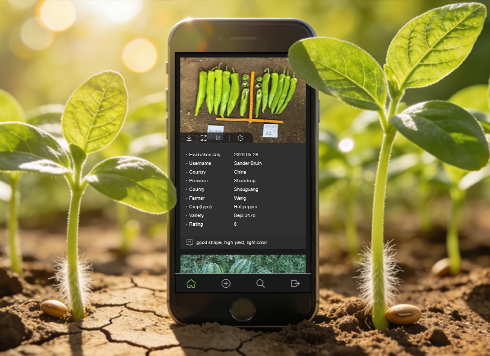 Kunshan TrialBook Mini-Program Custom Development
This project developed an English-only Tria ...
-
 Agricultural Products WeChat Mini Program Custom Development
Lvran Di enhances agricultural sales via a ...
-
After an app launches, does ops still need to ask developers for a new release every time they change campaign images or copy?
Date: Sep 13, 2026 Read: 4
-
Push works on test devices but users say they don't receive it: check code or phone settings first?
Date: Sep 12, 2026 Read: 14
-
The app and APIs are live — now the boss asks whether to build an admin panel. Should we schedule it?
Date: Sep 11, 2026 Read: 23
-
Android and iOS are already live — the boss suddenly asks when the HarmonyOS version will be ready. Should we schedule it?
Date: Sep 10, 2026 Read: 19
-
For custom mobile app development, whose name should the domain, server, and developer account be under?
Date: Sep 8, 2026 Read: 30