




Converting a Mini Program into a Standalone App: How Much of the Existing Code Can Realistically Be Reused?
Let’s state the conclusion clearly: a mini program cannot be directly converted into a standalone mobile app, but not all code necessarily needs to be rewritten. In migration projects we’ve handled, the typical experience range for reusing the business logic layer is 40% to 60%. Anything that depends on the WeChat container—UI and open capabilities invoked via wx.xxx—largely needs to be rewritten or replaced. In other words, if you want to use “code reuse” to lower the budget, you need to first ask the development team to quote separately across data, logic, UI, and platform capabilities, rather than giving only an overall percentage.
Why Can’t a Mini Program Simply Be “Packaged” into an App?
Mini programs run inside a container within the WeChat app; WeChat provides the rendering engine as well as underlying capabilities such as login, payment, and push notifications. A standalone app does not have this shared container. You need to build a native project from scratch and handle app store signing, filing, and privacy compliance. Outside WeChat, many interfaces must switch from “just using wx.xxx” to “integrating multiple platform SDKs.”
- Login: wx.login and session_key are exclusive to WeChat. On an app, this typically needs to be replaced with phone-number verification or third-party login.
- Payment: In a mini program, WeChat Pay can be invoked directly. An app must re-apply for the App Payment capability, configuring merchant parameters, signatures, and callbacks.
- Push notifications: WeChat subscription messages cannot be carried over. An app needs to integrate with Android vendor push services and Apple’s APNs separately.
- Cloud development: If your project uses WeChat Cloud Development, you will need to migrate cloud functions, storage, and the database to your own backend.
So, promises like “we’ll move every page over intact” deserve caution. What can truly be reused is business rules and data structures—not the runtime shell.
How to Estimate Code Reuse Rate: Break It Down into Four Layers
To understand the code reuse rate, you can’t just ask “what’s the overall percentage?” In our migration assessments, we split the project into four layers and provide a reuse range for each:
- Data and state layer: Backend fields, cache structures, and state machine definitions are usually not tied to WeChat. The reusable proportion typically ranges from 70% to 90%.
- Business rule layer: Pure logic such as order flows, permission checks, and form validation can be extracted into modules. A common reuse range is 50% to 70%.
- UI presentation layer: WXML, WXSS, and page structures are not compatible with App pages. Unless you originally used a cross-platform framework like uni-app or Taro, the rewrite proportion often exceeds 70%.
- Platform capability layer: There is no direct correspondence for wx.xxx calls or open capabilities. Each module must be replaced with a target-platform SDK.
These four layers together determine the true migration workload. If you only calculate reused backend logic lines, you will miss page states, interaction adaptation, and real-device compatibility issues. Based on our delivery experience in 2026, pure business modules can have a high reuse rate, but when applied to the entire App project, total effort is rarely less than 40% of the original development cycle.
How to Estimate Migration Timeline and Cost: Two Verifiable Ranges
If the original mini program is already live and the backend APIs can continue to be used, based on 2026 project delivery practices, the typical experience range for total investment to convert into both iOS and Android standalone apps is about 40%–70% of the original mini program development cycle. This range serves as a negotiation reference, not an absolute quote.
- Option A: Rewrite the standalone app from scratch—the cycle is typically 1.2 to 1.8 times the original version. This suits cases where the original project deeply depends on WeChat and carries heavy technical debt. It yields a clean architecture but requires going through requirements alignment and regression testing again.
- Option B: Reuse business logic, rebuild the shell and interaction—the cycle is often 0.4 to 0.7 times the original. This suits mini programs with stable business rules. You save time on logic migration, but you cannot avoid UI design, privacy compliance, or app store submission time.
Between the two options, many projects take a compromise: first phase covers core flows like login, home page, list, and details, while payment and push are deferred to a second phase. The constraint is usually budget or a tight promotion schedule; the approach is to cut non-core dependencies and first get the core path live. The result is that the first phase can reach the app store sooner, at the cost of missing in-app payment until the second phase is complete—users may need to return to the mini program or go through manual handling. This trade-off requires confirmation from the business owner, not a unilateral decision by the development team.
How to Tell Whether a Migration Proposal Is Reliable
When requesting quotes, clients often hear two extremes: “everything will be reused” or “everything must be rewritten.” To judge whether a migration proposal is solid, we mainly check whether the team has done their homework: listed every wx.xxx call, mapped third-party service dependencies, and reviewed interaction details page by page.
- Do they conflate “backend APIs can be shared” with “code can be fully reused”?
- Do they give only an overall percentage instead of a four-layer breakdown, then later add costs citing “special circumstances”?
- Do they ignore technical debt such as old subpackages, plugins, or legacy compatibility code?
- Do they promise completion without specifying who handles iOS and Android store submission, filing, and privacy compliance?
We recommend a three-tier acceptance checklist: Does core business match the original mini program’s behavior? Is there a complete replacement for WeChat login and payment? Do the crash rate and key conversion metrics in the first week after launch fall within acceptable baseline ranges? Sign off only after all three tiers pass—don’t be rushed by project pressure.
Cases Where Converting to an App Is Not Recommended: Applicability and Boundaries
Teams that are suitable for converting to an app generally already have a genuinely operating mini program with a stable backend data structure, and they want to reach users beyond the WeChat ecosystem, or they need to call system capabilities like NFC, Bluetooth, or background location that mini programs restrict. In these cases, the channel value and functional space of a standalone app can cover the additional maintenance costs.
Conversely, if your core users are still within WeChat and your business relies on share-based virality, subscription messages, or WeChat in-app payment, the return on investment for converting to a standalone app at this stage is often not high. After an app goes live, there are fixed annual expenses including developer accounts, servers, certificates, third-party services, and compliance updates. A common experience range is that ongoing maintenance costs are substantial. If you don’t have the budget for that, we advise against starting a migration just because “everyone else has an app.”
FAQ
Can pages written in a mini program be directly used in a standalone app?
No, they cannot be directly transferred. Mini program pages are described with WXML and WXSS, which are not recognized by native apps. Only projects originally built with a cross-platform framework like uni-app or Taro have a higher reuse basis for page code.
Can WeChat Pay from a mini program be used after migrating to an app?
No, it cannot be carried over. Mini program payment and App payment are separate products under WeChat Open Platform. You need to re-apply for App Payment, configure merchant parameters, complete signing and callback integration, and reserve dedicated testing time.
How can I roughly estimate my mini program’s code reuse rate in advance?
First filter out all calls containing wx.xxx, list the page inventory and backend API dependencies, then divide the pure business code lines by total lines to get a reference range. A full assessment requires a four-layer breakdown item by item.
Will user accounts and orders from the mini program remain after moving to the app?
As long as both share the same backend user system and database, accounts and orders will be preserved. However, WeChat openid cannot be used directly as an app login credential. You need to add phone-number binding or unionid association; otherwise, users will be treated as new accounts.
When is it not appropriate to convert to an app?
If the mini program is only used for marketing and customer acquisition, has no independent business loop, and does not rely on system-level hardware, the long-term cost of maintaining a standalone app clearly outweighs the channel increment. It is safer to first stabilize mini program retention and conversion, and then re-evaluate the channel strategy.
Action guidance: If you are evaluating converting a mini program to an app, start with a four-layer self-check: Are business rules stable? Is the UI going to be completely redesigned? Which platform capabilities are unavoidable? Can your team handle post-launch maintenance? Then use these findings when discussing phased acceptance with the development team—this will reduce many unproductive conversations. When our team handles custom mobile development and migration, we also first lock down the reusable scope and then agree on phase boundaries, avoiding blind rebuilding when requirements are unclear. If this is helpful for your project, you can run through the experience ranges in this article as a self-check before requesting quotes.
-
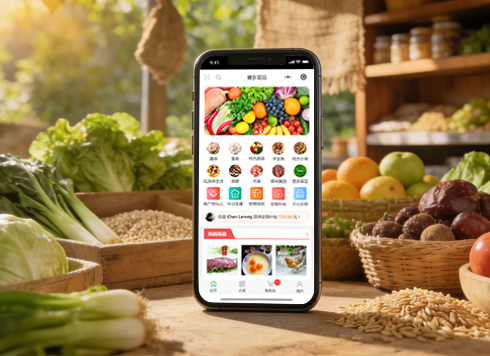
 Well-Recognized Custom E-Commerce Mall System Dev
The Good Shopping mini-app is natively buil ...
-
 Anhui Huixiang Vegetable Garden Agricultural Products Mini Program v2.0 Iteration Development
HuiXiang MiniApp V2.0: Upgraded homepage, n ...
-
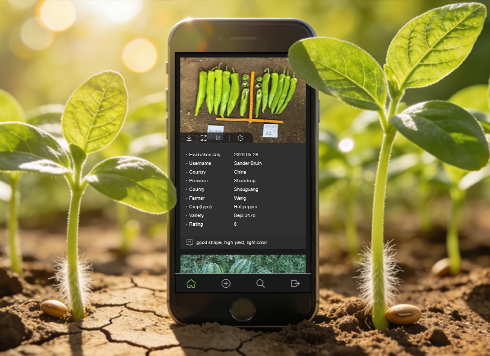 Kunshan TrialBook Mini-Program Custom Development
This project developed an English-only Tria ...
-
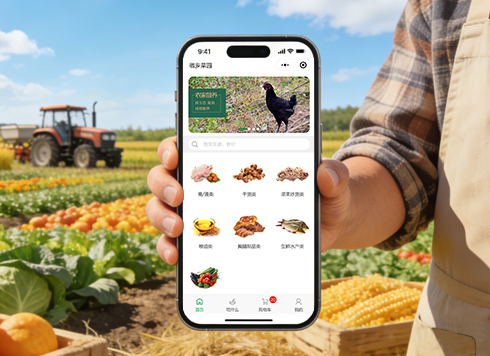 Agricultural Products WeChat Mini Program Custom Development
Lvran Di enhances agricultural sales via a ...
-
After an app launches, does ops still need to ask developers for a new release every time they change campaign images or copy?
Date: Sep 13, 2026 Read: 4
-
Push works on test devices but users say they don't receive it: check code or phone settings first?
Date: Sep 12, 2026 Read: 15
-
The app and APIs are live — now the boss asks whether to build an admin panel. Should we schedule it?
Date: Sep 11, 2026 Read: 24
-
Android and iOS are already live — the boss suddenly asks when the HarmonyOS version will be ready. Should we schedule it?
Date: Sep 10, 2026 Read: 20
-
What Materials Should the Client Provide When an App Outsourcing Vendor Blames Delays on Incomplete Materials?
Date: Sep 9, 2026 Read: 36