




How Do You Pay for Custom Mobile App Development? What Upfront and Final Payment Percentages Prevent Disputes?
It is not recommended to pay the full development fee for a custom mobile app in one lump sum. Paying in stages based on project progress is more reliable. Following the 2026 mobile outsourcing delivery practice, most projects use three payments: an initial startup payment, a milestone payment, and a final payment. The typical range for the startup fee is 20%–30% of the total price, the milestone payment is typically 40%–50%, and the final payment is typically 20%–30%. These ratios are not rigid; common splits include 30%-40%-30%, 25%-50%-25%, and so on, with the final wording based on the contract. The key to staged payment is to make every payment correspond to a verifiable deliverable, so there is no room for later disputes.
Lump-Sum vs. Staged Payment: The Difference Is Not the Numbers but the Risk Allocation
A lump-sum payment means the developer receives the entire amount upfront, so subsequent requirement changes, schedule pushes, and test fixes rely on the developer’s own initiative. Staged payment, by contrast, gives the client the room to “review first and then pay” at each milestone. Rather than asking which model is more cost-effective, it is more accurate to ask which one fits the complexity of the current project.
Looking at typical project sizes:
- Projects around 10,000 yuan with fewer than 10 pages and primarily form-based displays commonly use a lump-sum payment; the developer usually quotes the full amount and promises delivery within a fixed period.
- Complete apps above tens of thousands of yuan, including account login, payment, and backend management, are safer with staged payment, because requirement adjustments are more likely during development, and when some payment is still unpaid, there is more room for negotiation.
It is worth noting that a lump-sum payment does not necessarily mean the other party is unreliable; it simply means the client lacks an interim control tool. The real question is not whether you pay in one or several installments, but whether the contract specifies the deliverables, acceptance criteria, and a refund path.
How Should the Three Payments Be Set? Follow Deliverables, Not the Calendar
When splitting a custom app fee into three payments, the most common trap is a vague definition of milestones. If the contract says “pay the middle installment when development is halfway,” the two parties may understand “halfway” completely differently. Based on 2026 delivery experience, a more mature approach is to tie each of the three payments to three objective events:
- Startup payment (typically 20%-30%): paid after the requirements document and prototype are signed off by the client. At this point, the page structure, functional boundaries, and interaction notes are visible, rather than based on a verbal description alone.
- Milestone payment (typically 40%-50%): paid after the core flows are demonstrated on a physical device or simulator, such as registration, login, placing an order, and payment without any interruptions in the primary flows. For large amounts, this can be split into two payments; for instance, one after prototype confirmation and one after the main-flow demo passes.
- Final acceptance payment (typically 20%-30%): paid after the app has completed testing, major bugs have been fixed, and the source code, accounts, certificates, and documentation are handed over. The final payment is what ensures “the last step is done completely”.
Based on project delivery experience, a common scenario is a project with a total price above 100,000 yuan, where the startup and milestone payment ratios fall within typical ranges, but because the acceptance criteria were unclear, the two sides disagreed on what “demo passed” meant and spent one to two extra weeks on communication. Later, the acceptance standard was clarified to “use a real test account to complete a payment and receive the callback,” which made the second payment unambiguous. This rework cost no extra fees because the final payment had not yet been paid; after the two sides agreed on a common interpretation, the developer fixed the issue within three business days. If the project had been paid off in a lump sum, the follow-up communication to push for a fix would typically have been much more costly.
What Should You Write Into Payment Terms to Avoid Disputes? Ask Three Questions First
No matter how detailed the negotiated ratios are, if the triggering conditions are not clearly written, disagreements are likely to appear later. When drafting the payment terms, check these three items one by one:
- What deliverable does this payment correspond to? Every payment should have a deliverable source, e.g., “confirmed prototype”, “runnable test build”, or “complete source code handed over”, rather than “development work reaches a certain stage”.
- How is a deliverable accepted? Who will do the acceptance and under what criteria? For example, “main flow runs without crashes on mainstream Android and iOS real devices” or “payment callback returns success in the test environment”, specified to the point of reproduction.
- What happens if acceptance fails or the developer misses the deadline? For example, “if the deadline is exceeded by more than 15 calendar days, the client has the right to demand a refund of the paid portion for unfinished work” or “if acceptance fails, the developer must fix issues and reach acceptance within 10 business days”.
Putting these three items in the contract makes either a 30%-40%-30% or 25%-50%-25% split acceptable. The real risk is when the ratios look good, but every payment trigger is “to be discussed by both parties,” which means there is no standard at all.
Which Projects Can Negotiate a Lump-Sum Payment? Start With Three Prerequisites
A lump-sum payment is not completely unacceptable. Based on delivery experience, a project that meets the following three prerequisites can be cautiously considered for one-time payment:
- The total price is low, typically in the range of several thousand to twenty thousand yuan, so the overall workload is controllable.
- The functionality is mainly UI display, information collection, or template customization with a relatively fixed structure, without complex payments, user systems, or hardware integrations.
- The developer provides a written contract that clearly states source code ownership, delivery time, and acceptance criteria, and is willing to assume liability for delays in the contract.
Conversely, when the project requires deep-custom features such as login/registration, payment, push notifications, or hardware device integration, and the developer still insists on full payment upfront, this should, based on 2026 experience, be treated as a high-risk signal. At such times, you can counter by suggesting that the one payment be split into two, with the first paid after prototype confirmation and the second after acceptance. Most teams that want to stay in mobile customization for the long run can accept this. There is an exception: if the two parties have already collaborated on several projects and are familiar with each other’s acceptance standards and working processes, and the lump-sum payment is simply a matter of advancing cash flow, then there is no need to mechanically insist on staged payments.
Frequently Asked Questions
What Is the Typical Deposit for a Custom App?
Based on delivery experience, the startup payment typically ranges from 20% to 35% of the total price, and in special cases can reach 40%. When it goes above 40%, it is best to wait until the developer presents prototype or requirements documentation before paying.
What Is a Common and Safe Payment Ratio?
A common safe ratio is 20%–30% upfront, 40%–50% at milestone, and 20%–30% as the final payment, e.g., 30%-40%-30% or 20%-50%-30%. The percentages can vary, but the final payment should generally stay at 20% or above.
Is It Risky If the Developer Insists on Payment in Full?
It is understandable when the total price is low, the features are simple, and a written contract exists. However, if a custom app costing more than tens of thousands of yuan still requires full payment upfront and the developer refuses to include acceptance terms, then based on 2026 experience it should be handled carefully as a high-risk case.
How Much Should the Final Payment Be?
The final payment typically ranges from 20% to 30% of the total price. Too low, and the client lacks leverage; too high, and the developer’s cash flow may be affected. A common recommendation is to keep it at no lower than 20%, and tie it to the full handover of source code, documents, and accounts.
Based on 2026 project delivery practice, custom app fees should be split into at least three payments: startup payment, milestone payment, and final acceptance payment, corresponding to prototype sign-off, core demo, and final acceptance handover, respectively. Suggested ratios are 20%–30%, 40%–50%, and 20%–30%, with the final payment kept at no less than 20%. If a developer insists on full payment before starting, the contract must clearly specify source code ownership, acceptance criteria, and refund terms in case of delays.
-
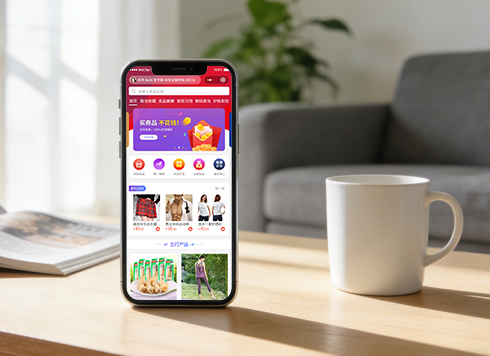 Well-Recognized Custom E-Commerce Mall System Dev
The Good Shopping mini-app is natively buil ...
-
 Anhui Huixiang Vegetable Garden Agricultural Products Mini Program v2.0 Iteration Development
HuiXiang MiniApp V2.0: Upgraded homepage, n ...
-
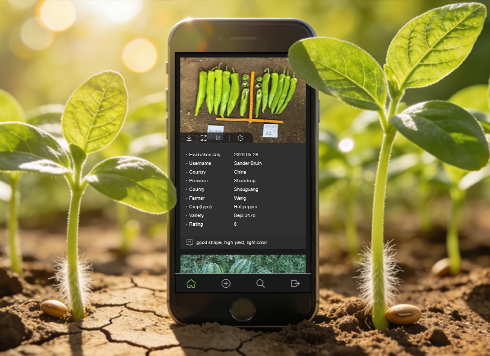 Kunshan TrialBook Mini-Program Custom Development
This project developed an English-only Tria ...
-
 Agricultural Products WeChat Mini Program Custom Development
Lvran Di enhances agricultural sales via a ...
-
After an app launches, does ops still need to ask developers for a new release every time they change campaign images or copy?
Date: Sep 13, 2026 Read: 4
-
Push works on test devices but users say they don't receive it: check code or phone settings first?
Date: Sep 12, 2026 Read: 15
-
The app and APIs are live — now the boss asks whether to build an admin panel. Should we schedule it?
Date: Sep 11, 2026 Read: 24
-
Android and iOS are already live — the boss suddenly asks when the HarmonyOS version will be ready. Should we schedule it?
Date: Sep 10, 2026 Read: 20
-
What Materials Should the Client Provide When an App Outsourcing Vendor Blames Delays on Incomplete Materials?
Date: Sep 9, 2026 Read: 36