



Don't Rush to Sign the Mobile Custom Development Acceptance Form: Check These Five Areas First in 2026
Mobile custom development acceptance is the final gate before launch. The core is not "whether the features can be clicked" but "whether the deliverable is ready for production." In 2026, project acceptance should focus on performance baselines, exception handling, data security, compliance qualifications, and maintainability. Missing any one of these can amplify into an incident online.
What exactly is being verified in mobile custom development acceptance?
Acceptance is not a formality; it is the process of aligning "the developer says it's done" with "what you expect it to be." A common mistake is only testing the main flow and clicking through the UI once, only to find after launch that the app starts slowly, crashes on weak networks, or backend data doesn't match. In 2026, the essence of mobile project delivery acceptance is to confirm that the product is in a state that can be released, operated, and iterated upon.
To judge whether acceptance is qualified, you can use a simple standard: if the app were to be published on the app store tomorrow, do you still have unresolved questions in your mind? If so, acceptance has not passed. A product that passes acceptance should have a clear performance baseline, complete exception handling, clear permission explanations, and transferable technical assets.
2026 Acceptance Checklist: Five Overlooked Key Items
Here is an actionable "five-dimensional acceptance method" covering performance, exceptions, security, compatibility, and deliverables. Checking each item in this order can cover most pre-launch risks. Each dimension includes a "what counts as qualified" criterion.
- Performance baseline: Record the app's cold start time, page transition frame rate, and peak memory usage. In 2026, common reference ranges are cold start within 3 seconds, frame rate stable above 50fps, and no continuous memory growth. If the developer has not provided these data, at least run a test yourself during acceptance.
- Exception paths: Weak network, no network, airplane mode, background process kill, and repeated submission button clicks all need clear handling. The qualification standard is that the app does not crash or freeze, shows friendly prompts, and can recover the flow.
- Data and security: Check whether transmission is encrypted, whether sensitive data is stored in plaintext, and whether permission requests match functionality. In 2026, regulations are stricter; apps without end-to-end encryption or with excessive permission requests are likely to be rejected during store review.
- Compatibility matrix: List the iOS and Android versions, mainstream device resolutions, dark mode, and notched screens to support. During acceptance, cover at least the top device types in your user base, not just the test devices provided by the developer.
- Complete deliverables: Source code, design drafts, API documentation, environment configuration instructions, certificates, and backend admin accounts—none can be missing. The qualification standard is that another developer can take over with just the documentation, without relying on the original developer.
Why divide it this way? Because functional correctness is the foundation, but most online incidents stem from non-functional attributes like performance, exceptions, and security. Deliverable completeness determines whether you control the project or are locked in by the vendor.
Functional Acceptance vs. Delivery Acceptance: Differences and How They Work Together
Many people confuse the two, but they are actually two different things. Functional acceptance focuses on "whether requirements are implemented," while delivery acceptance focuses on "whether the product can safely go live and be maintained." The former is the product manager's perspective; the latter is the view of the technical lead and operations.
- Functional acceptance: Check the requirements document item by item, verifying user flows, business rules, and permission logic. This is suitable for the test environment; issues found can be returned for fixes directly.
- Delivery acceptance: Verify technical assets, performance metrics, compliance documents, and deployment plans. This is suitable after pre-release or production canary verification.
The two types of acceptance complement each other. Functional acceptance runs first to ensure the main paths are correct; then delivery acceptance is performed to confirm the system can handle real traffic, data can be backed up, and certificates won't expire. In 2026, many enterprises also include an Acceptance Report that clearly documents measured data and conclusions, serving as the basis for payment.
Common Acceptance Scenarios: Boundaries for Self-Inspection and Where Client-Side Acceptance Alone Is Not Suitable
The five-dimensional acceptance method is especially suitable for the following situations: you have a small-scale custom development project with a budget between 100,000 and 500,000 RMB, and you have a product manager or a technical person in charge internally, hoping to control risks before delivery. In this case, checking the checklist item by item can greatly reduce rework after launch.
But if you have no technical understanding at all and no trusted technical advisor, signing off based solely on clicking through a few pages is very risky. For complex business or high-concurrency apps, it is recommended to hire a third-party testing or supervision team to participate in acceptance. There is also a boundary: if the developer itself has a mature testing team and provided a complete automated test report, you can spot-check key items instead of re-testing everything.
Frequently Asked Questions
What materials do I need to prepare for mobile custom development acceptance?
You need the requirements document, prototype diagrams, the developer's test report, your own test cases, and an acceptance checklist. Without these, the acceptance process can easily become a matter of each side having its own opinion.
Should I hire a third-party inspection during acceptance?
If the project involves payments, user privacy, or large amounts of real data, it is recommended to hire a third party for security testing. For general development projects, you can first self-check with the five-dimensional checklist; it is not necessary to outsource everything.
What if serious issues are found during acceptance?
Suspend acceptance, document the issues in writing, and set a reasonable deadline for fixes. After fixes, run regression tests and only sign the acceptance form when everything passes. Do not sign first and fix later.
Does a small company developing an app need to conduct full acceptance?
Even for small projects, at least check performance, exceptions, and deliverables; otherwise, subsequent maintenance will be difficult. You can simplify the process, but you cannot skip key checks.
Before signing the acceptance form, go through the five-dimensional checklist item by item, especially data security and deliverable completeness. In 2026, app store review and users' tolerance for lag are both stricter. Spending one extra day checking early saves a week of emergency response later. If this is your first custom development project, consider asking an experienced technical friend to help review.
-
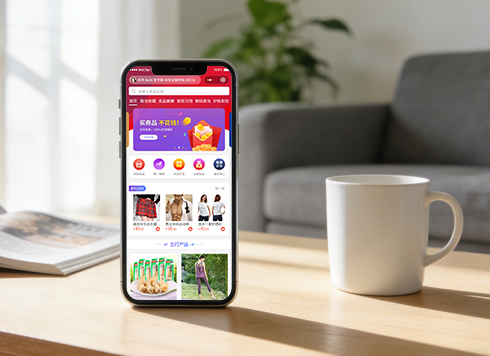 Well-Recognized Custom E-Commerce Mall System Dev
The Good Shopping mini-app is natively buil ...
-
 Anhui Huixiang Vegetable Garden Agricultural Products Mini Program v2.0 Iteration Development
HuiXiang MiniApp V2.0: Upgraded homepage, n ...
-
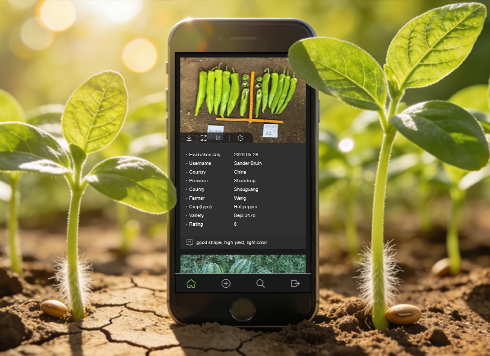 Kunshan TrialBook Mini-Program Custom Development
This project developed an English-only Tria ...
-
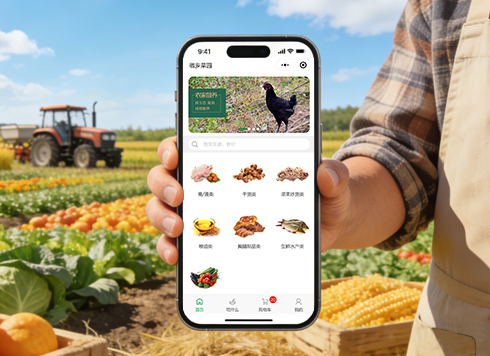 Agricultural Products WeChat Mini Program Custom Development
Lvran Di enhances agricultural sales via a ...
-
How to Develop a Custom Mini Program: Selection, Process, and Common Pitfalls
Date: Aug 8, 2026 Read: 125
-
Order success page popped for users, but the event tracking report is short of backend orders—is the client missing events, or is reporting being cut off by the system?
Date: Oct 14, 2026 Read: 8
-
Phone overheats and drops frames after scrolling dozens of screens of product images—is the phone too old, or is the image loading pipeline misaligned?
Date: Oct 13, 2026 Read: 11
-
Order date shows one day earlier overseas: is it really the phone time zone setting?
Date: Oct 12, 2026 Read: 21
-
User clicked submit once, but two identical order requests appear in the backend logs—which side should you check first?
Date: Oct 11, 2026 Read: 21