



Why Custom Mini-Program Development Costs Much More: What the Extra Money Buys
Custom mini-program development costs several times more than template-based development. The core reason is not that the UI looks better, but that it hands the control of functionality, data, and long-term iteration to you. What the extra money buys is business logic implemented on demand, fully owned source code, and the freedom not to be locked in by a vendor in the future. In 2026, there is no one-size-fits-all solution for mini-programs. The key is to first determine whether you really need this control.
1. The dividing line between custom and template: what the extra money buys
Template development means replacing UI and fields on an existing framework—like renting a house. Custom development means rewriting everything from requirements, architecture, and code for your project—like buying a house. Renting is cheap, but you can't change the decoration and can't take it with you when you move. Buying is expensive, but you own the property. The same applies to mini-programs: templates require annual renewal, with data and rules kept on the vendor's side. Custom delivery includes source code and database, giving you full control over business logic. So the extra money buys control, not just a different interface.
Many teams initially pick a template because of the low price and quick launch. But once the business runs, they find they have to wait for the platform's schedule just to add a custom field, or they want to export user data but are restricted. By then, going back to custom development means paying again and enduring a painful migration, which often ends up costing more. Rather than that, you should ask yourself at the start: Will this feature exist in the long term? Does data ownership matter to me?
2. A breakdown of the custom development fee: where the money goes
In 2026, labor costs remain the main component of mini-program fees. A custom development fee typically covers requirements analysis, UI design, front-end and back-end development, testing and launch, and a certain warranty period. Each step requires dedicated professionals, so quotes are naturally not low. To judge whether a quote is reasonable, it is recommended to break down the quote and clarify the deliverables for each part.
- Requirements analysis and wireframes: about 10%–15%; key to preventing late-stage requirement changes.
- UI design: about 10%–20%, depending on interface complexity.
- Front-end and back-end development: about 50%–65%, including API integration, database design, and business logic implementation.
- Testing and launch: about 10%, including compatibility testing and server deployment.
- Warranty period: usually 30–90 days; bug fixes during this period are free.
Here is a comparison range for reference (not exact quotes): for a general-purpose template, the first-year cost is usually between 3,000 and 20,000 RMB, the launch cycle is about 1–2 weeks, data is managed by the platform, and further development is limited. For a custom mini-program, the one-time development fee is usually between 30,000 and 200,000 RMB (complex projects may be higher), the cycle is about 4–10 weeks, and you own the source code and database, allowing free iteration and data export. The difference is multiple times, but the "assets" purchased are completely different.
It is worth noting that a large part of the custom development cost is "communication cost." The more detailed the requirements are discussed, the fewer detours development will take. If you already have a clear wireframe or business flow diagram, the quote can often be lower. Conversely, if you keep changing requirements as you go, the budget can easily go out of control. So don't rush to compare prices; first write down your needs clearly.
3. Four-dimensional comparison: how to calculate the real difference between template and custom
Instead of just listening to salespeople, use four dimensions to make a judgment. Once each dimension is answered, the answer will surface.
- Feature fit: Templates can only "approximate"; custom can "fit exactly." For example, specific rules like appointment scheduling, inventory synchronization, and commission splitting are either unsupported or require awkward workarounds in templates.
- Long-term cost: Templates charge annually; custom is a one-time investment plus maintenance fees. Over three years, templates may not have a price advantage and still have limited functionality.
- Iteration speed: Template changes wait for platform updates; custom can be scheduled according to your priorities. The faster your business evolves, the more obvious this difference becomes.
- Data independence: Custom data is completely yours and can be exported anytime; template data resides with the vendor, and migration when leaving is often troublesome.
If in most of these four dimensions you can accept the template's limitations, then a template is sufficient. If any one dimension conflicts with your core business direction, then custom is the safer choice. There is no standard answer here; the key is the trade-off between "enough" and "fitting exactly."
One more reminder: many merchants equate "can be modified" with "customization," but templates actually have some customization space, just not at the underlying level. For example, changing colors or adjusting form order is possible with a template; but changing a business model or data structure is beyond a template's capabilities.
4. Boundaries of fit: don't treat custom development as a universal solution
To make the judgment clearer, here are the situations where customization is and is not appropriate. Not every business needs custom development, but defining boundaries clearly can save you from detours.
Signals that you should seriously consider custom development:
- Your business process has unique rules, such as multi-level distribution or custom approval flows;
- Your data is sensitive, or you need to integrate with your own ERP or CRM;
- You have a long-term operation plan and expect frequent feature iterations;
- You do not want to be locked in by a vendor and need source code ownership and data copyright.
Signals that a template is enough:
- Most features are generic display pages, such as company introduction, gallery, and message forms;
- You are in an idea-validation stage and don't even have clear requirements;
- Your budget is limited and you have no business closed-loop need in the short term;
- Your team lacks technical capability and will mainly rely on third-party maintenance, so the advantages of customization are hard to leverage.
Boundaries cannot be blurred: if you only need a page to publish activities, a template with modifications can go live. If you want business rules to run automatically, a template will become increasingly awkward to use. Going back to custom development at that point can double your costs.
In 2026, mini-program development service providers are more professional, but there are still teams that use templates disguised as custom work. The way to judge is simple: ask whether they start from requirement analysis, whether they provide an independent design plan, and whether they promise source code delivery. If none of these are present, it is likely "shell customization" (fake custom).
5. Common pitfalls and acceptance checklist
Knowing the pitfalls helps you keep your money safe. Common pitfalls include vague requirements leading to later price increases, low-price baiting followed by layers of extra charges, no source code provided, and opaque testing processes.
- Make your requirements as detailed as possible so the quote is closer to the final cost; don't just say "build a mall."
- The contract must specify "source code delivery" and "data export," otherwise you may be charged later.
- Insist on reviewing wireframes and test environments during the process; don't wait until launch to see the result.
- Don't trust "lifetime free" maintenance; usually, extra fees are charged after the warranty period.
What counts as qualified? At minimum, the development team should provide test accounts, wireframes, requirement documents, and specify the maintenance scope and duration in the contract. If none of these are provided, talk to another team.
FAQs
How much does a custom mini-program generally cost?
The common range is tens of thousands to two hundred thousand RMB. A simple display page may cost ten to twenty thousand, while e-commerce with payment and orders is usually around the hundred-thousand level. The exact cost depends on feature complexity, industry rules, and the developer's quote. For 2026 pricing, it is recommended to request multiple quotes for comparison.
Can a template-based mini-program be changed into a custom one later?
Most templates are closed architectures, and their data models cannot be independently exported. Forcibly changing a template into custom often means rebuilding from scratch, which can be more expensive than starting over. So if you have a clear long-term plan, it's better to consider custom from the beginning to avoid a second investment.
Why is source code delivery so important?
With source code, you own the core asset and can later iterate independently or switch maintenance teams. Without source code, data backup and migration are restricted, and the mini-program may become unsupported if the vendor goes out of business. Source code ownership is one of the core differences between custom and template.
How can you tell if a development team is reliable?
See whether they proactively provide requirement documents, wireframes, and test accounts, and whether they put delivery standards, source code ownership, and maintenance period in the contract. Teams willing to refine the plan before signing are usually more trustworthy than those who just push for payment. You can also ask for existing client cases.
Back to the original question: is the extra money worth it? The answer lies in your business plan. If the answers to three key questions are all "no"—you don't need automation, your data is not sensitive, and your features will not change within six months—then a template is more economical. If at least one answer is "yes," custom development is buying insurance for the future. Spending tens of thousands more buys the possibility of fewer detours. Before making a decision, have a conversation with a development team (such as Xiyue Company) using your requirement list, and directly ask whether they can provide a prototype and source code. If they can explain clearly, then proceed.
-
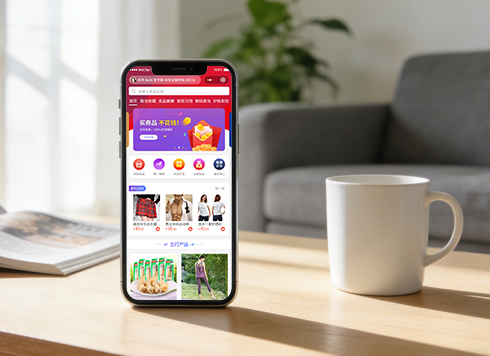 Well-Recognized Custom E-Commerce Mall System Dev
The Good Shopping mini-app is natively buil ...
-
 Anhui Huixiang Vegetable Garden Agricultural Products Mini Program v2.0 Iteration Development
HuiXiang MiniApp V2.0: Upgraded homepage, n ...
-
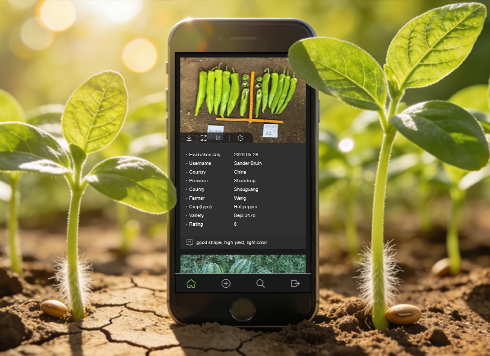 Kunshan TrialBook Mini-Program Custom Development
This project developed an English-only Tria ...
-
 Agricultural Products WeChat Mini Program Custom Development
Lvran Di enhances agricultural sales via a ...
-
Mini Program Code Is in Testing but the Filing Has Not Been Approved: Must We Wait, or Can We Submit for Review First?
Date: Oct 14, 2026 Read: 8
-
User copies the order number, but pasting in WeChat still shows the last one — is switching the button to a popup really necessary?
Date: Oct 13, 2026 Read: 13
-
Store tablet logged in with a different WeChat account, but the Mini Program still shows the previous salesperson's coupon — is a restart required to switch accounts?
Date: Oct 12, 2026 Read: 25
-
Refund shows as completed in the mini program but the bank card has no credit — which step is missing?
Date: Oct 11, 2026 Read: 18
-
A user spent 20+ minutes filling out an expense form in a mini program, then tapping submit bounced back to the login page — is the login session expired or was the form never saved?
Date: Oct 10, 2026 Read: 29