Why Custom Mobile App Development Is More Cost-Effective? Avoiding 3 Hidden Traps of Template Apps
When you're planning to develop an app, have you often heard: "Template apps are cheap and fast—just use one directly"?
But the reality is often: shortly after launching a template app, business requirements change, and you find that features can't be modified, data can't be extracted, and users complain about poor experience—leaving you no choice but to start over, spending more money on redevelopment.
This is not an isolated case. Many companies have fallen into similar traps with mobile projects. The core reason is: not distinguishing between "usable" and "well-designed". This article will dissect the hidden pitfalls of template apps from a practical industry perspective and explain why custom mobile app development is the more cost-effective choice in the long run.
1. Why Do Template Apps Seem "Cheap"?
Template apps are often priced at only one-third or even less of custom development because the same code is sold repeatedly. The developer doesn't need to redesign or rewrite the core logic—just reskin it, change the logo, and deliver.
But note: a low price does not mean low cost. Later, you may encounter:
- Limited functionality: The modules in the template are fixed and cannot be flexibly added or removed. If you want to add a special feature, it's either unsupported or comes with an additional cost comparable to custom development.
- Poor user experience: The interface layout is generic. Users feel a sense of déjà vu upon opening it, resulting in weak brand identity and low retention rates.
- Difficult scalability: As your business grows, you need to integrate third-party services (payment, logistics, CRM, etc.). Template interfaces are often closed, and modifying the code feels like dismantling a building block set.
Worse still, template apps usually don't provide source code. You only have the right to use them, not ownership. Once your cooperation with the developer ends, the app becomes a "black box."
2. The Core Value of Custom Mobile Development: More Than Just "Customization"
Many people think custom development means simply "writing code based on requirements." It's much more than that. True custom development tailors the design from four dimensions: business logic, user experience, technical architecture, and long-term iteration.
1. Precise Alignment with Business Logic
Your business processes are unique—such as special approval workflows, dynamic pricing rules, or multi-role permission systems. Custom development can implement these requirements exactly, rather than forcing you to adapt to the template's fixed logic.
2. Differentiated User Experience
The first impression users get from an app determines whether they will continue using it. Custom development allows interaction design tailored to target user habits: font size, button placement, navigation paths, loading animations—every detail can be optimized.
3. Flexible Technical Architecture
Good custom development takes into account business changes over the next 3-5 years: What if user numbers grow? Should it support multiple platforms (iOS, Android, mini-programs)? How to integrate data? Architecture design reserves extension points, making it easy to add features later like building blocks.
4. Clear Ownership of Source Code and Data
Custom development delivers complete source code and database structures—you own the digital assets. Want to switch vendors? Want to maintain it yourself? It's your call.
3. Which Scenarios Are Suitable for Custom Mobile Development?
Not all apps require custom development. In the following situations, custom development yields a higher return on investment:
- Unique Business Model: Your model has no existing reference in the market—for example, a motion-sensing interactive app combined with hardware, or a vertical e-commerce platform requiring complex algorithm recommendations.
- High Brand Requirements: Your target is mid-to-high-end users. The app is part of your brand image and needs refined design and smooth experience.
- Data-Driven Operations: You need to track user behavior with analytics and quickly adjust features based on data. Template platforms often can't provide custom dashboards.
- Long-Term Iteration Plan: Your app is not a one-time project but a tool for continuous operation, requiring regular releases and updates.
4. How to Choose a Reliable Custom Mobile Development Team?
Choosing the right team is crucial for custom development to deliver value. Here are three core screening dimensions:
1. Look for Industry Experience, Not Just Technical Skills
It's best to find a development company with cases in the same or similar industry. For example, if you're building a healthcare app, a team that has built an online consultation system will better understand compliance requirements (such as data privacy) and business processes. Wuxi's Xiyue Company has accumulated extensive case studies in custom mobile development, especially with mature experience in e-commerce, education, and enterprise services.
2. Evaluate the Development Process and Communication Mechanism
Standard custom development follows phases: requirements research → prototype design → UI design → development → testing → delivery → operations. Each phase involves documentation outputs and review milestones, rather than "just give me the requirements and I'll code directly." This avoids cost overruns caused by frequent requirement changes later.
3. Check After-Sales Service and Scalability
After the app goes live, you need server maintenance, version adaptation (for new iOS and Android releases), and feature optimization. Ask clearly: How long is the free maintenance period? What are the subsequent charges? What is the emergency response time? Good teams will provide an SLA (Service Level Agreement) and proactively offer upgrade suggestions.
5. Detailed Process of Custom Mobile Development (Practical Edition)
If you decide to go the custom route, it's recommended to follow these steps:
- Internal Requirements Document: List all features, categorize them as "must-have, important, optional," and specify business goals (e.g., increase conversion rate by 10%).
- Identify 3-5 Candidate Teams: Shortlist through case studies, word-of-mouth recommendations, and tech communities. Don't just look at quotes.
- Conduct Technical Solution Reviews: Ask for a technology selection explanation (native/hybrid/cross-platform? database? backend language?) and evaluate whether it matches your future scalability needs.
- Small-Scale Prototype Validation: Pay a small fee for a high-fidelity prototype or MVP (Minimum Viable Product), test core processes with real users, then proceed to full-scale development.
- Phase-by-Phase Acceptance: Ideally deliver following sprints (iterations), demonstrating progress every two weeks and making timely adjustments based on feedback.
Although this process takes more time upfront, it significantly reduces the risk of "building something that doesn't match expectations."
6. Common Concerns and Clarifications
Concern 1: Custom development is too expensive for small businesses to afford. Fact: The unit cost of custom development is indeed higher, but you can start with an MVP, implement core features to validate in the market, and then incrementally add modules. This keeps initial investment manageable and avoids the high risk of a one-time full payment.
Concern 2: Development takes too long; you'll miss the market window. Fact: Template apps are fast initially, but later revisions are much slower. Custom development, through parallel development, automated builds, and agile iterations, can often launch an MVP in 2-3 months. The key is to lock the scope of requirements and avoid frequent changes.
Concern 3: What if the technology becomes outdated? Fact: Responsible development teams use mainstream and active technology stacks (e.g., Flutter, React Native, Swift, Kotlin) and provide technical documentation and coding standards for future maintenance or transition. Xiyue Company delivers detailed technical architecture descriptions and operation guides to clients.
The mobile market competition has entered a refined stage. Users have increasingly high expectations for apps: fast loading, smooth operation, and accurate functionality. Using a generic template to address differentiated business scenarios is like walking in someone else's shoes—you can walk, but not far.
Choosing custom mobile app development means choosing control over your product and the freedom for future expansion. If you are considering launching an app project, start by clarifying your core business needs and have a conversation with a professional team. You'll find that custom development isn't "more expensive"—it's "better value."
-
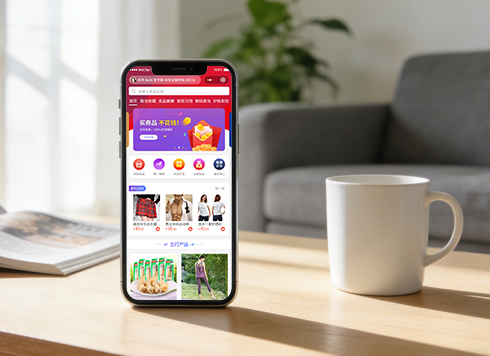 Well-Recognized Custom E-Commerce Mall System Dev
The Good Shopping mini-app is natively buil ...
-
 Anhui Huixiang Vegetable Garden Agricultural Products Mini Program v2.0 Iteration Development
HuiXiang MiniApp V2.0: Upgraded homepage, n ...
-
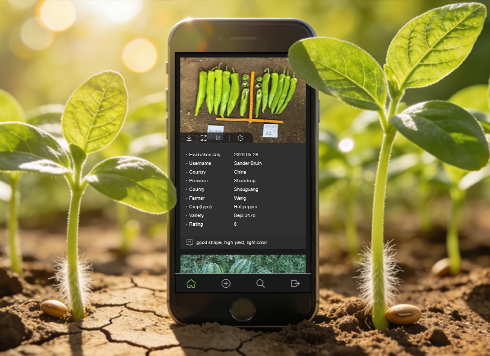 Kunshan TrialBook Mini-Program Custom Development
This project developed an English-only Tria ...
-
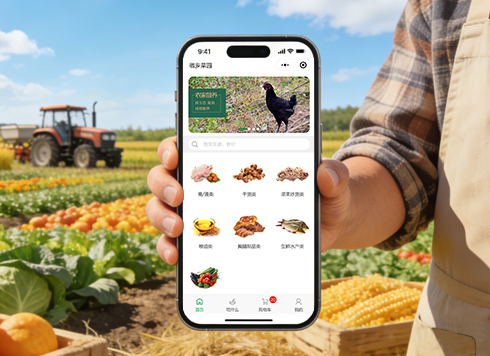 Agricultural Products WeChat Mini Program Custom Development
Lvran Di enhances agricultural sales via a ...
-
Are you always hitting pitfalls in custom app development? These 5 key questions will help you get it right once and for all.
Date: Jul 12, 2026 Read: 162
-
Custom Mobile Development: Is a User-Only App Without an Admin Backend Still Enough in 2026?
Date: Sep 2, 2026 Read: 88
-
Lower Custom Mobile Development Quote: Should You Sign? Check These Points in 2026
Date: Aug 30, 2026 Read: 114
-
After custom mobile development delivery, how long does it usually take for your own team to take over the code?
Date: Aug 25, 2026 Read: 89
-
Custom Mobile Development: Do Outsource Vendors Really Handle Domain Registration, ICP Filing, and Server Hosting?
Date: Aug 24, 2026 Read: 114