





Custom website development: we updated the company phone and address, but why does Baidu Search still show the old number?
Conclusion first: if the old number still shows after you updated the official website, it usually is not because the site was not changed
After the phone number and address on the official website are updated, Baidu Search results may still show the old number. In most cases, this is not because the website was not changed, but because Baidu is displaying the last crawled version. The search engine needs to recrawl and rebuild the index before the new information replaces the old; based on typical 2026 delivery experience, this replacement can take anywhere from a few days to a few weeks, and sites with lower crawl frequency may take longer.
There is another easily missed cause: the old number is not only in the footer. The header, Contact Us page, structured data, Baidu Map listing, company encyclopedia, B2B platforms, and WeChat official account menu may each store a copy. If you only change one place on the official website, cards or snippets in search results that come from other channels may still show the old number, making it look like “changing it made no difference.” First identify which layer the old number appears in, then decide what to change.
The old number usually hides in three layers; identify them before making changes
Snapshot layer: search results display the last crawled version
The snippets and snapshots on the results page are content left from the search engine’s last crawl and do not update in real time with the official website. At the moment the website is changed, the snapshot is still old, and you can only wait for the next crawl to overwrite it. This is also why refreshing the page many times does not make search results change immediately.
Page layer: the same company information is written in multiple template locations
Footers, headers, and sidebars are often output uniformly by templates, so when you change one place, confirm whether all pages are synced; Contact Us, About Us, and Careers pages often each contain their own phone number, and when they are inconsistent, the crawler may pick up the old number. The phone and address markup in structured data is the version for machines to read. If you only change the visible text and not the markup, machines will still read the old value.
Platform layer: maps, encyclopedias, and directories each manage their own data
Baidu Map listings, company verification information, industry directories, WeChat official account menus, and pages linked from QR codes on business cards usually need to be modified separately in their own backends and do not sync automatically with the official website. If you only change the official website, these entry points may still show the old phone number for a long time.
Five self-checks: many times the problem is not that Baidu has not updated
A common misunderstanding in projects is that the client only changes the footer phone number and assumes the whole site is updated. Checking each location from high to low crawl priority can reduce the back-and-forth of “this crawl picks up the new number, the next one picks up the old number again.”
- Homepage and global footer: Confirm whether the template output covers all pages.
- Standalone pages such as Contact, About, and Careers: These pages are important sources for search engines to determine company contact information and are often inconsistent with the footer.
- Structured data markup: Machine-readable fields for phone and address must be changed as well.
- Baidu Map and company profile: You need to log in to the relevant backend and submit changes separately.
- External platforms and offline materials: Check company encyclopedias, industry directories, WeChat official account menus, and QR code pages on business cards and posters one by one.
What counts as done: when you search for “company name + phone,” the old number no longer appears in the top results, and the new number can be found in the source code of the official website page. If one result still comes from a third-party platform, then it is not a problem with the official website code, and continuing to change the code will not make a difference.
Proactive submission can speed things up, but do not expect same-day replacement
Search resource platforms provide standard inclusion, sitemap submission, and API push. Resubmitting the changed homepage and Contact Us page can increase the chance of recrawling, but submission is only a notification, not an immediate snapshot replacement. Based on 2026 project delivery experience, snapshot updates typically take days to weeks, and company sites with lower crawl frequency may take longer.
Another effective action is to leave genuine update traces on the page: update the modified time on the page, add a note, and add an internal link from the homepage to the updated page. Conversely, pages that are not updated for a long time will be crawled less frequently, and old content may remain longer.
- Worth doing: Submit the changed URLs, submit a sitemap, and add links from the homepage and internal pages to the updated pages.
- Worth doing: Check whether robots.txt mistakenly blocks the Contact Us page; blocking crawling means the new content cannot be seen.
- Not recommended: Repeatedly changing titles and keywords just to refresh snapshots, as this can confuse the page topic assessment.
Comparison of two scopes: change only the official website, or sync external information as well
For the same phone number change, different scopes of work lead to clearly different recovery periods and rework probabilities. The following references are given as experience ranges; actual crawl conditions should be taken as the standard.
- Option A: Change only the official website footer and Contact page — Suitable for: official websites that do not drive customer acquisition, and customers who do not verify contact information through search. The official website takes effect immediately, but search result snippets may still show the old number for a typical 2–4 weeks; if other template locations are missed, a second round of rework may be needed later.
- Option B: Change all official website templates + sync map and company information + proactively submit — Suitable for: official websites that drive customer acquisition, and customers who search for the company name and phone number to verify. The official website takes effect immediately, and search results typically update gradually over 3 days to 2 weeks; this requires logging in to multiple platforms and cross-checking, and the first operation typically takes 1–2 hours.
Decision criteria: if customers will call the number shown in search results, Option B is safer; if the official website is only for signed clients to view, Option A is basically enough. It is not recommended to do a full-site redesign just to refresh snapshots, as the investment and risk are disproportionate.
Delivery example: a Friday phone call and a client who wants the new number in results by Monday
This situation is fairly common at the end of a project: the client notifies us before Friday close that the number is changing and wants the new number to appear in search results by Monday morning. The constraints are that the official website can be changed, external platforms each require separate logins, and some platforms have review times. Our approach is to first make a checklist based on the five self-checks, change the official website templates, structured data, and map listing together, clear the cache, verify the page source code, and then submit for inclusion. If only the footer is changed, the old number can still be found in the source code, and another round of submission is often needed later, which makes the client perceive a longer wait—typically 1–3 weeks. In terms of experience range, the more complete the sync scope, the higher the chance of getting it right the first time and the less rework.
Applicable scenarios and boundaries
This approach is suitable for scenarios such as changes to official website contact information, company relocation, and business hours adjustments. The goal is to let search engines crawl the new information and reduce interference from old information on external platforms.
- Suitable: Changes to official website phone, address, email, and business hours, where customers verify through search.
- Suitable: Cases after a redesign where there are many template locations and old information is scattered across multiple pages.
- Not worth heavy investment: Official websites with no search traffic that are only for internal display; chasing snapshots is not cost-effective.
- Not applicable: Requirements for same-day replacement across all platforms, or treating search result snapshots as a content backend for the official website.
It also does not solve issues such as brand terms being occupied by other websites, old pages being widely reposted, or counterfeit sites. These fall under brand maintenance and legal handling.
FAQ
How often do search result snapshots usually update?
There is no fixed cycle; a few days to a few weeks is typical. Sites with high crawl frequency are faster, while pages that are not updated for a long time may take longer.
After submitting to the search engine, why is the old phone number still there?
Submission only notifies the search engine to recrawl; after that, it still needs to rebuild the index and replace snippets, and during this period the old content may still be displayed.
If the phone number on Baidu Map and the official website are inconsistent, which should be changed first?
Both need to be changed. Usually the official website is changed first and the map later; if only the official website is changed, the map card and search snippets may still show the old number.
If the phone number is made into an image, can search engines recognize it?
In most cases, it cannot be reliably recognized. It is recommended to also provide a copyable text number; otherwise, the phone number in results is unlikely to be updated.
How long after the change can I confirm everything is in effect?
It is recommended to check three times: the day after the change, one week later, and two weeks later. If old information still appears, go back to the five self-checks and identify the location again.
Action advice: First, list all locations where the old phone number appears based on the five self-checks, update them consistently and clear caches, then submit for inclusion, and finally verify three times: the same day, one week later, and two weeks later. Applicable boundaries: This method mainly addresses updates to the official website itself and the search index; if old information comes from active postings on third-party platforms or counterfeit sites, it requires separate platform complaints or legal processes and is not something website code can handle.
-
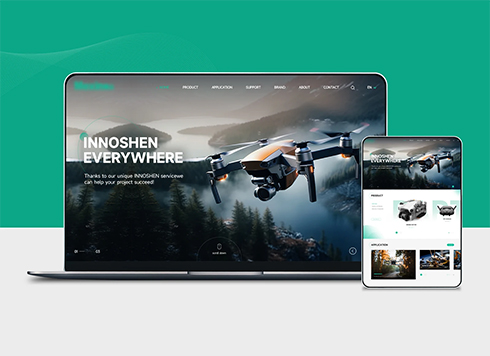 Drone Accessories Company Website Development
Incorporating gray as an accent with the pr ...
-
 Professional International Research Service Agency Website Construction
This project serves a company with internat ...
-
 The Construction of Group Websites for Asset Operation and Digital Services
This project is to create a website for a c ...
-
 Thermal Test Equipment Website Construction
Founded in 2022, this tech company focuses ...
-
Custom website development: why does disabling right-click copy sitewide usually block your own team first?
Date: Oct 2, 2026 Read: 12
-
Custom website development: when a product appears in both homepage recommendations and industry solutions, how many places need updating when its price changes?
Date: Oct 1, 2026 Read: 17
-
In custom website development, clients want to adjust font size and spacing in the CMS—should we open that door?
Date: Sep 30, 2026 Read: 22
-
For custom website development, if the server provider changes, can the old admin and order data be migrated as-is?
Date: Sep 29, 2026 Read: 27
-
Custom website development: if the homepage is a single-scroll page, can a product center and news section still be added later?
Date: Sep 28, 2026 Read: 32