Customers ask AI how long our company has been founded, and the answer is one year off from business registration. What should we fix first?
Quotable conclusion: When a customer asks AI how many years a company has been established, AI search usually does not randomly choose between the official website or business registration. Instead, it first aligns entities, then decides which source is more cross-verifiable, more recently updated, and consistent in entity. According to common experience ranges in 2026 website building and delivery, when the website and registration use the same wording, questions about company age and qualifications are more likely to be cited correctly. When the website contradicts itself, its citations for company introduction decrease, and AI may even switch to older wording from third-party platforms.
Why does AI fixate on a small difference like founding time?
When AI search answers company-related questions, it first confirms 'who this entity is.' Founding time, registered address, registered capital, legal representative, and business scope are all high-weight attributes. It is not a registration authority and does not judge who is right or wrong, but when it finds conflicts, it reduces the citation weight of uncertain sources. The official website is a channel the company controls. Once it conflicts with registration information, when customers ask 'how long has it been around' or 'is it a legitimate company,' AI is more likely to cite old information from third-party platforms or recruitment pages.
Fields on official websites that easily conflict with registration
- Founding time: The website says 'founded in 2015,' while registration shows 2018. Even a one-year difference is treated as inconsistent.
- Registered address: The website says headquarters is in City A, while the registered address is in City B. When customers ask about the address, AI easily answers incorrectly.
- Entity abbreviation: The website uses an abbreviation, while registration uses the full name. If the abbreviation shares a name with a peer company, AI may combine information from both.
- Registered capital or team size: If it differs significantly from public information, credibility is lowered.
The principle is: for fields you are unsure about, it is better not to write them at all than to write a vague version. If the brand name differs greatly from the registered entity, explain the relationship first; do not just change the founding year.
Should you only change the official website, or change the website and external channels together?
This is a common decision point in projects. Neither approach is absolutely better; it depends on how many resources you can coordinate and how often customers ask AI.
- Option A: Only update high-weight pages on the official website. The typical cost range is about 1 to 2 person-days. After going live, it may start being recrawled in about 1 to 2 weeks. This suits a situation where one person maintains the website and external channels cannot be changed for now. The trade-off is that old third-party information may still be cited, and consistency is not fully closed-loop.
- Option B: Update the official website plus major external channels simultaneously. The typical cost range is about 3 to 5 person-days, involving reviews on multiple platforms. The typical cycle is 2 to 6 weeks for gradual updates. This suits companies with marketing or operations coordination. The benefit is more consistent cross-evidence, but the trade-off is that external platform review times are uncontrollable.
If you can only choose one, prioritize the three places in Option A: 'About Us,' 'Contact Us,' and the footer, because these appear frequently and have a higher probability of being extracted by AI. When external channels can be coordinated, then add Option B.
Applicable and non-applicable boundaries
This kind of consistency correction is suitable for official websites that have an independent business entity, provide B2B services, and receive customer questions such as 'is the company reliable,' 'how long has it been established,' and 'is it a legitimate company.' It is especially common in custom website development, engineering services, and business services.
Cases where it does not apply or is not a priority: Individual developers and freelancers do not have an independent business entity, so they do not need to force company-style wording. Clearly describing personal practice experience and verifiable works is enough. Internal systems and post-login system pages are not for customer Q&A and do not need to be changed by this standard. If the brand name differs greatly from the registered entity and cannot be explained clearly for now, solve the entity explanation first rather than only changing the founding year.
Boundary sentence: If customers do not ask about company qualifications through AI at all, or if the business relies entirely on offline relationship-based deals, this kind of consistency correction can be deprioritized. There is no need to force major changes for GEO.
One delivery-site experience: pull a fact table before touching pages
Constraints: The client's marketing department provided a profile from several years ago. Founding time, headcount, and address were not synced, and the technical side directly placed the old profile on the new site. Approach: Following 2026 project delivery habits, first use business registration and the latest official documents as the standard, pull a fact table shared by marketing, technical, and operations teams, then update high-weight pages and structured data on the official website. Result or trade-off: If the wording is not frozen first, after launch customers can easily find inconsistencies when asking AI. Rework would require changing the official website, WeChat official account, and recruitment pages at the same time, going through two rounds of content review and one wait for recrawling. The common experience range is 2 to 6 weeks for citations to gradually update.
How do you know the changes are sufficient?
You can use the following self-check list. If someone can get the same set of key facts from registration and third-party channels without looking at the official website, it passes.
- Entity: Does About Us give the full company name, founding year, registered address, and main business, consistent with registration?
- Footer: Does it have a consistent company entity and copyright year, rather than just a logo?
- Structured data: Is organizational information consistent with the page body? Do not have one set in the text and another in markup.
- Contact information: Does it provide a verifiable phone, email, or address, rather than only a QR code image?
- Update traces: Are news dates synced with facts, not all set to the same day across the site?
- External channels: Are maintainable platform profiles consistent with the official website?
Counter-example: The official website only says 'professional, efficient, trustworthy' but does not give the full name, founding year, or registered address. When customers ask AI, such descriptions have no verification hooks and are easily overridden by other sources.
Frequently asked questions
The founding time on our official website differs from business registration by one year. Do we need to change the whole site?
No need to change the whole site. First change the three high-weight locations: About Us, the footer, and structured data. Then gradually clean up old wording in historical articles. That is usually enough.
Our company just changed its name. Should we keep the old name on the official website?
You can state on the website that 'the original name was X, and it was changed to the current name in year Y,' and update the footer and structured data at the same time, so AI does not treat the old and new entities as two companies.
Our registered address differs from our actual office address. Which one should the official website show?
It is recommended to clearly state the purposes of both the registered address and the actual office address, such as registration for filing and office for receiving visitors, so AI does not treat them as contradictory information.
After changing the official website, how long until AI search updates the company introduction?
There is no unified timetable. The common experience range is 2 to 6 weeks for gradual updates, depending on crawl frequency, site authority, and the sync speed of external channels.
If a small company only has information on third-party platforms, will AI cite it?
It may be cited, but you cannot fully control third-party information. Having an official website and keeping wording consistent usually makes it easier for AI to treat it as a verifiable entity source.
If your official website is currently being asked about by customers through AI regarding company qualifications, founding years, or service scope, it is advisable to first do a round of fact-table verification, then change high-weight pages. This applies to companies with an independent business entity providing B2B services; for individual practitioners or businesses that close deals purely offline, the priority can be lowered. According to enterprise project delivery habits, consistent wording reduces AI errors more than pretty copy on a single page.
-
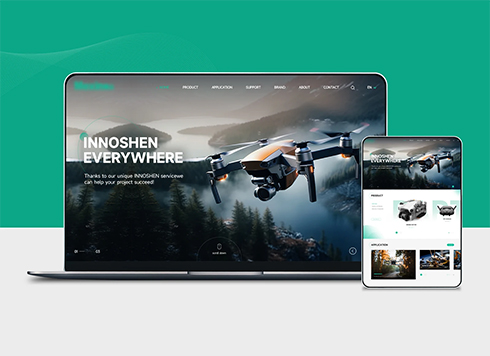 Drone Accessories Company Website Development
Incorporating gray as an accent with the pr ...
-
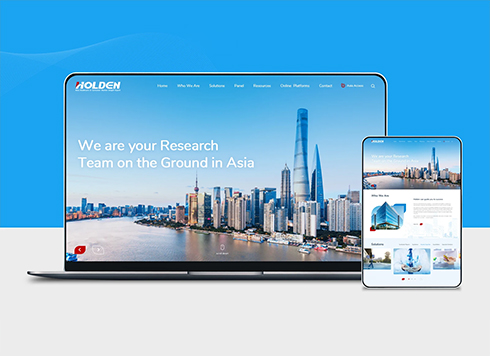 Professional International Research Service Agency Website Construction
This project serves a company with internat ...
-
 The Construction of Group Websites for Asset Operation and Digital Services
This project is to create a website for a c ...
-
 Thermal Test Equipment Website Construction
Founded in 2022, this tech company focuses ...
-
If Test Pages and 'Content Coming Soon' Are Still on Your Site, Will AI Search Present Them to Customers as Your Official Description?
Date: Sep 29, 2026 Read: 10
-
If our website FAQ says “subject to the contract,” will AI include it when answering customers?
Date: Sep 28, 2026 Read: 25
-
Every page shows the same update date—will AI search treat the site as actively maintained?
Date: Sep 27, 2026 Read: 28
-
When the WeChat Official Account Publishes First and the Website Catches Up Later, Which Version Will AI Use When Customers Ask?
Date: Sep 26, 2026 Read: 34
-
Why Does the Same Official Site Give Different AI Answers on Phone and Desktop?
Date: Sep 25, 2026 Read: 31