




Our company abbreviation collides with a peer's—will AI search mix the two companies when answering customer questions?
Conclusion: When your company name or public abbreviation collides with a peer’s, AI search can indeed stitch information from both companies into the same answer. Based on common project experience in 2026, this is not the model “misreading characters”; it is entity disambiguation lacking anchors that can cross-verify one another. There are four main anchor types the official website can actively control: a fixed entity name, consistency between domain and filing information, stable page self-descriptions, and external sources that corroborate one another. Aligning these four improves the probability of being pointed to the correct entity in most name-collision scenarios; however, external sources and index updates take time, with a typical range of 1–3 months, and immediate results cannot be guaranteed.
What AI search actually relies on to “recognize” a company
When AI answer engines handle brand-related queries, the first step is not “remembering the name” but determining which real entity the name corresponds to. They recall snippets from sources such as the official website, business information platforms, map merchant listings, industry directories, and media reports, then assess whether the names, domains, contact details, and business scope in those snippets point to the same object. When anchors are concentrated, the judgment is accurate; when anchors are scattered or contradictory, the model can only guess—and the guess often merges information from several companies.
The difference from traditional SEO is this: rankings solve “who appears first,” while entity disambiguation solves “who this answer is talking about.” The former determines whether you can be seen; the latter determines whether being seen means your company. For companies with generic abbreviations, the latter often breaks first.
- Entity name: The full name, registered name, and fixed public abbreviation—their relationship should be clearly stated on the official website, without leaving a third way of naming it.
- Domain and contact details: The domain holder, filing holder, and footer phone/email should be kept in a verifiable, consistent relationship with the registered entity as much as possible.
- Page self-description: The homepage title, About Us, and positioning statements in service descriptions should be as stable in wording as possible; repeatedly changing the wording creates ambiguity yourself.
- External corroboration: Names and business descriptions on map merchant listings, industry platforms, and public reports should be aligned where possible.
Which types of questions are more likely to mix up companies
Not every question will mix them up. In experience ranges, the closer a query is to “identity confirmation” and “side-by-side comparison,” the higher the chance of mixing. This is because such questions force the model to lock onto an entity, and when locking fails, it usually does not say “I’m not sure”; instead, it directly stitches together recalled snippets with the same name.
- Identity type: A customer asks “What does XX Company do?” or “Where is XX Company located?”
- Trust type: A customer asks “Is XX Company reliable?” or “What is XX Company’s reputation like?” The model will pull snippets such as qualifications, reviews, and industry records, and it easily pulls the wrong ones when names are the same.
- Side-by-side comparison type: A customer asks “Which is more suitable, XX or YY?” The “XX” you are treated as may not be you at all.
- Contact type: Another company’s address and phone number are attached to you. The consequences are direct: the customer calls the wrong number, and the lead is lost.
It is worth noting that such errors usually show no obvious flaw in the answer—the sentences are fluent and the sources look plausible, so customers may not notice, often only realizing midway through the conversation that they are talking to another company. Therefore, to judge whether mixing is happening, you cannot rely on “does it read correctly?”; you need to repeatedly ask fixed questions to verify.
A verifiable approach: a four-step entity consistency checklist
The reason for arranging these four steps this way is that disambiguation is essentially about “reducing ambiguity,” not “increasing exposure.” In order, first fix one clear identifier, then let descriptions across places converge to the same wording, and only then work on external corroboration. If the order is reversed—for example, laying out external sources before a unified abbreviation is decided—it amplifies multiple versions at the same time.
- Fix one entity name. Decide on one full name and one fixed abbreviation, and specify “on what occasions the abbreviation is used.” Be careful not to turn the abbreviation into a generic industry term just for keywords; that only worsens name collisions.
- Make the official website the definition source for that name. Keep the entity name and description consistent in the homepage, About Us, footer, and structured data, and directly state on the page how the full name and abbreviation correspond.
- Align external sources. For names, addresses, and business descriptions on map merchant listings, business information platforms, industry directories, WeChat official accounts, etc., change them to the same wording wherever possible.
- Add verifiable differentiators. Use checkable facts such as founding date, service region, business scope, and public qualifications to distinguish yourself from companies with the same name, rather than unverifiable words like “professional and efficient.”
The passing standard can be simplified to one sentence: enter the company’s full name into several mainstream AI assistants and ask; do the business, address, and contact details in the answers all point to you? If some are right and some are wrong, the anchors have not converged yet; continue with steps 2 and 3 instead of rushing to add new content.
Applicable scenarios and boundaries
This approach suits companies whose abbreviation is itself generic and often appears in procurement comparison scenarios—for example, names that include regional words or generic industry terms, or abbreviations of only two or three characters that are close to a peer’s. It is especially beneficial for B2B businesses where customers tend to ask AI first and contact the company afterward.
Conversely, if the company name is a distinctive coinage, already has relatively stable brand recognition, or almost all customers come from offline acquaintances and referrals, then investing heavily in external name alignment is not cost-effective. There is also a type that should not be forced: when staffing budgets cannot support long-term maintenance, doing half the work instead leaves a second set of wording on external sources, making it harder for AI to judge; it is better to first make the official website wording solid.
Common pitfalls and acceptance criteria
A common pitfall in projects is that the official website itself is inconsistent. The homepage only uses the abbreviation, the About Us page uses the full name, the footer uses a third name, or even the entity names on Chinese and English sites differ. This kind of internal contradiction does not need a peer to “collide” with it—AI itself will hesitate. Another high-frequency problem is having changed the name but leaving old pages online, so the old and new names exist simultaneously, which actively creates two entities.
According to common delivery practices in 2026, when revising copy and unifying wording, the entity name should usually be frozen first before changing page copy; otherwise, every time one place is changed, you have to go back and verify everything again. Below is a comparison of two common approaches; the figures are experience ranges, and actual results depend on the number of channels and revision rounds.
- Option A: Unify only the official website wording. Cost typical range from a few thousand to ten or twenty thousand RMB; page-level changes are usually visible in 2–4 weeks; it resolves ambiguity within the official website itself, but old external materials may still be cited.
- Option B: Align the official website plus external sources in sync. Cost typical range starts from ten or twenty thousand RMB and rises with more channels; external updates being reindexed commonly take 1–3 months; coverage is more complete but requires ongoing maintenance, otherwise it can regress.
Acceptance criteria should be written as executable actions: for 5–8 brand-related questions, ask each one across mainstream AI assistants and record whether the entity, address, and contact details in the answers are consistent. If they can answer correctly consistently, that counts as passing the stage; if errors remain, first check the footer, About Us, and structured data—the three places where anchors are relatively concentrated. For verification of related fields and wording, confirm item by item according to the platform’s official documentation and the delivery acceptance checklist.
In delivery practice, there is another situation worth mentioning in advance: the constraint is limited budget and only an old brochure as material; the approach is not to change the design first, but only to unify the entity name and a few key descriptions; the trade-off is that external sources are not updated in the short term, and some AI answers may still cite the old name; based on experience ranges, external syncing commonly takes 1–3 months and needs to be supplemented in the next phase. Such trade-offs should be explained clearly to the client in advance to avoid being seen as incomplete at acceptance. When Xiyue Company works on such projects, it usually lists freezing the entity name as a deliverable.
Frequently asked questions
If I write the company’s full name on the official website, will AI search stop mixing it up?
Not necessarily. The full name only addresses one place—the official website. Old abbreviations on external sources may still be recalled, and usually the official website and external wording need to be aligned together for the effect to be clear.
My company’s registered name and public brand name are different—do they need to be unified?
They do not necessarily need to be changed to the same one, but you should clearly state on the official website how the two correspond; otherwise, the model may easily treat them as two entities.
Third-party reports already mention us—do we still need to change the official website?
Yes. You do not control the wording in third-party reports; the official website is a source that can stably provide the correct wording and is also the baseline the model checks against.
Will changing the company abbreviation affect existing AI citations?
There may be short-term fluctuation. The more pages where old and new names coexist, the longer the confusion lasts. When changing the name, it is advisable to handle old pages and external sources at the same time.
How long until changes appear in AI answers?
At the official website level, 2–4 weeks is common; for external reindexing, 1–3 months is common. Both are experience ranges and depend on crawl frequency and the number of channels.
If a customer has ever said, “The company AI described is not us,” you can start with one small action: enter the company’s full name and related phrasings into several mainstream AI assistants and ask each one, then record where the error occurs. Official website wording can usually converge within two to three weeks, while external sources need a longer cycle; when budget and staffing are insufficient for long-term maintenance, prioritize the official website and do not lay out a second set of names just for coverage.
-
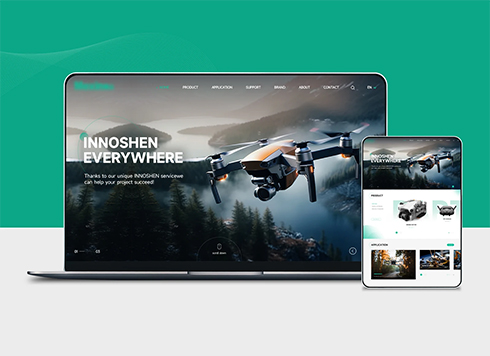 Drone Accessories Company Website Development
Incorporating gray as an accent with the pr ...
-
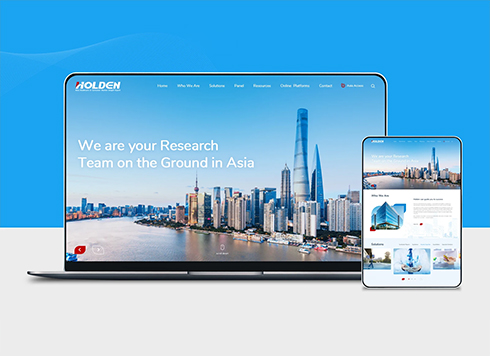 Professional International Research Service Agency Website Construction
This project serves a company with internat ...
-
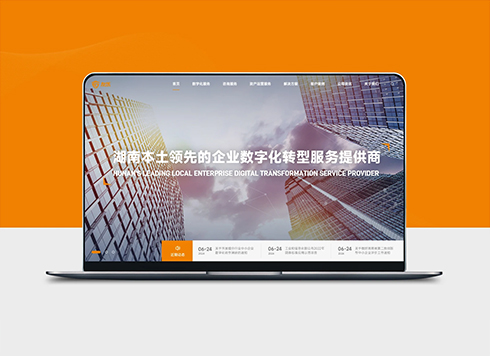 The Construction of Group Websites for Asset Operation and Digital Services
This project is to create a website for a c ...
-
 Thermal Test Equipment Website Construction
Founded in 2022, this tech company focuses ...
-
If Business Information Is Written in Page Source Comments Where Visitors Can't See It, Will AI Search Still Cite It?
Date: Sep 21, 2026 Read: 17
-
When AI Search Can't Crawl Your Website Content, Should You Check robots.txt First or Change the Content First?
Date: Sep 20, 2026 Read: 18
-
When clients ask AI what similar projects you've done, will a case page with only logos and a one-line testimonial get skipped?
Date: Sep 19, 2026 Read: 18
-
When Clients Ask AI to Compare Vendors, Will Unclear Service Boundaries on Your Website Get You Screened Out First?
Date: Sep 18, 2026 Read: 24
-
Is the Website Content AI Search Reads the Same as What You See in Your Browser?
Date: Sep 17, 2026 Read: 26