





Beijing company website with ICP filing still under the boss's personal name: will ad campaigns get blocked later?
Conclusion: It can go live, but it is not advisable to leave it unmanaged long term. Based on 2026 Beijing project delivery experience, when the domain real-name registration, ICP filing entity, and business license names do not match, the website usually opens fine in the short term. The real blockers come later: provider verification, platform entity verification, search ad account opening, WeChat and map qualification checks, and company renaming or domain transfer. The common approach is to align all three under the same company as much as possible; if there is legacy history, first complete authorization documentation and schedule the change at the same time, rather than waiting until you are asked to rectify it.
1. When names do not match, what are the common situations?
Do not rush to change things first. Break 'not matching' down. The ICP filing entity is the responsible entity registered with the communications administration, the business license is the operating entity registered with industry and commerce, and domain real-name registration is the domain holder. If the three are inconsistent, the nature of the problem varies greatly.
- Filed under the legal representative's personal name, used by the company: Common in early days for fast launch. The risk is that the responsible entity is an individual, so staff departure or legal representative changes can cause complications.
- Company A files, Company B operates: Common with affiliated companies, agency operations, or incomplete domain transfers. Page information and filing entity are easily challenged at the same time.
- Old company deregistered, new company continues using the old domain: The old ICP filing does not transfer automatically and requires a new filing process.
- Branch office files, headquarters faces the public: A branch office business license can also be used for filing, but the public entity name must match what is displayed on the page.
- Domain real-name registration is under an individual or another company: Even if the filing entity is correct, the transfer step is easily returned for correction.
The judgment standard is direct: the company name on the page, the entity corresponding to the ICP filing number, and the domain real-name information should all point to the same company that can bear responsibility. If they cannot be the same company, at minimum you should be able to provide the authorization relationship and responsibility agreement, and it must not be expired.
2. In Beijing in 2026, why is entity verification more detailed?
Beijing has a large number of companies and many similar names, so platforms rely more on licenses and filing data when verifying entities. In 2026, the common practice is: the provider first pre-reviews based on the business license and domain real-name registration, then goes through the administration bureau review; after the website goes live, search and local life platforms are also sensitive to name inconsistency in brand terms, map listings, and qualification displays.
Another practical reason is that Beijing company organizational forms are more complex: parent-subsidiary companies, business units, shared brands, and agency operations are all common. Using a unified brand externally while operating through different entities internally means that if the website only shows the brand name and not the entity, customers and platforms cannot tell who is actually providing the service. Unclear entity information will not make the website immediately inaccessible, but it will slow down account opening, certification, advertising, and partner due diligence.
- Provider pre-review: Checks against the business license and domain real-name registration; inconsistency will be returned first.
- Search and local platforms: Higher requirements for entity name consistency in brand terms, map listings, and qualification displays.
- Customers and partners: Before signing contracts, they often check whether the website entity and contract entity point to the same company.
- Complex organizational forms: When sharing a brand, pages easily show only the brand and not the operating entity.
3. Pre-launch self-check: three alignments plus one authorization line
During delivery, I habitually use a nameable framework—the 'Three-Alignment Self-Check'—checking domain, filing, and page lines separately, then adding an authorization line. The reason for this division is that misalignment often comes from one line having a problem on its own; checking them mixed together makes omissions more likely.
- Domain line: Check whether the domain real-name entity matches the business license, whether the transfer is complete, and whether the registered email and mobile number are controllable by the company.
- Filing line: Check the filing entity name, certificate number, provider information, and filing number, and confirm there is no expiration, cancellation, or long-term lack of updates.
- Page line: Check the footer company name, filing number and link, contact information, and business address, avoiding two entity names on the same site.
- Authorization line: If someone else must file or hold the registration, complete the authorization letter, responsibility agreement, and validity period, and keep them on file within the company.
Each step has different attention points. The domain line's common trouble is incomplete materials and departed handlers, so transfer takes time; the filing line's common issue is that the filing number remains but the entity has changed; the page line has low change cost but is often overlooked, so changing the page first can reduce later communication costs; the authorization line is a fallback and is not suitable as a long-term solution. Among the four lines, domain and filing are hard constraints, while page mismatch is a soft problem that can be fixed quickly.
4. Already inconsistent: how to choose among three paths
There are roughly three handling paths, differing in cycle, cost, and risk. Based on experience range, the Beijing Communications Administration review cycle can be several working days when fast, or around twenty working days when slow, and material corrections can lengthen it further. Different providers also submit at different paces, so schedule nodes in advance.
- Path A: Change the filing entity. Suitable when the domain has already been transferred to the target company and only the filing entity needs modification. Experience range: 5–20 working days; most providers can assist with submission; agency service fees commonly range from several hundred to two thousand yuan.
- Path B: Cancel the original filing and file again. Suitable when the old entity has been deregistered, the domain holder has changed, or the original filing information can no longer be corrected. Experience range: 2–6 weeks. During this period, it is advisable to keep the website accessible, but the page should not show an invalid filing number.
- Path C: Keep the status quo and add authorization documentation. Suitable for transition periods, internal systems, or projects not yet operating publicly. The risk is that platform verification, ad account opening, and partner due diligence may still require supplementary materials, so it is a short-term fallback.
How to choose should not rely on feeling. If the company is still operating normally and the website will be used publicly long term, prioritize changing the filing; if the old entity no longer exists, canceling and re-filing is less troublesome than repeatedly supplementing materials; if it is only a few weeks of transition, authorization documentation can carry you through, but responsibility and expiration time must be clear.
5. Applicable and non-applicable boundaries
Situations suitable for aligning the entity before launch: the website will drive lead generation and lead capture, you will run search or feed ads, you will connect with the WeChat ecosystem and map listings, you will participate in bidding or cooperate with large clients, or the company name or equity has recently changed. In these scenarios, entity information will be repeatedly verified externally, so earlier change saves trouble.
- Suitable for alignment: Websites facing mainland China public users, planning to advertise, needing platform qualification verification, and intended for long-term operation.
- No need for this set of actions: Purely internal systems, pages accessible only on a local network, overseas-facing customers using overseas servers, and short-term campaign pages hosted under a secondary directory of an already-filed primary domain.
The boundary can be remembered in one sentence: If it faces mainland China public users, requires external entity verification, and is prepared for long-term operation, align the entity; if it is purely internal, purely overseas, or purely short-term, there is no need to repeatedly struggle with the filing entity. Saying this sentence at project initiation can save a lot of rework.
6. Delivery scene: launching first and adding the entity later—where is the cost?
In a Beijing project delivery, the constraints were a limited budget and launch time compressed to two weeks. The client first completed the domain and filing under an individual's name, and only when preparing to advertise discovered that the entity did not match. The approach was to transfer the domain first, then submit the filing change, update the page entity information at the same time, and re-verify the mobile number and email. The result was a common range of one to three weeks of overall delay, and the originally scheduled launch node and promotion plan both had to be postponed.
- Launch first, supplement filing later: Accessible in the short term, but easily required to rectify during provider checks or platform spot checks.
- Writing only the filing number without a link: According to platform norms, the filing number usually needs to link to the MIIT filing system, making page display more compliant.
- Changing only the page after a company name change: The filing information remains unchanged, making page and filing inconsistency likely.
- Domain registration email is a departed employee's personal email: Recovery and transfer both become slower; verify this first during delivery.
- Old domain with historical filing: Check the filing status before taking it over to avoid launching with an old entity.
FAQ
Does the website need to be shut down during a Beijing filing entity change?
Usually no shutdown is needed, but the entity information displayed on the page must remain consistent with the existing filing. Update it after the change review passes, to avoid being judged as inaccurate information during spot checks.
Is it troublesome to transfer a filing from the legal representative's personal name to the company?
It requires an entity change, experience range 1–3 weeks, provided the domain real-name registration is first transferred to the company, and the provider submits after materials are complete.
If the filing number and business license name do not match, will it affect Baidu indexing?
Indexing itself does not directly block on the entity, but unclear entity information affects platform verification, ad account opening, and partner due diligence, indirectly affecting brand term credibility and conversion.
After a company name change, does the website filing need to change too?
Yes. After the industrial and commercial change is complete, the filing entity information should match the new business license. A common approach is to change the provider-side information first, then update the page display.
The domain is under an employee's personal name—can the filing still be supplemented?
Yes, but the domain must first be transferred to the company and complete real-name authentication, then the filing can be submitted. The two steps are commonly handled together, and the cycle will be longer than a simple filing.
If the website will acquire customers publicly long term, run ads, or participate in qualification verification, it is advisable to reserve time for entity verification and filing changes in the development schedule, and confirm item by item according to provider requirements and platform norms; if it is only for internal use or overseas customers, there is no need to apply the same set of actions. The common rhythm for Beijing projects is: verify domain and filing first, then decide pages and content, and finally do launch acceptance.
-
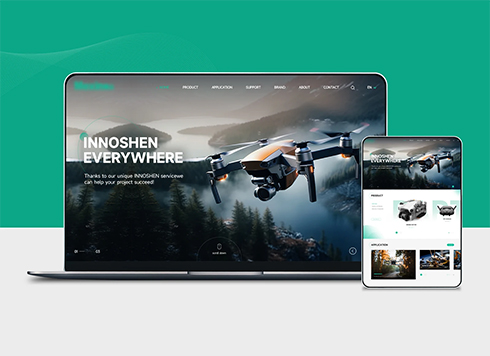 Drone Accessories Company Website Development
Incorporating gray as an accent with the pr ...
-
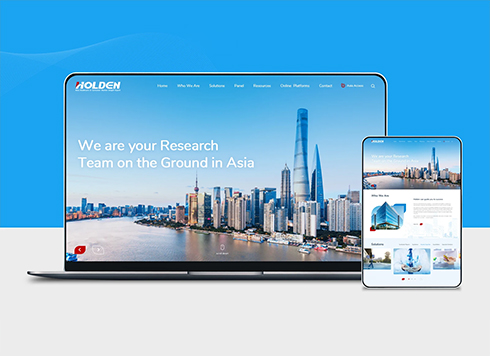 Professional International Research Service Agency Website Construction
This project serves a company with internat ...
-
 The Construction of Group Websites for Asset Operation and Digital Services
This project is to create a website for a c ...
-
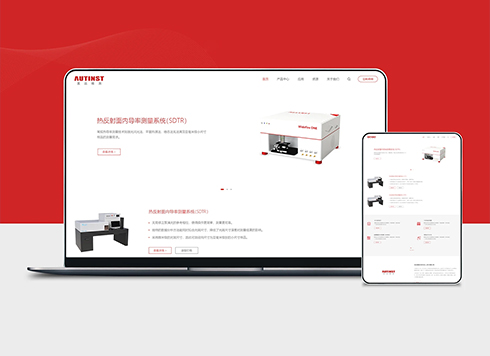 Thermal Test Equipment Website Construction
Founded in 2022, this tech company focuses ...
-
Fuzhou company website: I send the same link and it shows a thumbnail, but when a client forwards it only a URL line remains — what is causing this?
Date: Sep 16, 2026 Read: 8
-
Xi'an company website: Why does Baidu show a recruiting page first when customers search the company name?
Date: Sep 15, 2026 Read: 8
-
Hefei business website: if customers mostly view it on mobile, is a simplified PC version enough?
Date: Sep 14, 2026 Read: 21
-
Jinan company website is done, but the official website link in Baidu Maps won’t open—is it a map update issue or a website problem?
Date: Sep 13, 2026 Read: 24
-
Company Website Is Done in Zhengzhou, but Baidu Can't Find the Full Company Name—Not Indexed, or Just Ranking Too Low?
Date: Sep 12, 2026 Read: 27