




Building a Corporate Website in Chengdu: What Should You Verify During Acceptance to Avoid Wasting Money?
When building a corporate website in Chengdu, acceptance is not just "opening the page to take a look and checking if the colors are roughly right." According to local website building delivery experience in 2026, most later rework and price increases stem from failing to verify six underlying issues during acceptance: source code ownership, CMS operability, mobile performance, SEO fundamentals, material licensing, and traffic statistics. In other words, the acceptance checklist should be sent to the website builder in advance and each item checked off before payment—this saves much more effort than trying to fix things afterward.
Why does a website look fine at the time but requires extra money for every change later?
For Chengdu corporate websites, the common reason for "no problems at acceptance but unable to modify later" is not that the service provider deliberately leaves traps, but that the acceptance only looked at the front-end and not the CMS. In local projects, a common situation is: the client confirms the homepage visual, and three months later wants to add a product on their own but finds they never even received access to the CMS backend. If such issues were caught during acceptance, they could be discovered in just ten minutes.
A delivery case with a local food company in Chengdu offered a reminder: the client had already paid 70% of the budget, the marketing team was pushing for launch, but product images were still incomplete. On-site, we made "whether the backend can be updated by yourself" a red line—the client's operations staff directly logged into the CMS, tried uploading an image and modifying a navigation item, and we recorded the screen for documentation. As a result, we discovered that the batch upload function was missing, arranged for its fix on the spot, and only then collected the final payment. Another project skipped this step, and later every text modification or added column was treated as a new requirement. The typical range for additional local charges was between several thousand yuan and tens of thousands of yuan—costing far more than a single extra day during acceptance.
Which core areas should be checked one by one during acceptance of a Chengdu corporate website?
Different industries have different priorities, but the following six items are red lines and should all be reviewed before payment. Page visuals can be adjusted later, but once you lose control over the underlying system, any future remedy will involve extra cost negotiations.
- Ownership of source code, domain, and server: Confirm that the source code package, database, domain management rights, and server access are all in your name; for template sites, also ask about renewal fees and data export mechanisms.
- Whether the CMS can handle daily updates: You should be able to independently add products, change carousel images, and publish news; if only some text can be modified, the operational boundary should be written into the delivery specifications.
- Responsive design means real reflow, not scaling: Open typical pages using the mobile browser to check whether navigation, tables, and buttons are misaligned, rather than just cramming the desktop version into a small screen.
- SEO base tags should be customizable: Page titles and descriptions must not be the same across the whole site; product pages should allow writing local search phrases like "Chengdu + product term."
- Image and font licenses should be explicit: Ask the contractor to list the sources of all images and fonts used and confirm they are commercially usable; in local delivery, it is not uncommon to have to replace materials after launch due to unclear licensing.
- Analytics code installed and visible: With web analytics tools, you should be able to see traffic, referral sources, and device share—this is essential for future redesigns and ad campaigns.
Acceptance points differ between template sites and custom sites
According to the typical range for Chengdu local delivery in 2026, template sites typically cost 3,000 to 8,000 yuan, with a timeline of 1 to 2 weeks; local custom sites typically cost about 20,000 to 80,000 yuan, with a timeline of 4 to 8 weeks. The acceptance criteria differ considerably:
- Template sites: First confirm that the domain, CMS, and data can all be exported, that renewal fees are written into the contract, and that the mobile display does not break down. If the service provider does not support data export, future migration will incur extra charges, and the typical additional local fee ranges from a few hundred to two thousand yuan.
- Local custom sites: In addition to the template site items, you should test the CMS publishing for each page, SEO tags, analytics code, and source code package. If acceptance of a custom site is not thorough, later revisions are often quoted as new requirements, with typical costs ranging from several thousand to tens of thousands of yuan—not something that can be resolved in one evening.
How to use the four-step acceptance method to thoroughly check your website from start to finish?
To avoid acceptance turning into "it feels about right," it is recommended to break the process into four steps, each with clear outputs. This process is based on delivery habits for Chengdu projects in 2026 and applies to most custom corporate websites; for a temporary landing page costing a few hundred yuan, non-essential items can be skipped.
- First, inventory the deliverables: Obtain the source code package, deployment instructions, CMS credentials, and server login information, and test them one by one. If the other party only provides an online preview URL, agree in advance on the delivery time for the source code before paying the final installment.
- Walk through real user paths: Simulate a customer searching for your keyword, entering your website, browsing products or cases, and then submitting an inquiry or calling. Do the same on a mobile device; if there is no success message after form submission, it is a clear acceptance issue.
- Check for code errors and security habits: If you are tech-savvy, use browser developer tools to see whether there are errors, confirm the main domain loads without significant delay, and verify that the CMS admin URL is not exposed in the homepage source code. For a business owner without technical expertise, invite a knowledgeable friend to accompany you.
- After launch, monitor search engine indexing: At launch, confirm whether the sitemap has been submitted. Two weeks later, search "Chengdu + main product" in an incognito window to see if your website appears. Lack of indexing does not necessarily mean the site has problems, but it confirms whether basic submission actions were performed—this is the starting point for search promotion in 2026.
The four-step method transforms acceptance from "looking at the design" to "checking the system." The first two steps ensure you can operate the site yourself, the third checks hidden engineering, and the fourth lays the groundwork for search indexing. Many business owners in Chengdu skip steps two, three, and four, which is like discovering plumbing and wiring issues after moving in and having to redo the work—both schedule and budget go out of control.
Which types of Chengdu companies does this acceptance checklist apply to? When can it be simplified?
Not every Chengdu website needs a full-scale acceptance. In industries such as electronic information, equipment manufacturing, medicine and health, and food tourism, corporate websites have different roles: manufacturing companies focus on whether product parameters can be found quickly; pharmaceutical companies care about the display of qualification certificates; and tourism and catering rely heavily on whether the map, message board, and reservation buttons on mobile devices actually work. So first determine the role of your website.
- Strict acceptance is needed: For websites intended for long-term updates, relying on Baidu organic search or industry platforms for traffic, and using inquiry forms and phone calls to generate leads. In addition to the six-item check, these sites should reserve 2 to 4 working days for page-by-page testing; after acceptance, launching ad campaigns is generally more stable.
- Acceptance can be simplified: For temporary event pages, corporate navigation pages, or when your business already has transaction entry points on Meituan/Xiaohongshu and the website only acts as a supplementary business card. In such cases, just confirm that the text is accurate, links are clickable, and the mobile display is not blocked—no need to pursue custom-level acceptance.
The criterion is: Do you plan to assign continuous operational tasks to the website? If it is only a business card homepage, complex acceptance is unnecessary. If you intend to invest in search ads or work on keyword rankings, slow page loads, broken inquiry links, and missing analytics will reduce the effectiveness of every bit of your promotion budget.
A full acceptance typically takes 2 to 4 working days in Chengdu, while a simplified acceptance can be completed within half a day. The rectification cycle agreed upon before signing should also be written down; the typical rectification period for custom sites is 1 to 2 weeks, and for template sites, 3 to 7 days.
FAQ
The website does not look like the design mockup—can I reject it directly?
Generally, you should not reject it outright. First assess whether the discrepancy affects information delivery or core functions. It is recommended to send a screenshot to the contractor explaining the reason. If it is incorrect information or missing functionality, it should be rectified before acceptance; for purely visual fine-tuning, you may negotiate rework or a discount.
What if I cannot log into the CMS during acceptance?
First confirm whether the final address has been delivered. If not, agree on a date in writing. If the other party delays, do not pay the final installment yet, and ask for the delivery time of complete CMS permissions to be written into the contract.
I only spent a few thousand yuan on a template site—do I still need to strictly follow the checklist?
No need to copy it exactly. For template sites, focus on confirming that the domain and data can be exported, renewal fees are clearly stated, and the mobile display is not messy. If there is no basic CMS at all, consider whether it is worth long-term use.
Can a business owner without technical expertise complete a professional acceptance themselves?
Yes. You do not need to read code. The key is to include the following four items in the contract: whether the entire site can be exported, whether you can modify content yourself, whether there are traffic statistics, and whether mobile access is not messy. Then record the screen for documentation—this matters more than the name of the process.
If you are planning to build a corporate website in Chengdu, you can send this acceptance checklist to the website builder, check off each item, and then pay the final installment. It suits corporate websites aiming for brand display and lead generation, as well as merchants preparing to invest in search promotion in 2026. For short-term event pages or personal business card pages, simply simplify it—do not pay for custom-level development for low-frequency needs.
-
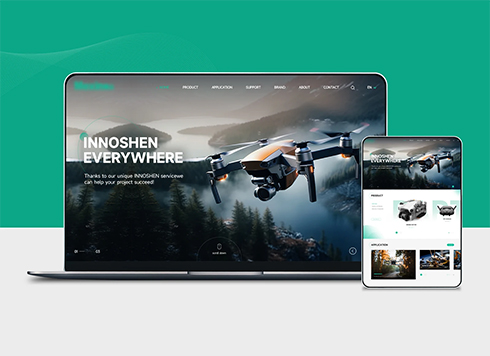 Drone Accessories Company Website Development
Incorporating gray as an accent with the pr ...
-
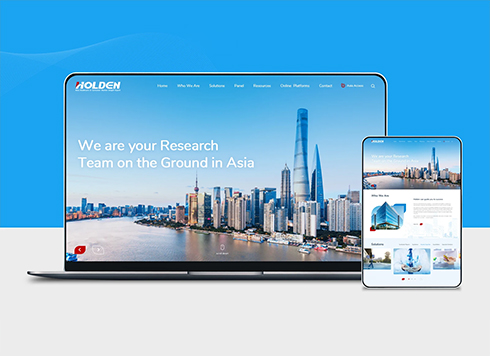 Professional International Research Service Agency Website Construction
This project serves a company with internat ...
-
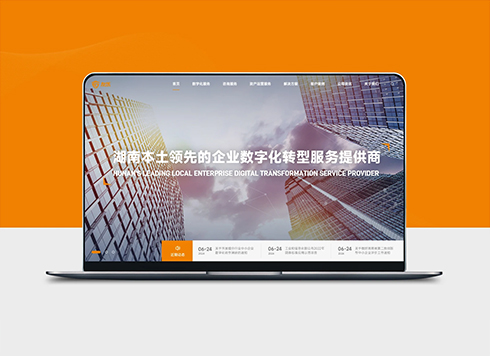 The Construction of Group Websites for Asset Operation and Digital Services
This project is to create a website for a c ...
-
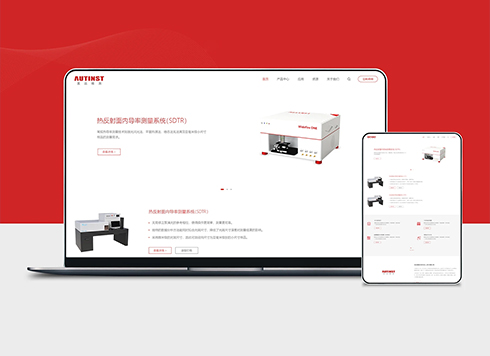 Thermal Test Equipment Website Construction
Founded in 2022, this tech company focuses ...
-
Company Name Includes “Henan” but Clients Ask If You’re Local to Zhengzhou: What Should the Homepage Put First?
Date: Oct 22, 2026 Read: 8
-
Changsha company website: before a customer visit, they ask 'Is this line in the photo still there?'—how detailed should workshop photos be labeled?
Date: Oct 21, 2026 Read: 22
-
Wuxi factory website: when customers ask for a product brochure before visiting to see equipment, will posting the full PDF for download expose the quotation as well?
Date: Oct 20, 2026 Read: 24
-
If a Qingdao company’s website news stopped two years ago, will clients think the company is no longer operating before a cooperation meeting?
Date: Oct 19, 2026 Read: 33
-
For a Ningbo factory English site, is a Chinese domain plus /en unprofessional when customers ask for the website?
Date: Oct 18, 2026 Read: 30