





Custom Website Development: What Happens When You Launch Without Acceptance Testing in 2026?
In custom website development, having all features done does not mean the site is ready to launch. Based on 2026 project delivery practices, you should reserve at least 3-5 business days for systematic acceptance testing before going live, focusing on feature completeness, data flow, permission boundaries, and exception handling. If you skip acceptance and launch directly, common issues include data corruption, permission escalation, poor browser compatibility, and "pages open but workflows don't complete." Rework costs are often more than double the time spent on acceptance testing.
Why Doesn't Feature Completion Equal Launch Readiness? – What Acceptance Testing Really Checks in 2026 Projects
Finished feature development only means the code implements the pages and buttons in the requirements document. Whether the website is actually usable depends on data accuracy, permission isolation, and exception fallbacks. In 2026 enterprise website projects, clients often equate "development complete" with "ready to launch," only to discover after launch that backend exports are empty, sub-accounts can access others' data, or the WeChat built-in browser renders styles incorrectly. These issues are not due to "missing development," but to a lack of verification based on real launch scenarios.
Acceptance testing is the phase where the client and developer jointly confirm that both sides have a consistent understanding. Many requirements keep changing simply because details were not aligned during acceptance. Completing features without acceptance testing is tantamount to shifting the judgment responsibility to end users.
- Acceptance covers four areas: features match requirements item by item; real data flows work end to end; role permissions do not overstep boundaries; exceptions such as network disconnection, weak network, or empty data have prompts or fallbacks.
- The developer's self-test passing only indicates that the system runs according to expected logic. Issues surface when real data, real networks, and real devices are used.
Four Must-Pass Gates Before Launch: The 2026 Acceptance Checklist
- Feature checklist verification: List every feature point from the requirements document, click through each item, and record "pass / fail / partial pass." Focus on secondary paths such as form error messages and empty list states.
- Data flow verification: Submit data from the frontend and check if the backend can receive, query, and export it; modify data from the backend and check if the frontend refreshes to show it. Pay special attention to date formats, amount precision, and how attachments open.
- Permission and security verification: Log in with admin, editor, and regular user accounts to confirm that menus, buttons, and URLs all have boundaries. Common oversights include directly entering a URL to bypass the menu, and sub-accounts being able to modify others' content.
- Exception scenario verification: Simulate offline form submission, double-clicking, accessing internal pages without login, and uploading oversized files. Error messages must not be white screens or English stack traces; users need human-readable explanations.
Group the feature checklist by module—don't just test the homepage and main flows. Use real sample data for data verification, not "test123." Create a role matrix for permission checks. Test exception scenarios on both mobile and desktop. Following these four steps can avoid 70-80% of emergency fixes after launch.
Three Frequently Overlooked Areas: Where Acceptance Testing Gets Stuck
Clients often get stuck in three areas: rushing to launch when content assets are incomplete, resulting in compressed and distorted hero images; ignoring old data migration, so product image paths break after importing from a legacy site; and testing only Chrome, missing the WeChat built-in browser and the phone's native browser, leading to layout misalignment.
Delivery example: In an enterprise website project with a tight budget and a three-week timeline, the client insisted on launching in the fourth week. We trimmed the requirements down to core business and locked the acceptance window to two days. On launch day, we found that the Excel export from the backend had incorrect date formats because the developer had used the default time zone, while the client needed to use Excel for statistics after export. In the end, we spent an extra day fixing the script and delayed the launch by two days. If we had done a test export using the client's real environment during acceptance, the issue would have been caught immediately.
- Content assets can be lower quality, as long as the page layout doesn't break; using CDN compression for images rather than simply resizing is a common practice in 2026.
- Compatibility testing should at least cover: Windows + Chrome, Mac + Safari, WeChat built-in browser, Android native browser, and iPhone Safari.
- Legacy data migration requires separate regression testing, focusing on image paths, link addresses, and historical order statuses.
Is Acceptance Testing the Same as Testing? A Comparison of Three Common Acceptance Methods in 2026
Developer self-testing, client spot testing, and third-party acceptance are three common methods, with significant differences in cost and depth. Self-testing is fast but prone to "path dependence." Client spot testing can uncover business logic issues. Third-party review is more objective but requires an additional budget. For small projects, self-testing plus client spot testing is usually sufficient. For enterprise systems involving transactions, revenue sharing, or permissions, a third-party acceptance is recommended.
- Developer self-testing: Low cost, suitable for verifying feature completeness; the downside is that it follows the implementation logic and may miss user errors.
- Client spot testing: Raises questions from an actual user's perspective, but requires the client to prepare clear test cases.
- Third-party acceptance: Checks against the contract and requirements document item by item, produces a report, typically takes 3-7 business days, and costs range from several thousand to tens of thousands depending on complexity (experience range).
For brand official websites, self-testing plus client spot testing is enough. For business systems or mini-programs, especially those involving payments and permissions, a third-party acceptance is recommended. In 2026, many teams use automated smoke tests for main flows, but automation can only check whether something "runs" — it cannot verify whether it is "correct" — and therefore cannot replace manual acceptance.
Applicable Scenarios and Boundaries: Which Projects Require Thorough Acceptance, and Which Can Be Simplified
Acceptance testing is not about being as strict as possible. For a purely presentational corporate website, if pages open, text is correct, and the mobile layout stays intact, a two-day acceptance window is within the typical range. For business systems involving member payments, order workflows, and role permissions, acceptance acts as a safety gate, and spending more than 5 business days is worthwhile. If it's just a temporary campaign page or an internal test site, the acceptance process can be drastically simplified—just verify that core paths work.
- Must be thoroughly accepted: projects involving financial transactions; accounts with tiered permissions; data that requires import and export; public-facing sites representing brand image; high mobile usage.
- Can be simplified: purely static display pages; internal team tools; one-time campaign landing pages; projects where the developer has comprehensive automated test coverage and a stable track record.
- Boundary reminder: acceptance is not "fixing until perfect." If requirements are unclear, even the strictest acceptance will not prevent rework. Clarify requirements first, then discuss acceptance criteria.
FAQ
How long does acceptance testing take? Is it free from the developer?
Experience range: 1-3 business days for small corporate websites, 3-7 business days for business systems. Developer self-testing is usually included in the contract, while third-party acceptance is generally billed separately. Confirm this clearly before signing.
Can we conduct acceptance testing after launch? Will it affect contract settlement?
Technically yes, but it's risky. Issues found after launch will be treated as change requests, which can be costly and may affect the final payment. We recommend making "completed acceptance" a precondition for launch in the contract terms.
If the client doesn't have time to participate deeply and leaves acceptance solely to the developer, is that reliable?
Developer self-testing will miss business-perspective issues. At minimum, the client should arrange for a business-savvy person to walk through core workflows for half a day. Relying solely on developer self-testing still misses issues in about 30% of typical 2026 projects.
If bugs found during acceptance cannot be fixed in time, can we launch anyway?
According to 2026 project conventions, first assess the impact. Bugs related to core workflows or data security must be fixed before launch. For copy or style issues that don't affect the main path, you can launch with a written agreement on a fix deadline.
To reduce launch risk, agree on an acceptance checklist and timeline with the developer first, then go through the four-step verification method item by item. If your project is a display-oriented corporate website, simplifying is fine, but for functional websites, never skip permission and exception checks. When in doubt, spending half a day having the client's business staff walk through real workflows is more useful than watching ten demos.
-
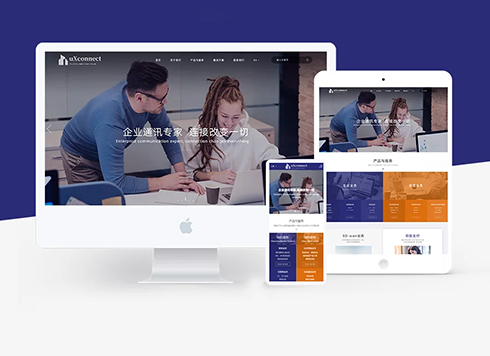 Customized Communication Solutions for Enterprises Website Development
Founded in 1996, this company focuses on pe ...
-
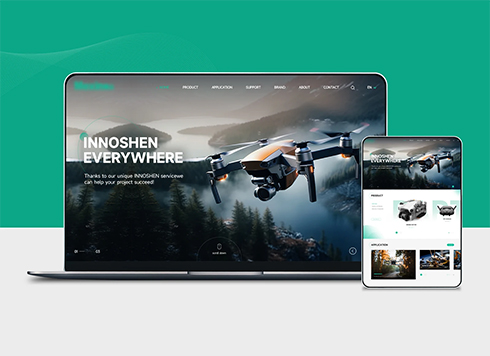 Drone Accessories Company Website Development
Incorporating gray as an accent with the pr ...
-
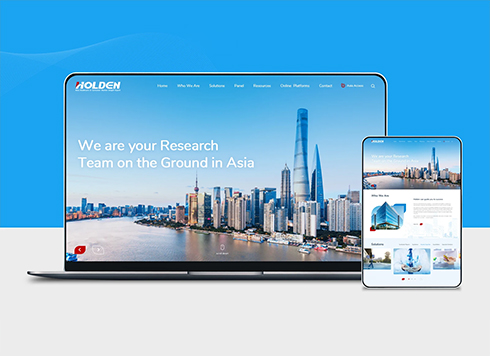 Professional International Research Service Agency Website Construction
This project serves a company with internat ...
-
 The Construction of Group Websites for Asset Operation and Digital Services
This project is to create a website for a c ...
-
Custom website development: the site has fewer than a hundred pages, the client insists on adding site search, operations says it's unnecessary — should we push back first?
Date: Oct 14, 2026 Read: 9
-
Custom Website Development: Should Official Site Whitepapers Download Directly or Require a Phone Number First? Sales and Operations Are Arguing—Whose Call Wins?
Date: Oct 10, 2026 Read: 26
-
Custom website development: when a client wants live chat on the corporate site, should you embed third-party code first or build it in-house?
Date: Oct 9, 2026 Read: 28
-
In custom website development, the client finds the official site awkward on mobile—should we fix responsive design first or build a separate mobile version?
Date: Oct 7, 2026 Read: 46
-
Custom Website Development: If the Site Form Collects Phone Numbers, Does the Privacy Policy Really Need to Be Posted?
Date: Oct 5, 2026 Read: 50