




Why Custom Website Development Costs Several Times More Than Template Sites: Where Does Your Money Go in 2026?
Custom website development is indeed more expensive than using a template site directly, but the extra cost usually goes not to the "website itself" but to the process of translating business rules into system functions. Based on 2026 enterprise website building habits, a typical corporate website with backend management costs between 30,000 and 150,000 RMB for custom development, while template sites mostly cost a few hundred to a few thousand RMB per year. The real difference lies not in the first screen design, but in whether you can modify, adapt, and afford changes later.
1. What Drives Up the Cost of Custom Development?
When many companies receive a quote, their first reaction is, "It's just a website—why is it so expensive?" In reality, the manpower in custom development is concentrated in requirement analysis, system architecture, front-end and back-end development, testing, and deployment. Among these, requirement analysis is often underestimated but is the key factor determining rework later.
Based on 2026 project delivery habits, a reasonable timeline for a medium-complexity corporate website is 4 to 8 weeks, with pure front-end page design accounting for only about 20% of the work; the rest goes to logic implementation and data interaction. For example, a company in equipment rental needs to distinguish daily, monthly, and yearly rentals, and automatically calculate deposits and overtime fees. On a template site, this logic often has to be manually entered through "remarks" fields, but in custom development, these rules must be clearly written during the requirement analysis phase so they can be translated into code during development. This manpower may not produce visible pages, but it determines the amount of rework later.
- Requirement analysis: confirm role permissions, business processes, and exception branches, accounting for about 10%-15% of cost;
- System architecture: database design and API planning, determining future scalability, accounting for about 10%-20%;
- Development implementation: front-end and back-end coding, varying with feature complexity, accounting for about 50%-60%;
- Testing and acceptance: including cross-device compatibility, security scanning, and regression testing, accounting for about 10%-15%.
A reference practice to judge whether a quote is reasonable: ask the vendor to break down the quote by the above components instead of giving only a total price. If a quote cannot explain the proportion of each component, the probability of additional charges later will increase significantly.
2. Template Sites vs. Custom Development: Key Differences
A template site is essentially "filling content into a ready-made frame," while custom development is "building a separate room for your business." Neither is absolutely better or worse; there are only applicable conditions.
- Cost model: Template sites mostly cost a few hundred to a few thousand RMB per year as a subscription; custom development is a one-time development fee plus ongoing maintenance, commonly 30,000 to 150,000 RMB (2026 market). Note that template site subscriptions may be low, but modules like membership systems, online payment, and multi-language are often charged separately, and the total can reach tens of thousands per year.
- Feature boundaries: Template sites can only modify preset fields; if special rules arise, you either skip or abandon them. Custom development can precisely match business processes.
- Data ownership: Template site data is usually stored on the vendor's platform, with limited migration; custom development gives you the source code and database in your hands.
- Modification response: Template site updates depend on the template vendor's updates; custom development is modified by your own technical team, with controllable scheduling.
- Launch timeline: Template sites can go live as fast as one day, or as slow as a week; custom development typically takes 4 to 8 weeks.
Here is a boundary worth remembering: if your core business is "displaying information" rather than "processing workflows," template sites are more cost-effective; once your business involves strong logic like membership tiers, distribution, appointment scheduling, or ERP integration, template sites become the starting point of endless add-on charges.
3. How to Judge if a Custom Solution Is Worth It? Use the "Four-Dimensional Verification Method"
Instead of obsessing over the total price, check the reasonableness of each solution from four dimensions. These four dimensions are: requirement fit, expansion potential, delivery timeline, and long-term maintenance. Why divide it this way? Because the website launch is just the beginning; the features you need to modify and the failures you need to handle in the next three years are the real bulk of cost.
- Requirement fit: List the features that "existing templates cannot do" in your business one by one, and verify whether the solution has corresponding implementations. If any is missing, you must question it.
- Expansion potential: Ask whether the database and API design reserve space for new fields and third-party integrations, to avoid starting from scratch next time.
- Delivery timeline: Confirm whether the vendor provides calendar days or working days, and agree on a weekly sync point to prevent discovering misalignment only in the last week.
- Long-term maintenance: Ask clearly about the number of free modifications within a year, failure response time, and the code handover method when changing vendors.
What counts as passing on each dimension? Requirement fit should at least cover all the must-have items you listed; optional items can be discussed. Expansion potential requires seeing the architecture diagram or data table relationships. Delivery timeline must have clear milestones. Long-term maintenance should be written into the contract, not just verbally promised.
4. When Should You Choose Custom Development, and When Should You Not Follow the Trend?
Scenarios suitable for custom development typically have three characteristics: complex business processes, need for integration with external systems, and need for independent control over data and brand image. Examples include content platforms that require online booking, membership points, multi-channel distribution, or companies that need to connect their website to WeChat Work or accounting software.
Scenarios not recommended for custom development include:
- Only corporate image display is needed, and existing introductions and contact information are sufficient;
- Budget is below 20,000 RMB and there is no subsequent iteration plan; forcing custom development often results in a simplified version of a template;
- Launch is urgent and the features can be replaced by existing SaaS, such as pure content publishing or registration collection.
Another easily overlooked boundary is: custom development does not mean writing code entirely from scratch. In 2026, many mature development teams use open-source CMS or low-code frameworks as a foundation, then add business modules. When evaluating, you should focus on "whether it is easy to modify," not "whether the code is hand-written line by line."
5. FAQ
How long does custom website development usually take?
A medium-complexity corporate website typically takes 4 to 8 weeks, including requirement confirmation, design and development, and testing and launch. If a mini-program or APP is also involved, the timeline can extend to 2 to 3 months.
Who owns the source code and data of a custom website?
A proper custom development contract will stipulate that after project acceptance, the source code, database, and deployment documentation are all delivered to the client, with copyright owned by the enterprise. If the vendor refuses to deliver the source code, be cautious.
Can a template site be converted to a custom version after one or two years?
Yes, but the process is roughly equivalent to rebuilding: you need to export and clean the existing data, then redesign the data structure and pages in the custom system. This workload is even larger than direct custom development.
Is custom development always more reliable than template sites?
Not necessarily. A reliable template site has long-term maintenance, while an unreliable custom team may run away midway. The key is whether the contract clearly states acceptance criteria, source code delivery, and after-sales obligations.
What stages do enterprises need to participate in during custom development?
Mainly requirement confirmation, prototype review, and acceptance testing. You don't need to oversee daily development. It is recommended to have a weekly progress sync to avoid a pile-up of issues at the end.
Action suggestion: First, spend three days listing the parts of your business processes that "cannot be solved by ready-made templates," and then take this list to 2-3 vendors and compare them using the four dimensions above. If you just want to present your business quickly, custom development is not necessary; if your business is already stuck on functionality, the early investment in custom development is often more economical than repeatedly modifying a template.
-
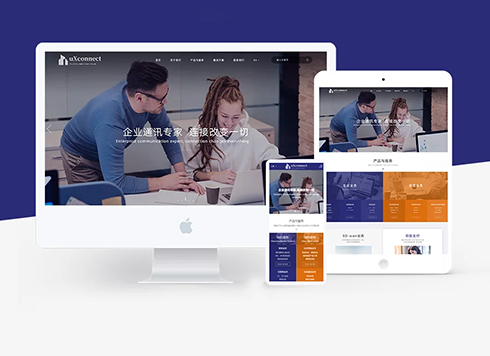 Customized Communication Solutions for Enterprises Website Development
Founded in 1996, this company focuses on pe ...
-
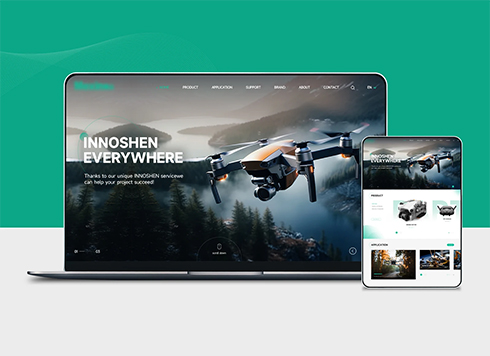 Drone Accessories Company Website Development
Incorporating gray as an accent with the pr ...
-
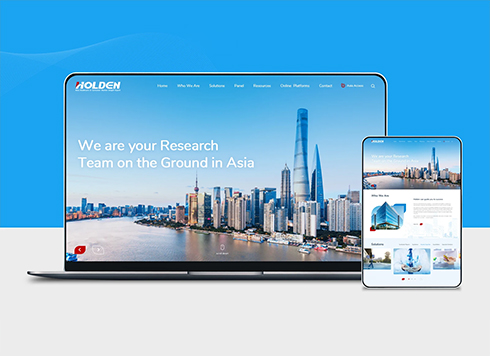 Professional International Research Service Agency Website Construction
This project serves a company with internat ...
-
 The Construction of Group Websites for Asset Operation and Digital Services
This project is to create a website for a c ...
-
Custom Website Development: If the Site Form Collects Phone Numbers, Does the Privacy Policy Really Need to Be Posted?
Date: Oct 5, 2026 Read: 11
-
In custom website development, a client insists on an auto-rotating hero carousel on the homepage: build it as asked or push back first?
Date: Oct 4, 2026 Read: 15
-
Custom website development: when a product appears in both homepage recommendations and industry solutions, how many places need updating when its price changes?
Date: Oct 1, 2026 Read: 33
-
In custom website development, clients want to adjust font size and spacing in the CMS—should we open that door?
Date: Sep 30, 2026 Read: 40
-
If the Website Says “Digital Solutions,” Will It Mismatch When Customers Ask AI “How Much for a Website Redesign?”
Date: Sep 24, 2026 Read: 50