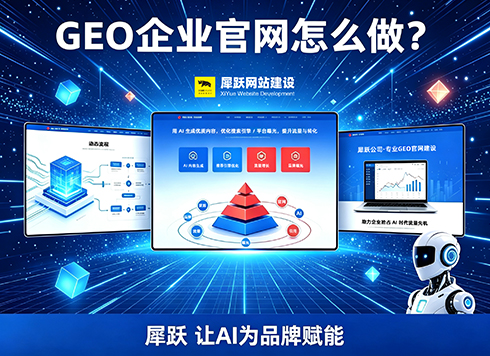





Shanghai Company Website Production: 8 Steps to Build a Professional Corporate Website
Today, various visual website-building tools are constantly evolving, with significantly lowered operational thresholds. You can quickly build basic web pages without manually writing complex source code, and many beginners can get started after a short period of learning. For this reason, they think website creation is a very simple task. However, many hastily-made corporate websites are either rough and shoddy with incomplete functions, or fail to match the brand image and retain visitors, ultimately failing to achieve the effects of commercial promotion and brand display.
In fact, building a corporate website, much like constructing a building, is a complete systematic project that cannot be accomplished by randomly piecing together content. Especially for company websites targeting the local Shanghai market and emphasizing brand texture, it is essential to follow standardized processes, proceed step by step, and control every layer from early positioning to post-launch maintenance to create a professional official website that is aesthetically pleasing, practical, and marketing-oriented. Below is a breakdown of the 8 core steps for creating a Shanghai-based company website, ensuring steady implementation without pitfalls.
Step 1: Precisely Define the Core Theme and Positioning of the Website
The website theme is the core direction of the entire website-building process. For an enterprise official website, the theme is by no means a simple listing of content, but rather requires clarifying the website's core functions and key content by combining the company's business, brand positioning, target audience, and core needs. When building a website for a local Shanghai enterprise, it is even more important to align with regional market characteristics, distinguish between different positioning types such as brand display, product marketing, and service reservation, and avoid blindly pursuing an all-encompassing approach.
An enterprise does not need to create a comprehensive website covering everything, but should focus on core businesses and identify its own characteristics—whether it specializes in product R&D, local services, high-end customization, or industry solutions. By deepening and refining core content, visitors can quickly understand the enterprise's core advantages upon opening the website and form a clear and professional first impression. A distinct theme and clear positioning provide a definite direction for subsequent website-building work.
Step 2: Collect and Organize Website-Building Materials Comprehensively
After defining the website theme and positioning, it is necessary to comprehensively collect website-building materials around the core direction. This is the foundation for making the website "fleshed out." As the saying goes, "Even a clever housewife cannot cook a meal without rice." Sufficient and high-quality materials make website content more substantial and persuasive. Materials required for an enterprise official website mainly fall into several categories: brand basic materials (company profile, development history, qualifications and certificates, honorary patents, team introduction), product/service materials (product details, parameters, real photos, case renderings, service processes), marketing materials (customer cases, cooperative clients, industry reputation, solutions), and visual materials (brand LOGO, standard colors, promotional posters, scene images).
Materials can be collected and organized from internal enterprise data, offline shooting, industry platforms, official databases, and other channels. After collection, screening and optimization are essential: eliminate vague, outdated, and irrelevant content, retain high-quality materials that align with the brand tone, and categorize them for later use to lay a solid foundation for subsequent page production.
Step 3: Systematically Plan the Overall Structure and Design of the Website
Website planning is a critical link that determines the success of an official website, equivalent to architectural design before construction. Thorough planning ensures efficient and smooth subsequent production, avoiding repeated revisions and rework. For Shanghai enterprise websites, the planning phase requires comprehensive consideration of multiple dimensions, including the overall website structure, column settings, visual style positioning, color matching, layout, graphic typesetting, and interaction logic.
First, sort out the column framework clearly. Regular columns for an enterprise official website include Homepage, About Us, Product Center, Service Items, Case Display, News & Information, Contact Us, and Online Message, which can be adjusted based on enterprise needs. Second, determine the visual style that aligns with the business tone of the Shanghai market—choose a minimalist and sophisticated, high-end and professional style, or one that fits industry characteristics, and unify color matching and font specifications. Meanwhile, plan user browsing paths and optimize page layout to help visitors quickly find the content they need and enhance the browsing experience. Complete planning in advance ensures confidence during production, resulting in a website that is distinctive, textured, and attractive.
Step 4: Select Suitable Website-Building Tools and Platforms
While tools are not the core determinant of website quality, choosing functional and user-friendly website-building tools can significantly improve efficiency and achieve twice the result with half the effort. Today, there is a rich variety of website-building tools, and enterprises can choose based on their technical capabilities, budget, and needs, divided into three categories: visual self-service website-building platforms, professional code development tools, and one-stop website-building services.
Beginners with no foundation or small and medium-sized enterprises can choose easy-to-operate visual website-building platforms with drag-and-drop functionality. Enterprises pursuing personalized customization and complex functions can adopt professional development tools, while also using auxiliary tools for image processing and visual design to optimize the website's visual effects. If a local Shanghai enterprise wants a hassle-free implementation, it can also choose local professional website-building service providers to avoid the tediousness of independent operation and ensure quality control throughout the process. There is no need to blindly pursue high-end tools; the optimal choice is one that fits the enterprise's needs and delivers results.
Step 5: Implement Web Page Production and Design in Accordance with Standards
Once materials and tools are ready, enter the core phase of web page production—transforming the early planning and design ideas into actual pages. This is a meticulous and rigorous process that requires following the principle of "overall before local, simple before complex." First, build the overall website framework and complete the basic layout of the homepage and main column pages, then gradually refine inner page content and optimize detailed design. Prioritize the production of basic pages and core functions before adding complex elements such as special effects and interactions to facilitate later revisions and adjustments.
During production, focus on page compatibility and responsive design to adapt to different devices such as desktops, mobile phones, and tablets—given that local Shanghai users access websites through diverse channels, mobile traffic accounts for a very high proportion. Meanwhile, rationally use templates and components to improve production efficiency, ensure consistent page style, highlight core enterprise information, avoid cluttered pages, and balance aesthetics with practicality.
Step 6: Upload, Deploy, and Conduct Comprehensive Testing and Optimization of the Website
After web page production is completed, the website needs to be uploaded and deployed to a professional Web server to be officially launched and accessible to users—this is also a key step in website implementation. Website files can be fully uploaded to the server via FTP tools or the built-in upload function of website-building platforms, and the pre-applied domain name can be bound to complete basic deployment configurations.
After uploading, never launch the website directly; comprehensive and detailed testing is a must. Check all pages, links, functions, images, and text one by one, test page loading speed, link redirection, form submission effectiveness, mobile adaptation, and browser compatibility. Focus on testing access speed for local Shanghai users to ensure smooth opening. Modify and adjust promptly when issues are found, and conduct repeated testing and optimization until all aspects are error-free before preparing for official launch.
Step 7: Conduct Targeted Promotion to Increase Website Exposure
Website launch is not the end, but the starting point of operation. Especially in the highly competitive local Shanghai market, effective promotion is essential to help more potential customers find the website, increase traffic, and boost brand awareness. Enterprises can choose suitable promotion methods based on their business, divided into online and offline categories.
Online promotion includes search engine submission, local business district platform promotion, industry website cooperation and link exchange, new media platform drainage, and SEO optimization. Offline promotion involves printing the website domain name on business cards, brochures, office materials, and promoting it through local offline events in Shanghai. Targeted local traffic drainage ensures the website fulfills its practical marketing and brand display value instead of becoming a "zombie website."
Step 8: Conduct Regular Maintenance and Updates to Ensure Long-Term Website Operation
Enterprise websites require long-term operation and maintenance to remain vibrant and competitive—never ignore them after launch. Regular maintenance work mainly includes content updates, security protection, troubleshooting, and version optimization. Update enterprise news, product dynamics, and case information regularly to maintain content freshness, continuously attract visitors, and improve search engine friendliness. Meanwhile, strengthen website security protection, back up data regularly, fix vulnerabilities, and avoid issues such as access failures and information leaks.
The Shanghai market changes rapidly, and enterprise businesses continue to evolve. Adjust website pages, functions, and content in a timely manner based on brand development and market needs to ensure the official website always aligns with the enterprise's current status, continuously empowers the brand, retains existing visitors, attracts new customers, and realizes the website's long-term value.
-
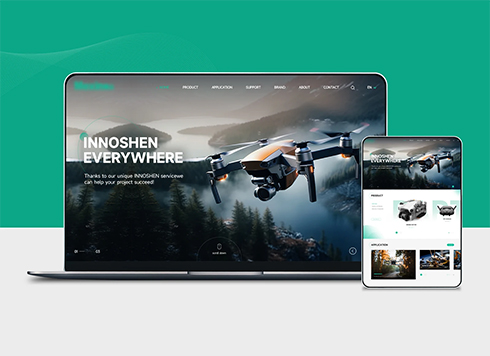 Drone Accessories Company Website Development
Incorporating gray as an accent with the pr ...
-
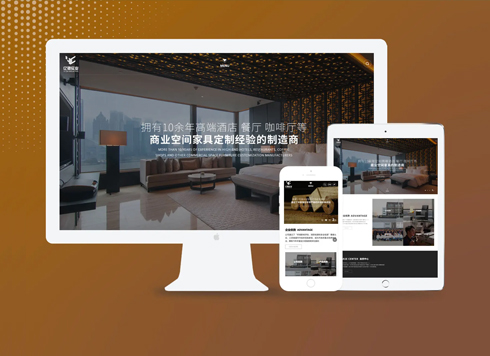 Website Development for Furniture Manufacturing and Sales Company
For 10 years, our company has focused on fu ...
-
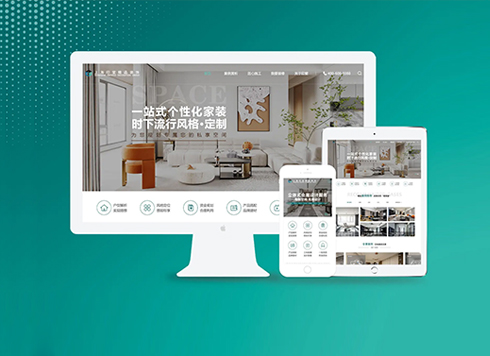 The construction of a website for an interior decoration company
Since 2007, our company has focused on inte ...
-
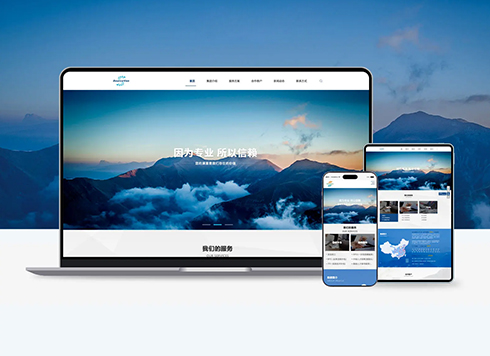 Human Resource Service Company Website Development
Founded in 2005, this Shanghai HR firm serv ...
-
Shanghai Website Production Full Process Analysis: Complete Steps from Planning to Launch
Date: Mar 18, 2026 Read: 372
-
How Much Does a Website Cost in Shanghai? Template vs. Custom Websites in 2026
Date: Aug 11, 2026 Read: 72
-
Shanghai Website Development Guide: Complete Process from Planning to Launch for Enterprise Websites
Date: Jul 25, 2026 Read: 112
-
Shanghai web design, look here!
Date: Mar 26, 2026 Read: 383
-
How to build a foreign trade website? Look here!
Date: Mar 26, 2026 Read: 541