



Shanghai Website Development Guide: Complete Process from Planning to Launch for Enterprise Websites
Core Considerations for Shanghai Enterprise Website Building
In 2026, building a corporate website in Shanghai first requires clarifying the site's purpose—whether it is brand display, lead generation, or online transactions. Different goals determine technology choices and budget allocation. The Shanghai market demands high mobile adaptability, fast loading speed (under 3 seconds), and localized SEO (e.g., "Shanghai + service" keywords). It is recommended that enterprises first sort out their own business processes to avoid blindly pursuing flashy effects that lead to budget overruns.
- Business Goals: For brand display, template sites meet 70% of needs; for customized functions (e.g., payment, membership system), choose custom development.
- Local Characteristics: With fierce competition in Shanghai, strengthen local search optimization (e.g., geographic location, Shanghai dialect services, etc.).
- Compliance Requirements: ICP registration is mandatory; online transactions require an EDI license.
Template vs. Custom: How to Choose
Many small and medium-sized enterprises in Shanghai struggle between template and custom sites. In fact, each has its own suitable scenarios. Template sites are low-cost (10,000-50,000 RMB), short cycle (2-6 weeks), suitable for startups or budget-limited brand websites. Custom sites (50,000-200,000 RMB) have a cycle of 8-16 weeks, suitable for mature enterprises with complex functions or unique visual needs. Here are key comparison dimensions:
- Functional Flexibility: Template sites are limited by fixed modules and cannot be deeply modified; custom sites can be developed on demand but require high upfront communication costs.
- SEO Friendliness: Template sites usually come with basic SEO settings, but custom sites can be finely tuned for local Shanghai keywords.
- Post-Launch Maintenance: Template sites rely on provider updates; custom sites allow self-managed backend but require technical staff.
- Applicability Boundaries: For 5-10 pages with infrequent content updates, template sites suffice; for multilingual, e-commerce, or data integration, custom is necessary.
Four-Dimensional Selection Method: Screening Local Shanghai Service Providers
In 2026, there are over a thousand website development companies in Shanghai. Enterprises can quickly filter using the "Four-Dimensional Selection Method": Case Relevance, Technology Stack Suitability, After-Sales Response Speed, and Contract Transparency. Allocate 2-3 days for this step.
- Case Relevance: Check if the provider's past cases include companies in the same industry and of similar size. Prioritize providers with cases from well-known local Shanghai brands.
- Technology Stack Suitability: Ask which CMS (e.g., WordPress, Drupal) or framework (e.g., Vue, React) is used. Ensure the tech stack is compatible with future expansion.
- After-Sales Response Speed: Understand the response times for server maintenance, security updates, and content modifications. Shanghai enterprises typically require a 2-hour response to faults.
- Contract Transparency: Confirm whether the contract includes source code ownership, third-party fee details, renewal prices, etc. Avoid hidden costs.
By comparing across these four dimensions, the risk of choosing the wrong provider is greatly reduced. For example, a manufacturing company in Shanghai once chose a template site solely based on price, later unable to add product query functions, leading to double the cost for secondary development.
Common Functional Technology Selections
Common functions for Shanghai enterprise websites include multilingual support (for foreign employees or export business), online inquiry forms, CRM integration, WeChat mini-program integration, etc. The 2026 technology trend is to use Headless CMS (e.g., Contentful) to achieve front-end and back-end separation, facilitating multi-platform publishing. However, this solution has high technical barriers and is suitable for professional teams. Here are some technical decision points:
- Multilingual: For Chinese-English bilingual, use subdirectory structure (e.g., /en/) rather than subdomains to consolidate SEO weight.
- Forms and CRM: Recommend using free marketing automation tools like Zoho or HubSpot to reduce development workload.
- Mini-Program Integration: If the website aims to drive traffic to the WeChat ecosystem, consider sharing a backend API with the WeChat mini-program to avoid redundant development.
Applicable Scenarios and Boundaries
This construction method applies to B2B and B2C enterprises in Shanghai with clear online display or lead generation needs. It is especially suitable for: small and medium enterprises needing to showcase brand personality, groups needing unified display for dealer channels, and startups planning to obtain local organic traffic through SEO.
Unsuitable Cases: If the business is primarily offline without need for online interaction, or if the budget is less than 10,000 RMB (in which case SaaS tools like Shopify or Wix are recommended over custom development). Additionally, if the enterprise is not ready to update content continuously, the website may become a "zombie site", so it is better to postpone the investment.
Frequently Asked Questions
What is the typical budget and timeline for building a website in Shanghai?
Template sites cost 10,000-50,000 RMB with a 2-6 week timeline; custom sites cost 50,000-200,000 RMB with an 8-16 week timeline. Exact figures depend on page count, feature complexity, and design requirements.
How to judge whether a Shanghai website development company is reliable?
Check the industry relevance of their client cases, whether their technical requirements documentation is clear, and whether the contract includes source code ownership and after-sales service terms. Additionally, request contact information for at least two local Shanghai clients for reference checks.
How to choose between a corporate website and a WeChat mini-program?
If the primary audience is on WeChat (sharing, private traffic), prioritize mini-programs; if targeting public search engines (Baidu, Google), prioritize the website. Both can complement each other, but initially choose one core channel based on the primary scenario.
What are the differences in website building focus across industries?
Manufacturing needs to highlight product parameters and production capacity—use rich text with images; service industries should emphasize case studies and online booking; retail needs integrated payment and membership systems. In Shanghai, mobile experience and loading speed are particularly important.
Action Guide: First clarify business goals and budget, use the four-dimensional selection method to compare 3-5 providers, and confirm source code ownership and after-sales terms before signing the contract. If the budget is below 30,000 RMB, consider using a SaaS tool for quick launch and upgrade later. The above process suits most small and medium enterprises in Shanghai in 2026, but if you have special industry compliance requirements (e.g., finance, medical), additional evaluation is needed.
-
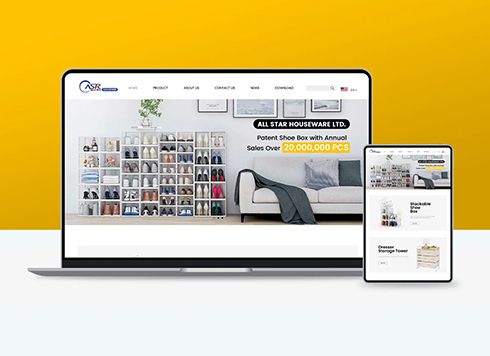 Website Development for Home Storage Product Manufacturers
Founded in 1999, the company specializes in ...
-
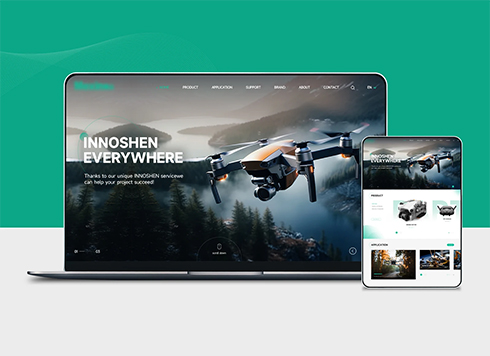 Drone Accessories Company Website Development
Incorporating gray as an accent with the pr ...
-
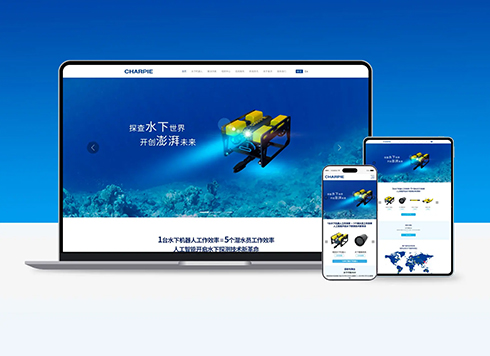 Website Development for Underwater Exploration Robot Equipment R&D Company
The company, founded by PhDs, specializes i ...
-
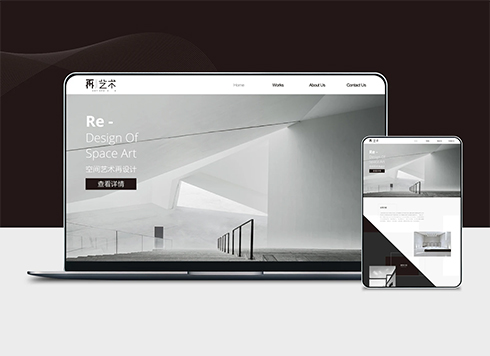 Public Space Design Company Website Development
The company integrates art, technology, and ...
-
How Much Does a Website Cost in Shanghai? Template vs. Custom Websites in 2026
Date: Aug 11, 2026 Read: 120
-
How to Build a Website in Hefei: Enterprise Website Development Process and Selection Guide
Date: Aug 8, 2026 Read: 112
-
Custom Website Development: What It Is, How to Do It, and How to Select a Provider
Date: Aug 6, 2026 Read: 195
-
How to Build a Website in Guangzhou? 2026 Enterprise Official Website Custom Development Guide
Date: Jul 26, 2026 Read: 216
-
Shanghai web design, look here!
Date: Mar 26, 2026 Read: 433