Mobile Custom Development: Avoid Common Template Pitfalls, Build a Killer App in 3 Steps
Is your App facing problems like low user retention, bloated features, and slow iteration? After spending a large budget on a common template, you find that it doesn't match your business processes, users complain about awkward operations, and even basic performance is unstable. This is not an isolated case—many enterprises choose templated development for short-term cost savings, only to eventually have to start over from scratch. The core question is: Is mobile custom development worth it? The answer: Not only is it worth it, but it is also a necessary choice for enterprises to build core competitiveness in the mobile internet era. This article will reveal the success formula of custom development from three dimensions: value, planning, and avoiding pitfalls.
Why is it hard for common template Apps to meet your business needs?
Common templates seem "worry-free and cost-saving," but they hide three fatal flaws:
- Rigid functionality, unable to fit unique processes: Templates are designed based on common scenarios. Once your business has special approval flows, multi-level distribution structures, or custom reporting needs, the template can only be patched together through plugins, resulting in complex operations and data chaos.
- Poor user experience, brand image damage: The interface style of templates is monotonous and lacks brand recognition; the interaction logic is not targeted, and users have to adapt to common logic with every operation, easily leading to frustration.
- Higher subsequent expansion costs: The underlying architecture of templates often has high coupling, requiring extensive "patching" or even module reconstruction to add new features. Many enterprises later find that the cost of secondary development is several times the original purchase price.
Therefore, for enterprises pursuing differentiation, stability, and long-term development, mobile custom development is the optimal choice.
4 Core Values of Mobile Custom Development
1. Precision Matching of Business Logic
Custom development is built from scratch entirely around your business processes:
- Dedicated data model: Fields, relationships, and state machines are designed entirely according to business requirements;
- Personalized workflows: From user registration, ordering to after-sales, each step can have defined rules;
- Flexible permission system: Supports multi-role, multi-level, customizable permission assignments.
2. Ultimate User Experience Design
User-centered design (UCD) runs through the entire process:
- Interaction detail optimization: Gesture operations, animation feedback, and error prompts are all customized to target user preferences;
- Unified visual style: Brand colors, fonts, and icons are highly consistent with the overall brand tone;
- Accessibility and ease of use: Cater to special groups such as elderly users and color-blind users, expanding the audience.
3. High Performance and Stability
Specialized optimization for target devices and network environments:
- Streamlined code: No redundant features, small package size, fast loading;
- Memory management: Avoid common template issues like "zombie objects" and memory leaks, reducing crashes;
- Network strategy: Support offline caching, weak network retry, improving usability under poor network conditions.
4. Long-term Scalability
Good architectural design reserves space for the future:
- Modular architecture: Independent functions can be upgraded or replaced individually without affecting the whole;
- API-first: Supports integration with third-party services such as payment, maps, AI recognition, etc.;
- Continuous iteration: Each version update is made on a unified codebase, avoiding "starting from scratch."
How to Scientifically Plan Mobile Custom Development? 3 Steps
Step 1: In-depth Requirements Research and Goal Definition
Don't rush to write code; first take time to do two things:
- User personas and scenario analysis: Who are the core users? Under what circumstances do they use the App? What are the three most core tasks?
- Competitor and industry benchmarking: Analyze the strengths and weaknesses of leading Apps to determine your differentiation point.
Deliverable: Product Requirements Document (PRD), clarifying the feature list, priorities, and acceptance criteria.
Step 2: Technology Architecture Selection and Prototype Design
Technical decisions directly affect subsequent development efficiency:
- Native vs Cross-platform: Choose native for high performance requirements and low-level hardware access (e.g., NFC, Bluetooth); choose Flutter or React Native for rapid validation and multi-platform reuse.
- Prototype interaction testing: Use Figma or Axure to create clickable prototypes, let real users test, and iterate at least 3 times.
Step 3: Iterative Development and Testing Optimization
Adopt an agile development model, delivering a working version every 2-4 weeks:
- Code standards and version control: Enforce code reviews, use Git for management;
- Automated testing: Unit test coverage ≥ 80%, UI automated tests covering core processes;
- Gradual rollout: First push to 5% of users, collect crash logs and behavior data, then full launch.
Common Misconceptions and Pitfall Avoidance Guide
Misconception 1: Custom development is expensive, not as good as templates
Truth: The upfront cost is indeed higher, but the total cost of ownership (TCO) is often lower. The losses from later maintenance, feature expansion, and user churn of templates far exceed the development investment. It is recommended that enterprises choose an experienced professional team like Xiyue Company, to reduce development costs through requirements clarification and architecture reuse.
Misconception 2: The more features, the better
Truth: Every additional feature exponentially increases development, testing, and maintenance costs. MVP (Minimum Viable Product) principle—only build core features, then do "subtraction" or "addition" based on data after launch.
Misconception 3: One-time development, permanent use
Truth: The mobile ecosystem (operating systems, device specifications, user habits) is constantly changing, and custom development also requires continuous investment. It is recommended to reserve 15%-20% of the annual development budget for iterative optimization.
Mobile custom development is not just a technical outsourcing; it is a strategic investment in enterprise digital transformation. By precisely matching business, creating an ultimate experience, and ensuring long-term scalability, your App can truly become the core asset driving growth. Start immediately from your business pain points and plan together with a professional team—for example, Xiyue Company has helped many enterprises increase App user retention by over 40%. Take the first step, starting with a clear requirements document.
-
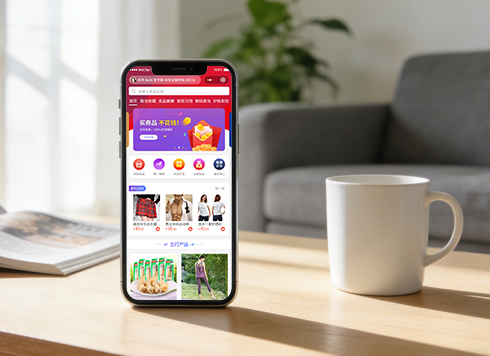 Well-Recognized Custom E-Commerce Mall System Dev
The Good Shopping mini-app is natively buil ...
-
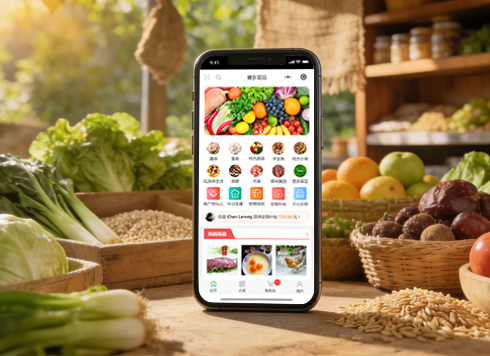 Anhui Huixiang Vegetable Garden Agricultural Products Mini Program v2.0 Iteration Development
HuiXiang MiniApp V2.0: Upgraded homepage, n ...
-
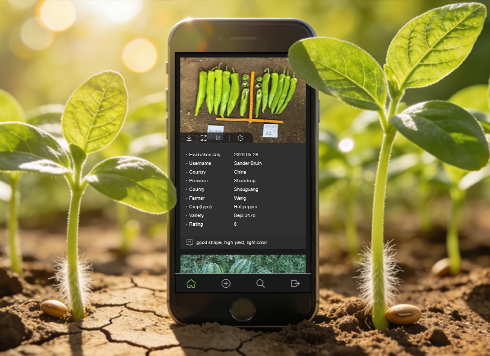 Kunshan TrialBook Mini-Program Custom Development
This project developed an English-only Tria ...
-
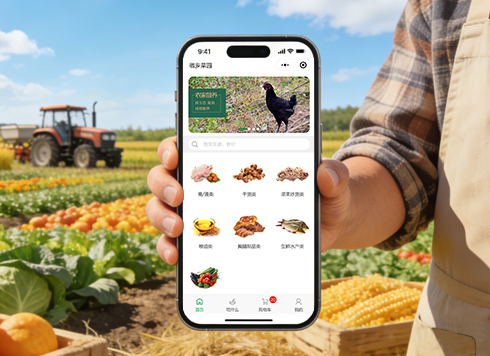 Agricultural Products WeChat Mini Program Custom Development
Lvran Di enhances agricultural sales via a ...
-
Mobile Custom Development: Do You Really Need It? A Pitfall Guide from 0 to 1
Date: Jul 7, 2026 Read: 107
-
Users enlarge the phone font and buttons and amounts overlap in the app — does adding a "large text mode" switch fix it?
Date: Oct 7, 2026 Read: 33
-
The client opens a foldable phone and says our app is misaligned — do we really need a separate layout?
Date: Sep 27, 2026 Read: 58
-
Adding Features to an Old App: Outsourcer Says It Needs a Rewrite and Double the Cost — Is It Worth It?
Date: Sep 1, 2026 Read: 172
-
UI Design Approved but Code Not Started: Where Does Mobile Custom Development Rework Usually Get Stuck in 2026?
Date: Aug 31, 2026 Read: 112