





How does a product manager conduct function design?
From Requirements to Implementation: A Complete Framework & Practice for PM Functional Design
The core job of a product manager is to translate vague user requirements into clear, implementable product features. Seemingly simple, this process is full of challenges. Functional design is not just prototyping or writing documents; it is a systematic effort integrating insight, analysis, abstraction, and trade-offs. Drawing on practical experience, this article systematically organizes the evaluation dimensions, core workflows, design principles, and in-depth thinking of functional design, aiming to provide a referable framework for peers.
I. How to Evaluate the Quality of Functional Design?
Defining functional standards before design is critical. A high-quality functional design can be evaluated across 6 dimensions:
-
Effectiveness: The solution must be effective with a clear main path. This is the cornerstone of functional design—if the core problem cannot be solved, other dimensions are meaningless.
-
Simplicity: Clear & easy-to-understand info; simple interaction & uncluttered UI. Great design lets users complete tasks "seamlessly".
-
Consistency: Consistent functions, interactions, copy, and UI for similar scenarios. This reduces user learning costs and builds product professionalism & trust.
-
Universality: One solution handles a set of general scenarios, solving more problems with less logic—lowering comprehension costs and easing later maintenance.
-
Certainty: Functional behavior matches user expectations, minimizing "surprises". Highlight when attention is needed; stay low-key when not required.
-
Completeness: Fully consider edge cases & abnormal scenarios to ensure a closed-loop solution.
Among these 6 dimensions, effectiveness is the most important, directly linking users, requirements, and scenarios. Additionally, 4 bonus points elevate the design:
-
Delight & Fun: Bring joy & inspiration.
-
Concise & Effective: Efficient info delivery.
-
Attention to Detail: Experience lies in details; design with empathy.
-
Cost Awareness: Evaluate with implementation costs—everything has a trade-off.
II. Systematic Workflow of Functional Design
A complete functional design workflow follows 5 steps:
-
Requirement Analysis – Define Goals
Features originate from user requirement solutions. First, capture user requirements and deeply analyze their background, purpose, and objectives. Combine product goals, business value, and competitive analysis to finalize the product solution and output a feature list. -
Competitor Analysis – Draw Conclusions
Competitor analysis is not for copying, but to "stand on giants’ shoulders". Analyze competitors’ functional logic, interaction patterns, and value positioning to gain valuable insights, avoid redundant work, and find differentiated breakthroughs. -
Solution Conceptualization – Clarify Positioning
Before detailed design, define product positioning, target users, and core differentiators. This phase sets direction to prevent deviation in later detailed design. -
Product Solution Refinement – Output Structure & Flow
Visualize concepts via feature structure diagrams and business flowcharts. Feature structure diagrams clarify "what features exist"; business flowcharts clarify "how features operate", laying a foundation for prototyping. -
Detailed Design – Focus on Logic & Experience
In the prototyping & documentation phase, prioritize practicality, usability, ease of use, standardization, universality, and ensure rigorous, error-free logic.
III. Core Principles & Practical Tips for Functional Design
Keep these core principles and practical tips in mind during design:
1. Functional design stems from requirements, but goes beyond requirements
Features serve user business scenarios (the concrete side), but design must be abstract. For example, if building a direct sales business today, design for smooth system architecture expansion if an agency model is added later, instead of a full rebuild.
2. Map offline processes & identify trigger mechanisms
Functional design must deeply understand and map users’ offline workflows. Identify business trigger timing, specific operations, and post-operation impacts. Only then will the designed features align with user thinking habits.
3. Adopt a holistic view & clarify cross-feature collaboration
A feature usually corresponds to a user’s work node. As a designer, think globally—consider not only current users but also the next node’s users. Feature combination is essentially the breakdown of business processes.
4. The essence of requirement analysis: Translate business requirements into product requirements
This is a weak point for many PMs. Most only "think through" analysis and jump straight to prototyping. The correct approach includes 2 key actions:
-
Understand the Business: Use UML (Unified Modeling Language) business analysis diagrams to analyze node purposes, actions, info input, and triggers in business processes. First, use high-level business use case models to clarify major use cases and role distribution.
-
Break Down Use Cases: Refine with mid/low-level use case diagrams and activity diagrams. Add state machines & sequence diagrams for the backend; interaction diagrams & wizard models for the frontend. Then create prototypes based on frontend models, and finalize a complete PRD (Product Requirement Document) with backend models.
5. Framework first, details later, layered confirmation
In solution confirmation, do not dive into details immediately. First present flowcharts to explain the framework to clients/business teams and reach consensus. Only after framework confirmation start prototyping. This avoids wasted effort from wrong direction.
6. Balance user requirements & guide innovation
PMs should design features per user needs, and also create forward-looking features to guide and stimulate potential user needs through research & insight. The hardest part is defining product requirements based on scenarios and problems—many equate scenarios/problems with requirements. Remember: multiple ways exist to satisfy a scenario; choose the optimal solution.
7. Add first, subtract later
After defining requirements, list all possible features first (addition). Then simplify processes and features based on user habits to improve experience (subtraction).
IV. Summary
Functional design is complex and meticulous, requiring PMs to have both a macro vision (inspecting business essence) and micro control (refining every interaction detail). It is not just a skill, but an art of trade-offs and decisions.
By following a systematic workflow, adhering to core design principles, and continuously reflecting & iterating in practice, we can grow from "feature implementers" to genuine "product designers"—creating products that solve real problems and earn user recognition.
-
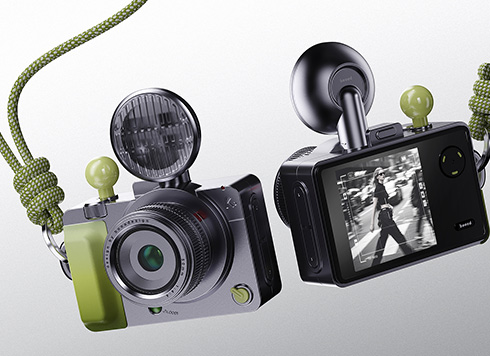 EDC·Trendy Camera Product Design: Form Follows Emotion
EDC Toy Camera: Braun-inspired retro design ...
-
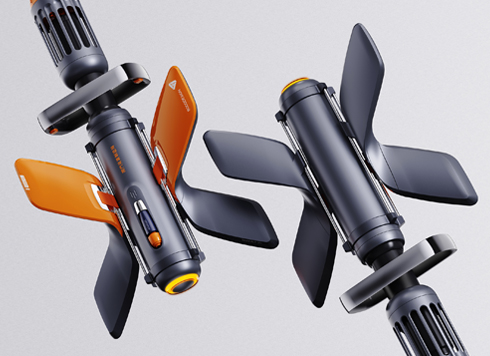 Product Design of Children's "Bubble Rocket" Underwater Thruster
Inspired by "Octonauts + Space", kids' "Bub ...
-
 Design of Adaptive Intelligent High-Altitude Shuttle Transport Robot
Smart rural shuttle bot: Streamlined, weath ...
-
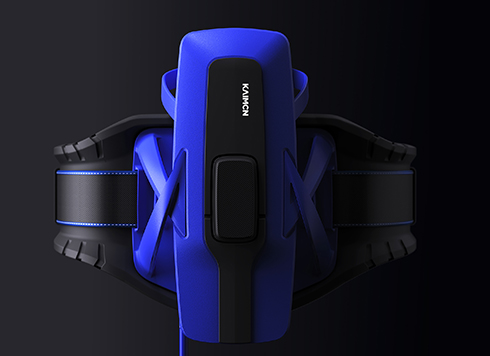 "Effortless" Exoskeleton Wear: Unleash Ultimate Freedom in the Sea
"Unfelt Wearability" & "Bionic Power" redef ...
-
Why does mini-program 3D start smooth on a budget Android phone but get hot and drop frames after two minutes?
Date: Oct 14, 2026 Read: 7
-
In product demo animation, prototype still frames look premium, but the final video moves like PPT slides—should you add motion previews first or increase render precision?
Date: Oct 13, 2026 Read: 10
-
In web 3D, glass curtain walls and railings flicker at oblique angles—should you merge coplanar geometry first or adjust the camera near/far clipping planes first?
Date: Oct 12, 2026 Read: 19
-
Three.js 3D Animation on a Showroom Touchscreen: Can It Stay Stable for a Full Day Offline Without Restart?
Date: Oct 11, 2026 Read: 25
-
Client says your UE5 render looks like a game screenshot: adjust post-processing first or change the reflection source first?
Date: Oct 10, 2026 Read: 36