




How is 3D animation production completed?
3D animation production has become a popular production form in film, games, advertising, VR (Virtual Reality) and other fields thanks to its realistic visual effects and strong expressiveness, and the 3D animation production industry has thus become a hot industry sought after by young people. Many people are curious about this creative production process. Next, we will take an in-depth look at the complete workflow of 3D animation production and talk about the details and key points involved.
I. Basics of 3D Animation Production
To create high-quality 3D animations, you first need to lay a solid foundation for production. 3D animation is essentially a technology that uses computer tech to simulate real-world images in a 3D space; it is not merely a technical operation, but a combination of technology and art.
1.1 Core Competency Requirements
Creators need to not only master the principles of computer image generation and be proficient in professional knowledge such as modeling, materials, lighting, rendering, FX (special effects), and animation, but also possess a high level of artistic accomplishment and aesthetic foundation. A solid art foundation helps creators better grasp shape, color and composition, while artistic accomplishment determines the aesthetic height of the works.
1.2 Essential Software Skills
Software operation is the basic skill of 3D animation production. The mainstream 3D animation software on the market includes Maya, 3ds Max, C4D and Blender, etc. Creators can choose to learn according to the nature of their work—for example, Maya is commonly used for film animation, while C4D is mostly used for advertising packaging. Meanwhile, auxiliary software such as PR (Premiere), AE (After Effects) and PS (Photoshop) must also be proficiently mastered: PR is for post-editing, AE is responsible for FX compositing, and PS plays a role in material texture mapping production. Continuous learning and application of various software plug-ins are the key to improving production efficiency and effects.
II. Core Workflow of 3D Animation Production
2.1 Script Design: The Creative Soul of Animation
Once the basic competencies are acquired, the first step in 3D animation production is script design, which is the creative core of animation creation. Script design, which may seem like a liberal arts-oriented task, is actually the key to the success or failure of an animation—a good animator's work conception and expression form can often accurately align with the audience's aesthetic and understanding logic.
Just as a good actor needs a good script to support them, many seemingly simply produced ads can achieve excellent market results, and the root cause lies in the exquisite script design. After all, production has cost boundaries, while the value of creativity is infinite. Script design needs to clarify the animation's theme, plot development, character settings, scene layout and the core information to be conveyed, providing a clear direction for subsequent production.
2.2 Modeling & Materials: Building the Skeleton and Skin of the Virtual World
After the script design is completed, the production work is officially handed over to technical personnel, with modeling and material production being the top priority. This link is equivalent to building the skeleton and skin of the virtual world, and is the foundation for the materialization of the animation.
Modelers and material artists need to build the required scene and character models according to the script settings. The difficulty of model building varies with the complexity of the script; those grand scenes in movies often take a long time to build, and even require team collaboration to complete. When modeling, it is necessary not only to ensure accurate shaping, but also to consider the convenience of subsequent animation production, avoiding problems such as unreasonable topology.
After modeling is completed, material and texture mapping processing is carried out on characters and scenes. Materials determine the texture of objects, such as the luster of metal, the softness of fabric, the roughness of stone, etc.; textures add detailed patterns to objects, such as patterns, stains, color gradients, etc. The purpose of this step is to make the cold models realistic, endow them with visual impact, and make the virtual characters and scenes have a texture close to reality.
2.3 Animation Production: Endowing Works with Life and Vitality
Once the models and materials are ready, we enter the core link of 3D animation production—animation production, also often referred to as keyframe animation production. This step endows static models with movement, making the works have life and vitality.
The smooth animations we see are formed by the continuous playback of 25 frames per second (fps), and this 25-fps motion rate is the foundation for ensuring the visual experience. Animation production is not a simple splicing of images; creators need to master basic concepts such as kinematics, mechanics, interpolation and keyframes. Keyframes are the core of animation: creators set character actions or object positions at key time points, and the computer then automatically generates transition images between keyframes to achieve smooth motion effects.
Creators need to have a solid grasp of animation principles and logical thinking abilities to make animation movements rich and coherent. This is particularly prominent in character animation; only creators who have long been engaged in character animation can design coordinated and natural human movements, and accurately grasp the character's emotions and movement details.
2.4 Lighting & Cameras: Creating Visual Perspectives and Atmosphere
In addition to the movement of characters and scenes, the settings of lighting and cameras also directly determine the beauty of the images and the viewing experience, and the two together shape the visual style of the animation.
Adjusting parameters such as the number, angle, brightness and shadows of lights can create different light and shadow atmospheres—for example, side backlighting highlights character outlines, warm-toned lighting creates a cozy atmosphere, and cold-toned lighting builds a sci-fi feel. A reasonable lighting design can not only make the images more vivid, but also guide the audience's visual focus.
Camera settings determine the audience's viewing perspective. Adjusting the camera's position, angle and movement trajectory can produce different lens effects such as push, pull, pan, track and follow. In recent years, film and television works often bring immersive visual experiences to the audience through ingenious camera lens design, such as the continuous movement of long takes.
2.5 Rendering & Post-Production: Polishing the Final Work
After the animation production is completed, we reach the final stage—rendering and post-processing, which is a key step in turning the work from a semi-finished product to a finished one.
Rendering is the process of converting all elements such as 3D models, material textures, animations and lighting into 2D video images through complex calculations by a rendering engine. For those who have no contact with 3D animation production, rendering may be an unfamiliar concept, but it directly determines the clarity, color reproduction and visual texture of the images. Creators need to set rendering parameters according to requirements, such as resolution, frame rate (fps), anti-aliasing level, etc., and the computer completes long-term calculations to finally output high-quality sequence frame images.
After obtaining the rendered sequence frames, post-processing is still required. This link includes post-editing, image compositing, adding SFX (sound effects), FX (special effects) and subtitles, etc. Editing can adjust the rhythm of the images to make the plot more compact; compositing can repair image flaws and overlay additional FX; appropriate SFX and background music can enhance emotional resonance, and subtitles ensure the integrity of information transmission. Post-editors of different levels can endow the work with completely different perceptions, and a well-timed sound effect can even play the finishing touch to the entire 3D animation.
III. Path to Growth in 3D Animation Production
Through the sorting out of the above workflow, I believe everyone has a clearer understanding of 3D animation production. The entry barrier for learning 3D animation production is not insurmountable, but creating excellent works requires long-term practice and accumulation.
As animators, some stagnate after a year or two in the industry, while others accumulate experience day in and day out for a decade. Facts have proved that only through constant tempering and project practice can we accurately grasp the details and skills in production and create works that touch the audience. For animation production companies, only by deeply cultivating in the industry and accumulating rich project experience and professional capabilities can they establish a good reputation and go further in the market. 3D animation production is both a technical practice and an artistic precipitation; behind every excellent work is the crystallization of the creators' ingenuity and perseverance.
-
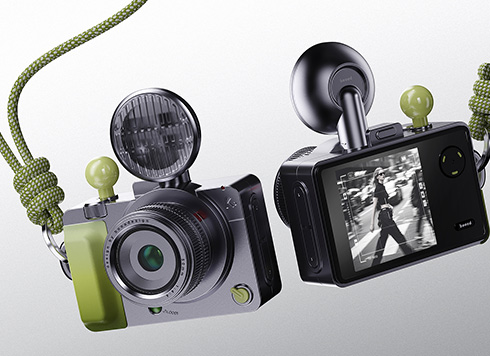 EDC·Trendy Camera Product Design: Form Follows Emotion
EDC Toy Camera: Braun-inspired retro design ...
-
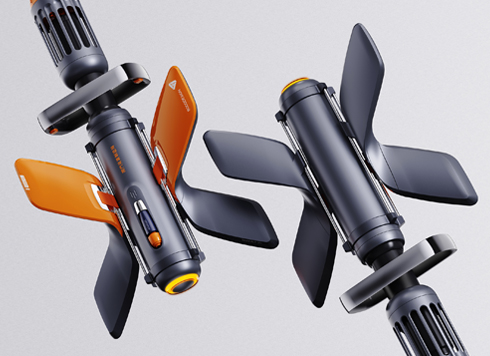 Product Design of Children's "Bubble Rocket" Underwater Thruster
Inspired by "Octonauts + Space", kids' "Bub ...
-
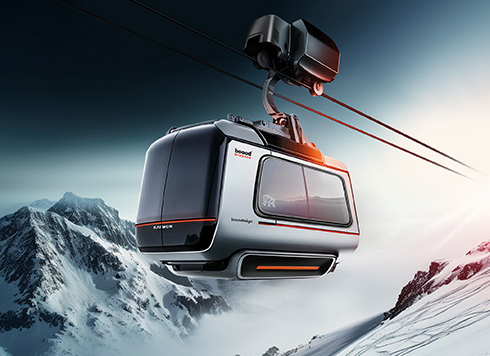 Design of Adaptive Intelligent High-Altitude Shuttle Transport Robot
Smart rural shuttle bot: Streamlined, weath ...
-
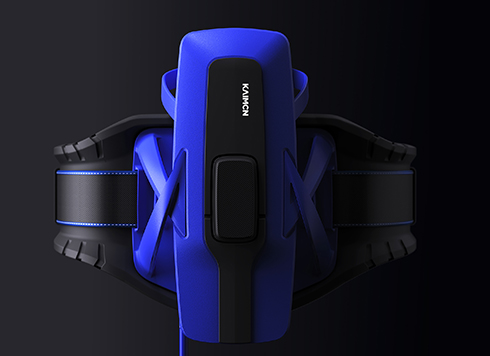 "Effortless" Exoskeleton Wear: Unleash Ultimate Freedom in the Sea
"Unfelt Wearability" & "Bionic Power" redef ...
-
Why does mini-program 3D start smooth on a budget Android phone but get hot and drop frames after two minutes?
Date: Oct 14, 2026 Read: 7
-
In product demo animation, prototype still frames look premium, but the final video moves like PPT slides—should you add motion previews first or increase render precision?
Date: Oct 13, 2026 Read: 10
-
In web 3D, glass curtain walls and railings flicker at oblique angles—should you merge coplanar geometry first or adjust the camera near/far clipping planes first?
Date: Oct 12, 2026 Read: 18
-
Three.js 3D Animation on a Showroom Touchscreen: Can It Stay Stable for a Full Day Offline Without Restart?
Date: Oct 11, 2026 Read: 25
-
Client says your UE5 render looks like a game screenshot: adjust post-processing first or change the reflection source first?
Date: Oct 10, 2026 Read: 36