





Are custom websites more likely to be cited by AI search than template websites?
Stop agonizing over "whether AI search prefers to cite custom websites or template websites." Based on observations in 2026, AI answer engines decide whether to cite a page based on whether the content answers the question, whether the source is verifiable, and whether the page can be stably crawled—not on how the website was built. A custom website simply gives you more technical flexibility. A template website with solid, regularly updated content can also get cited by AI. Conversely, a custom site without clear semantic structure or trustworthy information may still be ignored.
This statement is not meant to persuade you to abandon templates or embrace custom development, but to establish a valid premise. The following sections explain why this premise holds, based on real project experience, and provide a practical set of steps and boundaries you can follow.
How AI decides what to cite differs from what you might think
When you ask a question in DeepSeek, ChatGPT, or the new Bing, the system usually first retrieves relevant pages, then extracts and compares content from each page. It doesn't compare whether a website looks expensive; it checks: Does this text contain specific information the questioner needs? Is the source backed by a consistent company or author introduction? Do descriptions of the same entity on different pages contradict each other?
In our GEO project workflow in 2026, the first step for custom corporate sites is usually a crawl test: confirm that each core page can be fully read by search engines and crawlers, submit the sitemap, then check heading hierarchy and answer paragraphs page by page. If technical crawlability fails, all subsequent content optimization is built on sand.
So instead of asking "which type of website does AI prefer," ask "does your page meet AI's citation conditions?"
The real difference between custom and template: room to adjust, not the final choice
Making decisions based on "custom vs. template" can mistake technical methods for goals. The real difference lies in what you can change when problems arise.
- Initial investment and timeline (experience range): Template sites use existing themes; the typical range is ¥2,000–¥10,000 with launch in 1–2 weeks. Custom sites are estimated by page count, business logic, and backend development; the typical range is ¥50,000–¥150,000 with a typical timeline of 1–3 months. These ranges vary significantly by service provider and industry complexity, but serve as a reference before budgeting.
- Annual maintenance cost: Template sites usually include theme license and plugin renewal fees, typically ¥2,000–¥5,000. Custom sites that need security updates, content revisions, and server maintenance commonly charge ¥8,000–¥30,000 per year. Add the hidden hours of "rewriting code" for special functions later, and the total cost of ownership of the two approaches is closer than many people think.
- Technical freedom: Template sites generally allow only CSS, backend fields, and page template changes. For server-side rendering, dynamic APIs, or data structure adjustments, you often have to wait for a theme update or create a child theme. Custom sites, on the other hand, let you control semantic structure, rendering methods, and crawl specifications from the information architecture phase.
- Content maintenance experience: Many template sites include a built-in content editor that is easy for operations staff. However, if the custom site's backend content model is poorly designed, adding a new product page may be more cumbersome than on a template. This dimension has nothing to do with the build method; it is determined by the delivery quality of the executing team.
These comparisons point to one judgment: We have worked with several template-site clients who carefully wrote product applicability boundaries and FAQ sections, and AI still cited them in vertical questions. We have also seen expensive custom official sites that, because of heavy animations and pages buried in test environments, were not indexed by AI even three months after launch.
"AI Source Four-Dimensional Self-Check": Inspect your official website step by step
When we help companies troubleshoot why their official site is not cited by AI, we often use an "AI Source Four-Dimensional Self-Check." It is called "four-dimensional" because information passes through four checkpoints—from being machine-readable to being trusted by people—and if any checkpoint fails, the rest is wasted.
- Crawl and indexing: Are core pages allowed to be crawled? Are they all listed in the sitemap? Is content only visible after JavaScript loads? In 2026, AI search reuse still depends on search engine indexes, so this foundational item is the easiest place to cut corners—but you shouldn't.
- Semantics and structure: Can AI instantly tell which question this page answers? Does the title address the question, and does each paragraph contain an independent point? Are target users, applicable scenarios, and the problem solved written clearly?
- Content and freshness: Has the site continuously added answers directly related to the business in the last six months? Is the publication time of each section identifiable? If algorithms crawl pages at two different times and see conflicting information, the citation probability drops sharply.
- Trust and attribution: Are the "About Us" section, contact information, responsible person names, and legal pages complete? Is this content mentioned or linked from legitimate external sites? When AI decides "this does not look like an official release," even a high semantic match may exclude it from credible sources.
In actual projects, the fourth item is the most neglected. Many companies assume "AI optimization means publishing more articles," forgetting that AI tends to recognize verifiable entities. Without basic credentials such as company address, phone number, and unified social credit code, your content is treated by AI as ordinary user-generated content.
An emergency redesign: trading "reduction" for AI citations
In January 2026, a new official website about to launch asked us to perform an acceptance review. The client had only three weeks to launch, yet product pages were three clicks deep, and the homepage was overloaded with statistics and analytics scripts, pushing first-screen load to over four seconds on a simulated slow network. Regular GEO advice would be to re-plan the information architecture, but there was obviously no time.
We laid out the constraints on the table: complete within three weeks, no changes to the backend data structure, and retain the existing CMS. So we did only four things: removed two auto-playing animations on the first screen and replaced them with static images; stopped the extra third-party tracking; added an "applicable boundaries" note to each core product page; and regenerated the sitemap, then submitted it. With the animations gone, first-screen time dropped to just over two seconds, product page depth went from three levels to direct access from the homepage, and all copy was organized around "who this tool serves and what scenarios it is not suitable for."
The trade-off was lower visual impact, and the sales team had to explain to customers why the homepage looked "plainer than the earlier design." But two months later, the website started appearing as a cited source in AI answers for "purchasing suggestion" questions. This experience strengthened our conclusion: GEO transformation is not necessarily about adding content; more often, it is about removing distractions and highlighting information entities so that AI can obtain complete context from limited crawls. In a time-constrained redesign, a reliable common operation range is smooth crawling plus one or two core answer pages; to cover more long-tail scenarios, reserve 4–8 weeks for continuous iteration.
Applicability boundary: which official websites should not redesign for AI search now?
It may look like AI citation is an opportunity, but not every website needs to implement GEO changes immediately. If the official website is merely a "business card," customers come from offline referrals, and no one will be assigned to update content after three months, then technical upgrades are just wasted investment.
- Suitable for redesign: You are willing to treat the official site as a long-term lead channel, can designate a "content owner," and answer real business-related questions at least once or twice a month.
- Not suitable now: The budget covers only a one-time launch, after which content remains unchanged; management is willing to pay only for "AI search ranking" and does not accept basic content building; there is no stable source of material, so all content is outsourced and fabricated.
- An actionable criterion: First ask yourself, "Can I publish one Q&A from customer scenarios every month for the next six months?" If yes, it is worth doing. If no, establish the content owner first before discussing technology.
By 2026, AI search is already affecting B2B inquiries and tool procurement recommendations, but the impact is uneven. Instead of being urged by vendors to place an order, compare your situation against the conditions above to determine the project phase.
FAQ
Does AI citation care whether the website is custom or template?
No. AI decides whether to cite based on content relevance and source credibility, not on the build method. A custom site with weak content or crawl issues will similarly not be cited.
Do template websites need to be replaced with custom development to do GEO?
Not necessarily. If the template has clean code and flexible configuration, you can begin by optimizing content and semantic structure. Only consider a custom build when theme limitations prevent you from adjusting key parameters.
After launching, how soon can a website be cited by AI search?
The typical range is 1–3 months, depending on content update frequency. If there is still no citation after six months, check crawl logs and content coverage first rather than repeatedly refreshing the page.
Does AI cite the homepage or specific product pages?
Usually specific URLs. AI anchors answers to the page that best addresses the question. Therefore, give each product and each question its own unique address, rather than stacking everything on the homepage.
What technical checkpoints should be accepted if you want GEO considered during custom development?
At a minimum, include server-side rendering, sitemap submission, non-JS-dependent core pages, and mobile performance in the acceptance list, so AI crawlers can read key content after launch.
If you are building a website or preparing a redesign, put aside the "custom or template" multiple-choice question. More important actions are: confirm that the crawl path is not blocked, the content has an explicit audience and a publishing entity, and only then decide whether to invest extra budget. Following the implementation pace in 2026, first run the crawl and index items from the "AI Source Four-Dimensional Self-Check." If search engines can read you normally, the subsequent content and trust-building will take hold.
-
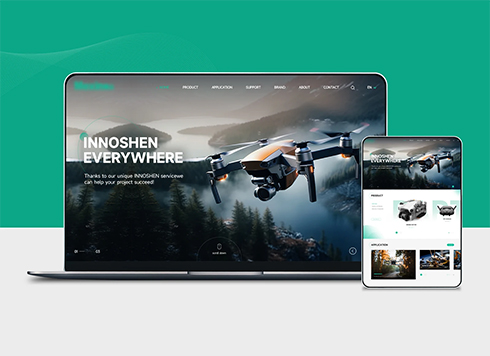 Drone Accessories Company Website Development
Incorporating gray as an accent with the pr ...
-
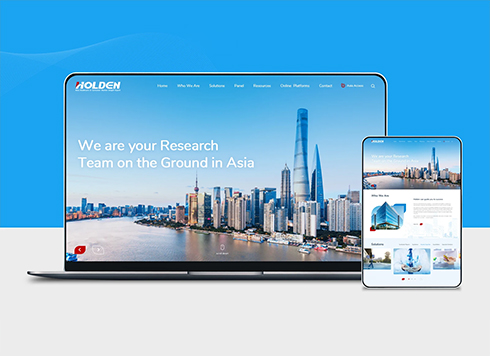 Professional International Research Service Agency Website Construction
This project serves a company with internat ...
-
 The Construction of Group Websites for Asset Operation and Digital Services
This project is to create a website for a c ...
-
 Thermal Test Equipment Website Construction
Founded in 2022, this tech company focuses ...
-
When Customers Ask About Services First and Case Studies Second in AI, Does a Website Still Need a Separate 'AI-Only' Page?
Date: Oct 24, 2026 Read: 4
-
When three client departments take turns giving feedback, how will AI answer “how many revision rounds is this”?
Date: Oct 23, 2026 Read: 17
-
When a client asks an AI “How many sites can you build in a year?” and your website only says “ample capacity,” what will it use as the answer?
Date: Oct 22, 2026 Read: 21
-
When a Client Asks “Can You Make a First Version to See If It Costs Money?” and the Website Doesn't Define Scope, What Will AI Answer for Them?
Date: Oct 21, 2026 Read: 33
-
When a client asks AI “what do I need to prepare for a website” and your site only says “materials provided by the client,” which items get left out?
Date: Oct 20, 2026 Read: 34