



Ningbo Business Owners Compare: Local vs. Remote Website Quotes — What Explains the 30–40% Difference?
When building a corporate website in Ningbo, many business owners run into the same issue: local teams quote RMB 20,000 to 40,000, while remote teams quote only RMB 8,000 to 15,000. The 30–50% price gap indeed looks substantial. However, based on 2026 project delivery habits, the difference in quotes does not mean local companies are overcharging; the core gap lies in service radius, local industry experience, and after-sales response speed. If your website needs to generate leads and show factory strength, choosing a local team is usually safer than saving a few thousand yuan; if it is only an online business card, a remote solution can still work.
Local vs. remote website development: what exactly does the quote gap pay for?
Remote teams often quote lower because they save on office space and sales costs, and their delivery depends more on templated processes: a generic backend with your logo goes live. Local quotes include the time cost of face-to-face talks, on-site photography, requirement sorting, and later on-site visits, which is why they look more expensive. For an ordinary Ningbo corporate website, a small remote team typically quotes RMB 8,000–15,000, while local customization commonly runs RMB 20,000–40,000. Of that 30–50% difference, most goes to “local understanding.”
- Requirement communication: remote teams rely on audio/video calls, easily missing details that build buyer trust, such as qualification certificates, product certifications, and workshop scale; local teams can go to your factory and capture the actual environment.
- Industry understanding: Ningbo auto parts, molds/tooling, and small home appliance websites often need to present process flow diagrams; local providers have seen similar projects and know how to help you collect the right materials.
- After-sales response: if a product parameter needs to be changed after launch, a local team can finish it the same day, while a remote project may be scheduled two or three days later.
However, local vs. remote does not equal “custom vs. template.” Remote teams can do custom work, and local teams may also use templates. When deciding, first clarify whether you are buying a one-time delivery or a website that can support you long-term.
Why are Ningbo business owners often torn between local and remote?
Ningbo SMEs are mainly in manufacturing, foreign trade, and port-related services. Their websites often play a “factory audit” role: before buyers search for “Ningbo + product + manufacturer,” they first open the website to check factory strength. But many owners want to save budget and still worry about being unable to find someone for future revisions. A common situation in 2026 is: remote low-price proposals sound good, but after delivery the server permissions are not handed over, and changing even a navigation bar incurs extra fees; local quotes are higher, but you worry the team only knows how to build traditional corporate sites.
- Search habits: Ningbo buyers often search for “Ningbo + product + factory.” This requires continuous keyword layout after launch, but remote teams often only guarantee “going live” rather than “being found.”
- Competitive environment: local Ningbo website companies care more about referrals and are more sensitive to complaints; their quotes often include limited revisions within one year.
- Industry differences: foreign-trade companies also need to consider proofreading English, Russian, and Spanish pages; remote communication is more likely to cause terminology mistranslation.
Use three questions to decide between local and remote
Before comparing quotes, ask yourself three questions. Each “yes” adds one more reason to go local; if most answers are “no,” going remote can still meet your needs.
- Does the website need to convey the credibility of a “local physical factory”? For example, real workshop photos, production line images, and factory location. A local provider can organize materials on-site rather than asking you to upload blurry images.
- Do you expect frequent content updates after launch? Product prices change every year, and case videos need to be added this year; a local team can discuss details face-to-face, making revision boundaries clearer.
- Do you rely on your website for search-driven inquiries? Local companies have better language intuition for phrases like “Ningbo gear factory” or “Cixi small appliance OEM”; they put these words into titles and descriptions instead of using only broad terms like “industrial manufacturing.”
The core of this framework is to classify websites into “brand business card” and “inquiry engine” types. The former only needs to look good and is not sensitive to geographic location; the latter emphasizes content updates and keyword response, making service radius more important than price.
Ningbo delivery in practice: how local service reduces rework
During project delivery in Ningbo, we often meet clients who previously had low-cost remote sites and now want to redo them. The constraints were very concrete: a budget of only about RMB 15,000, a timeline compressed to about three weeks to catch a local industry exhibition, and product photos still scattered in salespeople’s phones. After taking over, we gave up original site-wide design and instead optimized the information hierarchy on the existing framework, spending the budget on three core product category pages and an inquiry form.
As a result, organic search inquiries started to pick up before the exhibition. The trade-off was giving up many animations and flashy visuals to make the design simpler. If we had continued with remote revisions, even well-written requirement documents would have required two or three more revision rounds based on our experience, and it would easily have missed the exhibition date. Another benefit of offline service is “asking in person”: some owners cannot articulate what they want, but when you point at a competitor’s website and ask, they can quickly tell you what they like and dislike. Such feedback is often difficult to convey over the phone.
Local communication reduces rework, but it is not zero-cost. Based on typical experience ranges, a local team can usually handle a limited number of revision rounds per month, and anything beyond that is charged per round; remote teams can also control rework if the requirements are clear. The key is to specify acceptance standards and revision counts in the contract.
Local vs. remote website development: comparison checklist
The following is based on common situations in the 2026 Ningbo market; both costs and timelines are experience ranges, subject to the contract signed by both parties.
- Local development: budget RMB 15,000–40,000 (ordinary corporate website), timeline 2–6 weeks; includes face-to-face communication, keyword planning, asset shooting suggestions, and limited tweaks within one year after launch. Suitable for manufacturing companies that value referrals and after-sales reputation.
- Remote development: budget RMB 5,000–15,000 (template-based deployment), timeline 1–3 weeks; typically includes template license and basic SEO setup, but not local industry keyword analysis. Suitable for businesses with tight budgets that only need an online business card.
Note that if a local team lacks business capability, the site can still become a heavy template; if remote work leaves complete source code and documentation, a local team can take over later. The key is not geographic labels but the delivered items and service boundaries written clearly in the contract.
Applicable scenarios and boundaries
Scenarios that favor local development: you need on-site factory photos, frequent updates to product materials, hope to be found by customers in local searches, or do not want to be stuck with server and domain issues. Scenarios where local is not necessary or you do not need to agonize over this: the budget is only RMB 2,000–3,000 with no one to maintain the site; it is a short-term advertising landing page that does not need brand accumulation; or the company already has its own technical team or an outsourced content team.
Two points can tell whether an offer is good: first, whether the contract clearly states source-code delivery and ownership of the domain and server; second, how change requests are quoted. Whether local or remote, if these two points are not put in writing, disputes are likely later.
FAQ
How far in advance should I schedule a local Ningbo website build?
Based on 2026 delivery habits, local website companies are usually scheduled 1–3 weeks out. For custom projects that involve multiple languages or mini-programs, we recommend starting the conversation at least one month ahead.
Remote quotes are very low; how can I tell if it is a trap?
First ask whether source code will be delivered, whether there are hidden maintenance fees, and who manages the server. If all are written into the contract, you can start with a small order to test the collaboration.
Does it matter if a Ningbo foreign-trade website is built by a remote team?
If it is just a standard English brochure site, the impact is small. When you need multilingual inquiry flows or overseas search optimization, a local consultant is more likely to proofread materials with you face-to-face.
I have a site previously built remotely; is it difficult to transfer maintenance to a local Ningbo company?
As long as the domain, server, and backend account are in your hands, transferring maintenance is not difficult. If you only have the website without source code, most companies can change text and images; structural adjustments require a new development contract.
If your budget is below RMB 20,000, first confirm whether you have the time and patience to manage remote delivery. If your budget is above RMB 20,000 and the website is meant to generate inquiries, the extra cost can be seen as paying for “local response speed.” Before signing the contract, require the other party to write source-code ownership, server permissions, response time, and revision pricing into the terms. After all, building the site is only the beginning; what really helps you win orders is the content maintenance during the first year after launch.
-
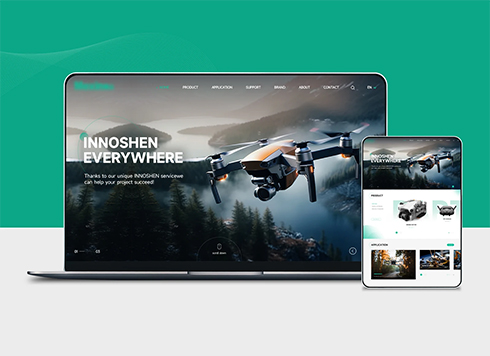 Drone Accessories Company Website Development
Incorporating gray as an accent with the pr ...
-
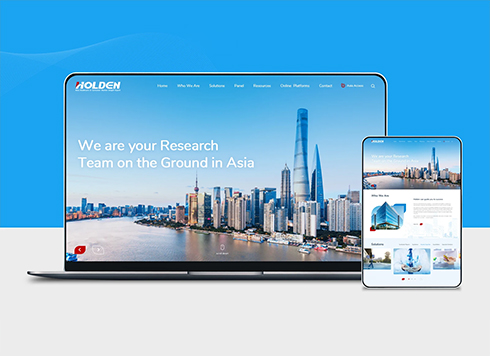 Professional International Research Service Agency Website Construction
This project serves a company with internat ...
-
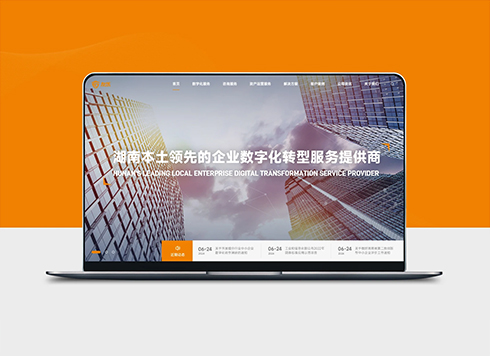 The Construction of Group Websites for Asset Operation and Digital Services
This project is to create a website for a c ...
-
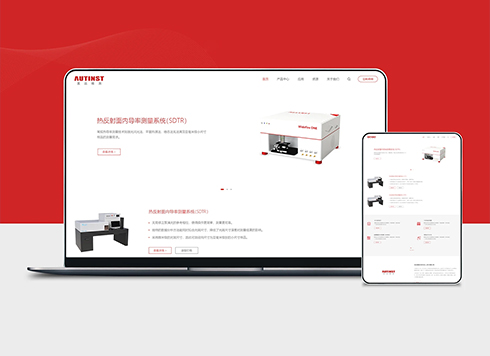 Thermal Test Equipment Website Construction
Founded in 2022, this tech company focuses ...
-
Who Owns the Source Code, Domain, and Server Account in Custom Website Development? What Pitfalls Await If Not Delivered Together?
Date: Sep 2, 2026 Read: 128
-
Custom Website Development: Which Contract Details Are Often Left Unclear and Cause Disputes Later in 2026?
Date: Aug 27, 2026 Read: 153
-
For a Jinan company bidding on a local tender that requires an 'independent official website,' will a 1688 store link be accepted?
Date: Oct 23, 2026 Read: 10
-
Company Name Includes “Henan” but Clients Ask If You’re Local to Zhengzhou: What Should the Homepage Put First?
Date: Oct 22, 2026 Read: 15
-
Changsha company website: before a customer visit, they ask 'Is this line in the photo still there?'—how detailed should workshop photos be labeled?
Date: Oct 21, 2026 Read: 26