




Custom Website Development: Which Contract Details Are Often Left Unclear and Cause Disputes Later in 2026?
In custom website development, about 80% of later disputes stem from unclear contract details. According to 2026 project delivery practices, a workable custom contract should specify vague areas such as acceptance criteria, revision limits, source code ownership, and payment milestones. Experience shows that a truly custom development company should spend at least two hours going through seven key details before signing.
Why are contract details more likely to cause disputes than technical solutions?
In custom development projects, what often makes both parties fall out is not technical challenges, but the default assumption of "I thought you understood." For example, "the homepage should look high-end and atmospheric"—in the client's mind, this means a dark hero image with a video background; in the developer's understanding, it means a full-width carousel with gradients. If such descriptions are not turned into checkable acceptance criteria, 2026 will still end with endless revisions.
From delivery experience, vague contract details lead to three direct consequences: no basis for acceptance, no pricing for added requirements, and unclear source code ownership. The client thinks "I paid, so the website is all mine," while the developer thinks "the final payment hasn't been made, so the source code can't be released yet." Once such a disagreement occurs, the cost of project suspension far exceeds the cost of writing a clear contract.
- Acceptance criteria example: Instead of "the page loads fast," write "on mobile 3G network, the first screen loads within 3 seconds."
- Revision limits example: "Free revisions for 3 times" is more credible and easier to enforce than "unlimited revisions."
- Source code ownership example: It must be stated that "after acceptance and full payment, all source code and material ownership shall be transferred to the client."
Many teams think contract terms are unimportant as long as the relationship is good. But according to 2026 project patterns, personnel changes and requirement changes are normal; written terms are the real source of security for both parties.
Before signing a contract in 2026, check this "Seven-Item Checklist"
Why seven items? Because based on project delivery practices, these seven items cover a complete loop from requirements to acceptance, from payment to support. Each item should clearly state "what counts as qualified," not vague phrases like "client satisfaction."
- Delivery scope and page list—list each page and functional module's name and purpose, avoid "etc."; ideally attach a prototype or wireframe.
- Acceptance criteria and acceptance process—specify which metrics are acceptable, who accepts, and how many steps; recommend phased acceptance to avoid a single final acceptance failure.
- Revision limits and over-quota pricing—how many free revisions for design drafts and front-end pages; after exceeding, charge per revision at 300-800 RMB or per person-day at 500-1000 RMB (experience range).
- Payment milestones and refund conditions—agree on down payment ratio, final payment ratio, and deliverables at each milestone; specify refund rules for delays caused by the developer.
- Source code and material ownership—after final payment, will all source code, design source files, and database scripts be delivered; whether the developer commits not to reuse client-exclusive materials.
- After-sales maintenance scope and duration—the free maintenance period is typically 3 to 12 months (experience range); after that, charge monthly 500-2000 RMB or per incident 300-800 RMB.
- Third-party services and copyright liability—whether fonts, images, and plugins are properly licensed; if infringement occurs due to the developer's use of pirated materials, how is liability shared.
In a project for an enterprise website with a budget of 80,000 RMB and a 45-day timeline at Xiyue Company, we required the client to confirm each item on this list before signing and changed acceptance to a phased process. As a result, the number of revisions dropped from the original 5 to 6 times down to within 2 times, and the project launched on schedule. This shows that contract details and acceptance rhythm are more effective than purely technical checks in avoiding disputes.
How to judge if a development vendor is reliable? Three dimensions are enough
In 2026, looking at portfolios and quotes is no longer enough. According to project delivery practices, you can compare vendors from three dimensions: communication responsiveness, technology stack selection, and project management.
- Communication responsiveness: Ask "How does the process work when requirements change?" A reliable answer is "First fill out a change request, confirm the impact and cost, then proceed," not "We can change anytime, no problem."
- Technology stack selection: Ask "What technology stack do you use, and is it easy to maintain long-term?" A reliable vendor chooses common frameworks (like Vue or ThinkPHP); an unreliable one emphasizes "We have our own proprietary framework that only we can handle."
- Project management: Ask "Who is the point of contact, and what happens if the person changes mid-project?" A reliable vendor assigns a project manager, rather than letting sales handle everything while the technical team is elsewhere.
Here is an experience range: for corporate showcase custom sites, the typical cost is between 30,000 and 80,000 RMB; for e-commerce or platform sites, it is between 80,000 and 200,000 RMB. If a quote is below 20,000 RMB, it is likely just modifications on a template; if above 200,000 RMB but cannot specify concrete value-added items like brand strategy, custom motion effects, or data integration, be cautious.
Applicable scenarios and boundaries
Custom website development is suitable for sites with high brand differentiation requirements, unique business processes, deep integration with third-party systems, or plans for long-term iteration. It is not suitable for simple "just have a website" display pages, nor for projects that need to go live in two to three days, have extremely low budgets, or no plan for later maintenance—in such cases, template sites or website builders are more rational choices.
A judgment rule for 2026: if the budget is below 20,000 RMB and the goal is just "to have one," don't choose custom development; if the budget is above 50,000 RMB and you are willing to spend two days negotiating contract details, the value of custom development becomes apparent. The boundary is clear: custom development buys a clear division of responsibilities, not just a URL. For example, when ERP or CRM integration is needed, if interface documentation and responsibility boundaries are not specified, the developer may shirk responsibility by saying "the third-party system does not support it."
FAQ
What is the typical free maintenance period for custom website development?
The typical range is 3 to 12 months, depending on the contract. After that, charges are per incident or monthly, with an experience range of 300-800 RMB per incident or 500-2000 RMB per month.
If minor issues are found during acceptance, can I refuse to pay the final payment?
Yes, but only if the acceptance criteria are clearly written in the contract. If it only says "functions work," a misaligned button may not be considered a functional issue; it is recommended to specify details like "visual error not exceeding 2 pixels."
When is source code ownership considered transferred?
Generally, after acceptance and full payment, the developer provides source code, database scripts, and deployment documentation, and completes deployment on your server. Remember to include "assist with deployment" in the contract.
Is it reasonable to charge extra for revisions beyond the free limit?
Yes, because exceeding the limit means additional work. However, the unit price should be agreed in the contract in advance; the experience range is 300-800 RMB per revision, or 500-1000 RMB per person-day.
Before signing the contract, go through this seven-item checklist item by item and ask the developer for written responses. If the budget is above 50,000 RMB, it is worth spending two days to negotiate acceptance and rectification terms in detail; if the budget is below 20,000 RMB, choose a template site. The core of custom development is not "buying pages," but "buying clear responsibility boundaries."
-
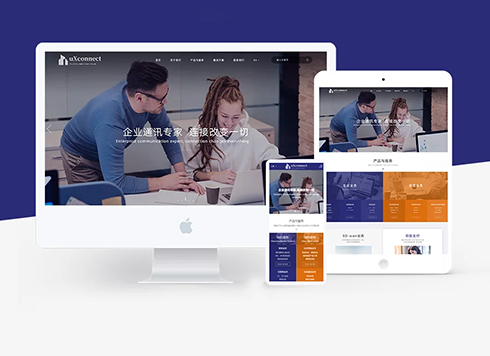 Customized Communication Solutions for Enterprises Website Development
Founded in 1996, this company focuses on pe ...
-
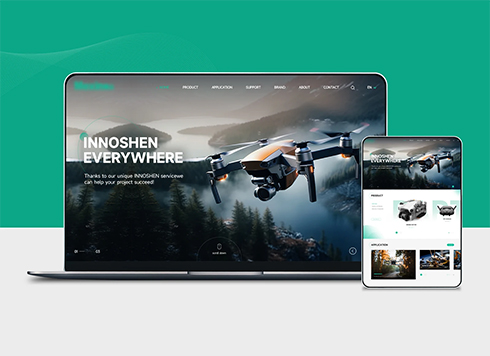 Drone Accessories Company Website Development
Incorporating gray as an accent with the pr ...
-
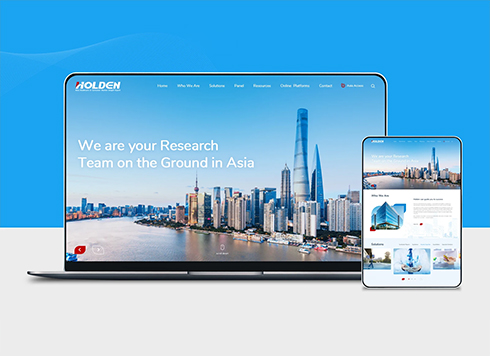 Professional International Research Service Agency Website Construction
This project serves a company with internat ...
-
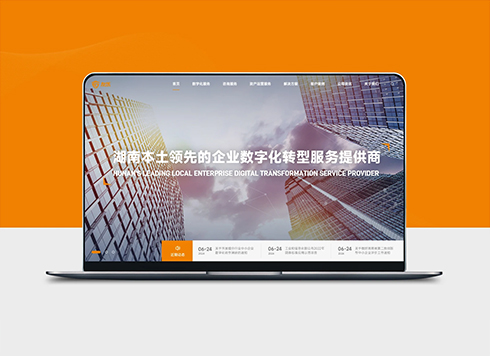 The Construction of Group Websites for Asset Operation and Digital Services
This project is to create a website for a c ...
-
Who Owns the Source Code, Domain, and Server Account in Custom Website Development? What Pitfalls Await If Not Delivered Together?
Date: Sep 2, 2026 Read: 112
-
How Strict Should Website Custom Development Acceptance Be in 2026?
Date: Aug 23, 2026 Read: 135
-
Custom website development: the site has fewer than a hundred pages, the client insists on adding site search, operations says it's unnecessary — should we push back first?
Date: Oct 14, 2026 Read: 9
-
Custom Website Development: Should Official Site Whitepapers Download Directly or Require a Phone Number First? Sales and Operations Are Arguing—Whose Call Wins?
Date: Oct 10, 2026 Read: 26
-
Custom website development: when a client wants live chat on the corporate site, should you embed third-party code first or build it in-house?
Date: Oct 9, 2026 Read: 28