




After a custom app goes live, do you have to re-release it to change copy or pages? What can be changed without re-releasing?
Once an app is live, changing copy, campaign images, or operational configuration doesn't necessarily require re-submitting to the app store. Based on 2026 delivery experience, content-layer changes (copy, pricing, toggles, campaign images) should go through remote configuration first, and most can take effect within hours. Campaign pages with frequently changing structures are better hosted in a Web container, where operations staff can update the webpage and see it go live immediately. Code and system capability layers, however, are subject to platform review and should not be bypassed with high-risk hot fixes. The core experience range is: remote configuration suits lightweight changes, Web containers suit complex pages that change often, and core flows involving login, payment, and permissions must go through a formal release.
First, distinguish: are you changing content data or page logic?
Whether you can skip a release is determined first not by technology selection, but by which layer of the program the change affects. In the 2026 development team practice, we have clients break changes into three categories: content data, page structure, and system capabilities.
- Content data: Copy, pricing, campaign carousels, feature toggles, etc. This kind of data is naturally suitable for backend configuration—operations can change it themselves without a release.
- Page structure and interaction rules: Sign-up steps, button positions, analytics events, etc. If a native page hard-codes these, a release is usually required; if it is already served by a Web container or backend-driven template, it can be updated independently.
- System capability calls: Native features such as camera, NFC, push notifications. Even wrapping a Web layer cannot bypass the native shell, so version release remains the common approach; code-level hot updates carry higher risk in iOS review.
For concrete decisions, apply the "three-question method": Is it content in the database or code? Can operations staff change it themselves? Do you expect it to take effect the same day or can it wait for app store review? If the answers are "data, operations, same day," choose remote configuration; if it is "complex page structure, needs developer styling, can wait a day or two," use a Web container or H5 page update instead of a full release every time.
Three no-release options differ in cost and time-to-effect
The no-release approaches actually used in 2026 projects can be grouped into three tiers by change scale and review risk. They are not mutually exclusive; they are often combined.
- Remote configuration: Push key-value pairs or JSON from the backend; the app fetches them on launch or page entry. Suitable for lightweight adjustments like toggles, copy, image URLs. Typical cost: if backend and client integration is reserved during development, about 0.5–2 working days; retrofitting remote configuration for a live app requires handling old-version compatibility, usually estimated at 3–8 working days. Effect time can be minute to hour level.
- Web container/H5 pages: Hand activity pages, announcement pages, etc., to front-end web pages, while the native shell only handles entry and authentication. Once operations updates the page, it takes effect without re-review. Typical cost: a full page conversion takes about 3–10 working days, depending mainly on the depth of native–Web interaction. The trade-off is maintaining two views afterwards.
- Backend-driven templates/dynamic frameworks: The client renders new UI according to server-delivered templates, or for emergency crash fixes. By 2026, this approach has obviously narrowed; it is used more for "local dynamic rendering" than hot-fixing core flows. Typical cost: developing the template system and release-management tooling usually takes more than 10 working days, and review and rollback mechanisms need extra design.
Match by change frequency: for campaign images that change every week, remote configuration is usually more cost-effective; for an operations homepage whose layout changes every month, a Web container is easier to maintain; exception-message copy inside the core transaction flow should still go with version releases, leaving audit and gray-release records.
Plan for no-release capabilities early; retrofitting often costs double or more
The most common problem at delivery is understanding no-release as "just adding a few backend fields," but when actual work starts, it turns out to involve data structures, API protocols, cache strategies, and permission management. When retrofitting, besides developing new capabilities, you must consider old-version clients that don't recognize new fields, causing blank screens or errors.
A typical scenario: a booking app launched under tight budget and timeline constraints, with the campaign page built as a native static image. After launch, every change to the main visual required code changes and a release. Once, stuck in review queue, the app went almost two weeks without updating. In the second phase, without overturning the overall architecture, we converted the home page title, keywords, contact info, and feature toggles to remote configuration, and moved the campaign page into a Web container. The measured retrofit effort fell in the 5–9 person-day range, half spent on old-version compatibility and rollback planning. After launch, operations could change the main visual themselves without waiting for developers; however, the month's maintenance cost increased by about 2–3 person-days for verification environments and documentation updates.
If such needs are anticipated at the design stage, the cost of reserving configurable slots is usually only one-third to one-half of the above. So the experience range is: doing remote configuration early in development often takes one or two days; retrofitting after launch typically costs one to three times more work depending on the number of operational slots. To verify whether a configurable slot is qualified, check that the backend has preview, scheduled publishing, and one-click rollback. If any of the three is missing, it is hard to recover quickly when operations introduces a problem.
When signing and accepting, put the no-release scope into a checklist
How deep no-release should go is often a point of disagreement in project collaboration. Following enterprise delivery practice, we suggest you add a separate "remote-configurable operations slot checklist" to the requirements specification and check off each item during acceptance.
- List specific operational slots: home page carousel, message-center toggle, bottom-tab ordering, payment-method display, etc.
- Agree on implementation method: remote configuration, Web pages, or backend-driven templates—do not just write "supports backend modification."
- Agree on modification permissions: operations self-service or developer dispatch; whether preview and production environments are separated.
- Agree on time-to-effect semantics: after saving in the backend, how quickly new and existing users respectively see the change, and the default cache expiry.
With such a checklist, acceptance can simply change a real piece of copy in the backend and time how quickly it takes effect in the app. Without a checklist, even changing two characters on a button may later be priced as a new feature request.
Applicable scenarios and boundaries: which apps should not blindly go no-release
Apps that suit no-release are usually business-oriented applications with high operational frequency, such as e-commerce campaigns, news content, local-service booking, and education courses. When pages and copy change monthly or even weekly, remote configuration and Web containers can significantly shorten iteration cycles.
The unsuitable boundary is equally clear: low-frequency tools or internal office apps that only change content a few times a year may find that building a separate configuration backend adds maintenance and test cost. For user assets, core transactions, permission controls, and content involving app store review rules—down to a "reset login" button—code-level hot updates to bypass review are not recommended. In 2026, app stores pay more attention to consistency of dynamic-delivery disclosures and revocation mechanisms; compliance space is narrowing, not expanding. Any no-release retrofit should be bound by official review guidelines.
FAQ
Is remote configuration the same as hot update?
No. Remote configuration only changes parameters and toggles, while hot updates download and execute new code. The two technologies have different boundaries in Apple's review rules; don't mix them up when designing a solution.
Will replacing native pages with Web pages affect app review?
Pages that merely display campaigns or announcements usually pass review. If a page contains an entry that induces users to bypass the app store's in-app purchase, it violates review red lines, regardless of whether Web is used.
Can an app that has been live for over a year still be retrofitted for no-release?
Yes. Start with two high-frequency operational slots as a pilot for remote configuration or Web container, then expand once they run smoothly. Covering all positions at once amplifies old-version compatibility risks.
In a quote, how do you judge whether no-release features are overpriced?
Remote configuration costs are usually measured in person-days; Web containers or backend-driven templates significantly increase the workload. A reasonable quote should map to specific development and testing steps, not just promise "support for backend modification."
Action advice: When discussing custom mobile development in 2026, first ask the vendor for a remote-configurable checklist that lists operational slots, implementation methods, and time-to-effect. Then run an end-to-end demo with a real change, and expand scope only after validation passes. Always remember: do not hot-update core flows or areas that cross review red lines; no no-release technique can replace disciplined version management.
-
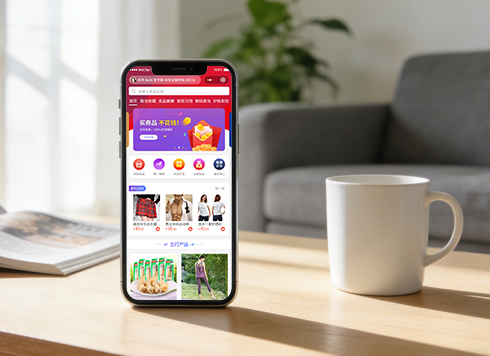 Well-Recognized Custom E-Commerce Mall System Dev
The Good Shopping mini-app is natively buil ...
-
 Anhui Huixiang Vegetable Garden Agricultural Products Mini Program v2.0 Iteration Development
HuiXiang MiniApp V2.0: Upgraded homepage, n ...
-
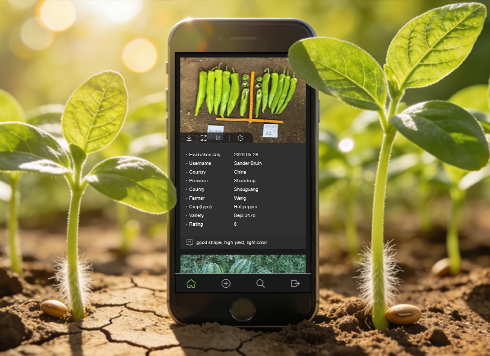 Kunshan TrialBook Mini-Program Custom Development
This project developed an English-only Tria ...
-
 Agricultural Products WeChat Mini Program Custom Development
Lvran Di enhances agricultural sales via a ...
-
Custom-developed app always shows a white screen for a second or two on launch—if users haven’t complained, should we optimize it first?
Date: Sep 13, 2026 Read: 7
-
App Store rejected your custom-built app: fix the code or the submission materials first?
Date: Sep 12, 2026 Read: 11
-
For a custom app that needs chat, how much more does building it yourself cost than buying an off-the-shelf IM service?
Date: Sep 11, 2026 Read: 24
-
If a custom App launched with WeChat login only, how much rework is needed to add phone-number login later?
Date: Sep 10, 2026 Read: 21
-
Custom-developed app goes live but push notifications aren't received—where does the problem usually lie?
Date: Sep 9, 2026 Read: 34