What is the typical annual maintenance fee for a custom-developed app after launch?
Let's start with the conclusion: Based on common outsourcing delivery practices in 2026, a custom app usually comes with a 1- to 6-month free warranty after launch. After the warranty period, the annual maintenance fee falls into the experience range of 15% to 25% of the original development quote. There is no nationwide “maintenance price list.” The price is mainly determined by the scope of maintenance defined in the contract: below 10% usually only covers crashes and obvious bugs, while above 30% likely already includes continuous new-feature development. Before signing a maintenance contract, checking the service scope is more useful than fixating on the percentage.
What exactly is the maintenance fee paying for?
The maintenance fee does not buy “round-the-clock on-call programmer support.” It is for services that keep the app running stably and in step with system changes. In 2026 projects, common maintenance work can be divided into five layers by level of responsibility. The lower the layer, the more it resembles infrastructure; the higher the layer, the more it resembles development.
- Online failure repair: emergency issues that must be handled quickly, such as crashes, sudden exits, white screens, and broken core payment connections.
- New OS adaptation: after each major annual version update of iOS and Android, existing code needs to be tested and adjusted when necessary.
- Upgrading third-party dependencies: SDKs for maps, payments, push notifications, login, etc., release new versions or discontinue old services, requiring synchronized updates.
- Infrastructure maintenance: server resource monitoring, log inspection, database backup, and security patch installation.
- Small incremental changes: rewriting copy, replacing images, correcting button navigation, or adjusting form validation logic.
Why split the scope into five layers first? Because after delivery, disputes often center on questions like “does a crash on the new OS count as an original bug?” If the contract simply mentions “free maintenance” without further detail, execution usually follows the developer’s more conservative interpretation: covering only the first layer, or even only problems in the initial released version. During the signing phase, the client is advised to list all five layers explicitly and, at minimum, specify “whether new OS adaptation is included” and “whose labor covers third-party service replacement.” For defining the boundary between two layers, the official system change notes from Apple and Android can be used as a reference.
Why can't you estimate using only the development-fee percentage?
The 15% to 25% range is more like a benchmark for labor service fees, not full ownership cost. Real annual spending also includes third-party costs such as servers, SMS channels, WeChat Pay, and map APIs. The larger the user base, the more likely these costs are to exceed labor charges. Conversely, for an internal tool used by only dozens of people, third-party costs are extremely low; an annual maintenance fee calculated at 20% of development cost may seem too high.
Two common pricing forms exist in 2026: fixed annual package and billing by actual work hours. Each has trade-offs, and no single formula can be directly applied. They can be compared from four dimensions.
- Suitable audience: A fixed package fits small apps with stable business logic and no more than three changes per year; per-incident billing suits teams with unpredictable needs and an internal technical contact.
- Budget predictability: A fixed package locks in the annual cost, but it often contains hidden terms such as “limited to five person-days.” Per-incident billing starts work first and settles after, giving flexible per-amount costs, but the annual ceiling depends on management oversight.
- Emergency response: A fixed package typically promises a response within 4 to 24 hours. Per-incident billing, in the absence of an established partnership, may require scheduling and cannot handle late-night crashes.
- Contract threshold: A fixed package can be signed after only a few hundred words; per-incident billing requires confirming the person-day rate and the “minimum billing unit” in advance, commonly starting at 0.5 person-day.
To judge which is more appropriate, do not simply look at the annual figure on the proposal. A contract that says “unlimited times” may actually split work into “major changes / minor changes” and bill separately for changing APIs or adding fields. A contract that says “includes five person-days” may have those person-days consumed in one month.
How do I know whether the maintenance fee quoted by an outsourcing vendor is expensive?
To judge expensiveness, don't base the decision solely on a percentage of the original development cost. Start by using a “four-step price verification method” to break the quote down into work items. This method is not for bargaining; it is for understanding the gap between how both parties interpret the same word “maintenance.”
- List possible failure scenarios: Write down three online failures that might happen in the next six months, such as a rising crash rate, an iOS new-OS compatibility problem, or a third-party API becoming rate-limited.
- Define the boundary for new requirements: Clarify which side counts as the developer’s responsibility, and obtain written confirmation for items such as “system adaptation, replacing SDKs, and adding push fields.”
- Check third-party costs: Confirm whether servers, SMS, object storage, etc., are paid directly by the client, so the annual fee does not double-charge them.
- Calculate replacement labor cost: In local hiring, a junior developer who can independently maintain such an app typically costs more than RMB 10,000 to 20,000 per month including social insurance. After comparison, whether a yearly maintenance fee of thousands to tens of thousands of RMB is worth it becomes easier to gauge.
An app for restaurant queueing (client name withheld) encountered a push-notification policy change by major smartphone manufacturers five months after launch, and a large share of previously normal push messages failed. The contract only said “fix obvious bugs within one year”; it did not exclude system adaptation, nor did it explicitly include it. The business constraint was that leaving it unfixed would directly affect the store’s take-a-number rate. The client did not simply accept the developer’s proposal for a new requirement. Instead, it asked the developer to issue a “current-state diagnostic report,” splitting the problem into “legacy code defects” and “external platform policy changes,” and then propose two repair plans. As a result, the developer adjusted the quote based on actual hours, and the client’s actual spending fell within the annual maintenance budget, but the trade-off was an extra two weeks of coordination time. From our retrospective analysis, the experience range for a single emergency repair caused by such an external platform change is usually RMB 4,000 to 8,000 in 2026; if it is included in annual maintenance, the maintenance fee will increase by 5 to 10 percent over the base percentage. Ordinary remote emergency repairs involving code-level troubleshooting are typically RMB 1,000 to 3,000 each time.
So is the maintenance fee expensive? The key is whether the unit cost is close to market rates. For labor, RMB 1,500 to 3,000 per person-day, and for remote emergency troubleshooting, RMB 1,000 to 3,000 per incident, are the typical ranges. If a quote is significantly lower, watch out for response speed and responsibility boundaries. If it is significantly higher, check whether it already includes server and third-party call costs.
Applicable scenarios and boundaries: which projects don't need annual maintenance?
Annual maintenance is not a must-have for every app. This quick checklist can help you decide whether it's worth it.
- Buy annual maintenance if: the user base continues to grow and downtime causes revenue loss; the business chain heavily depends on payments, logistics, and push notifications; and planned version iteration is expected in the next year.
- No annual maintenance needed if: the app is a one-off marketing campaign tool, an exhibition demo, or an internal system with a lifecycle shorter than one year; changes occur less than once a year; or the company already has internal people who can handle the code.
The main criterion is a single question: whether the code will be changed due to external environment shifts in the next 12 months. If you only need to change activity page content, you can do it yourself through a content management backend. If you must follow WeChat, Apple, and Android review policy updates, you should reserve a maintenance budget. Based on experience, for small and medium-sized apps, the annual labor maintenance fee is typically in the RMB 5,000 to 30,000 range (excluding servers); when the amount of change is less than one person-day, settling per incident is more flexible.
FAQ
What percentage should the post-launch app maintenance fee generally be?
There is no hard-and-fast percentage. A common baseline is 15% to 25% of the original development quote. Below 10% usually covers only bug fixes; above 30% generally includes new-feature development.
Will I need to pay extra if a problem occurs in the first month after launch?
In most cases, no. In 2026, outsourcing contracts commonly include a 1 to 6 month free warranty. Crashes caused by code defects after acceptance are fixed for free during the warranty period, but new fields or process adjustments are usually billed as change requests.
If I don't sign a maintenance contract, how are future change requests billed?
The common practice is per person-day billing. The experience range is RMB 1,500 to 3,000 per person-day, and the minimum billing unit is often 0.5 person-day. This suits projects that change only once or twice a year and do not require rapid response.
Can server and SMS costs be bundled into the annual maintenance fee?
Technically yes, but it is not recommended. These costs fluctuate with usage, and bundling them into a fixed annual fee can hide true costs. A more transparent approach is for the client to prepay the cloud vendor directly and have the maintenance fee cover only the cost of manual configuration and monitoring.
How can I avoid disputes during the maintenance period?
When signing the contract, add four items as an appendix: the warranty start and end dates, response requirements, whether new OS adaptation counts as maintenance, and who handles third-party service changes. Then check off each item against the delivery acceptance checklist.
Before you start calculating, go back and look at two places in the contract: the warranty start and end dates, and the definition of “maintenance.” Then estimate the actual amount of changes in the next six months. If it is less than one person-day, per-incident billing is more flexible; if it exceeds 10 person-days, you can use 15% to 25% as a bargaining anchor, and ask the developer to separate labor costs from third-party resource costs. Based on experience, RMB 5,000 to 30,000 is the typical annual maintenance range for small and medium-sized apps in 2026; the exact amount should be based on the written scope of services confirmed by both parties.
-
 Well-Recognized Custom E-Commerce Mall System Dev
The Good Shopping mini-app is natively buil ...
-
 Anhui Huixiang Vegetable Garden Agricultural Products Mini Program v2.0 Iteration Development
HuiXiang MiniApp V2.0: Upgraded homepage, n ...
-
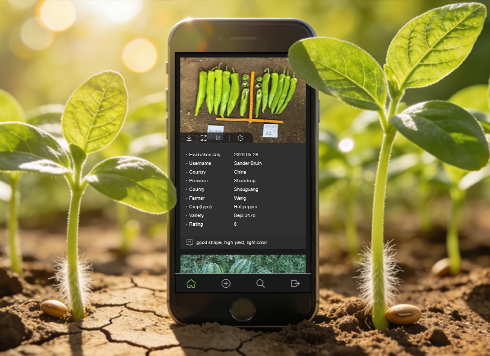 Kunshan TrialBook Mini-Program Custom Development
This project developed an English-only Tria ...
-
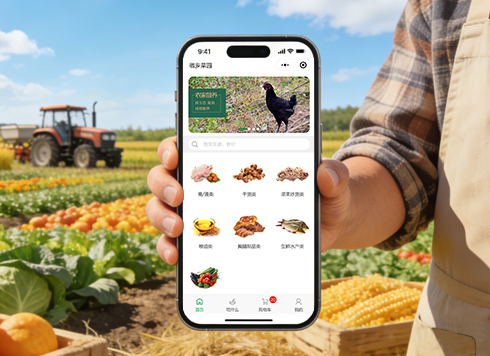 Agricultural Products WeChat Mini Program Custom Development
Lvran Di enhances agricultural sales via a ...
-
Custom-developed app always shows a white screen for a second or two on launch—if users haven’t complained, should we optimize it first?
Date: Sep 13, 2026 Read: 7
-
App Store rejected your custom-built app: fix the code or the submission materials first?
Date: Sep 12, 2026 Read: 11
-
For a custom app that needs chat, how much more does building it yourself cost than buying an off-the-shelf IM service?
Date: Sep 11, 2026 Read: 24
-
If a custom App launched with WeChat login only, how much rework is needed to add phone-number login later?
Date: Sep 10, 2026 Read: 21
-
Custom-developed app goes live but push notifications aren't received—where does the problem usually lie?
Date: Sep 9, 2026 Read: 34